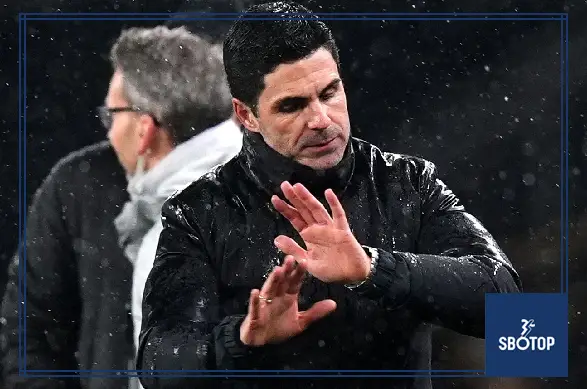
The scrutiny surrounding Mikel Arteta has intensified after Arsenal surrendered control of a crucial match against Wolverhampton Wanderers, a result that has reignited uncomfortable questions about the club’s readiness to claim the Premier League crown. What initially looked like a routine step forward in the title race became a psychological and tactical unraveling at Molineux Stadium—one that exposed deeper structural concerns beyond a single late mistake.
For much of the season, Arsenal have been praised for their evolution under Arteta. They have played with composure, positional clarity, and attacking precision. Yet football’s highest honors are rarely decided by aesthetics alone. They are won by resilience under pressure, by ruthlessness in decisive moments, and by mental durability when momentum begins to shift. Against Wolves, Arsenal faltered in all three departments.
A Match That Shifted the Narrative
At two goals up, Arsenal appeared in total command. Their passing patterns were sharp, their pressing synchronized, and their defensive shape compact. The tempo belonged to them. The body language suggested authority. But matches are not defined solely by control—they are defined by response.
When Wolves altered their intensity and began pressing higher, Arsenal’s composure evaporated. The midfield spacing grew inconsistent. Defensive transitions slowed. Communication seemed strained. What followed was not just a concession of goals—it was a surrender of belief.
This collapse was not merely about conceding a late equalizer. It was about how quickly assurance turned into anxiety. Wolves sensed vulnerability and accelerated. Arsenal retreated rather than recalibrated.
The Mentality Question Returns
For a club attempting to shake off years of near-misses, mentality becomes the central theme. Arsenal have been here before—leading the race, playing attractive football, only to falter when expectation tightens. Critics now argue that the Wolves draw represents more than dropped points; it symbolizes an enduring fragility. Championship teams maintain clarity when adversity strikes. They slow the tempo, dictate territory, and absorb pressure with discipline. Arsenal instead appeared reactive, unsure whether to defend deeper or press higher. The indecision proved costly.
The psychological element cannot be overstated. Title races amplify every mistake. The difference between contenders and champions often lies in emotional control during volatile moments. Against Wolves, Arsenal seemed overwhelmed by the shifting atmosphere rather than empowered by it.
Tactical Decisions Under the Microscope
Arteta’s tactical acumen has earned admiration, but this result has prompted scrutiny of his in-game management. Substitutions arrived, but critics question whether they were proactive enough. Did Arsenal adjust quickly enough to Wolves’ pressing triggers? Could midfield reinforcement have stabilized the closing stages?
Arsenal’s build-up play, usually methodical and layered, became hurried. Passes that earlier pierced defensive lines were replaced by hopeful clearances. The spacing between defensive and midfield units widened, creating exploitable gaps.
When leading, strategic control is essential. Slowing transitions, maintaining possession, and forcing the opposition to chase shadows are hallmarks of elite sides. Instead, Arsenal allowed Wolves to dictate emotional rhythm.
Arteta’s philosophy emphasizes courage and control. Yet courage under pressure requires flexibility. Some argue that sticking rigidly to preferred structures may have limited Arsenal’s ability to adapt to Wolves’ surge.
Squad Selection and Depth Debate
Another point of contention lies in squad rotation and depth. Arsenal’s starting eleven remains formidable, but the season’s closing months demand freshness and variety. Were key players fatigued? Should earlier substitutions have been considered?
Title races test squad breadth as much as starting quality. While Arsenal’s core remains strong, there are concerns about whether the bench offers enough dynamic alternatives when momentum shifts.
Fatigue manifests subtly—slower reaction times, reduced pressing intensity, delayed decision-making. Wolves exploited precisely those marginal slowdowns.
Arteta must now evaluate whether loyalty to established starters is limiting flexibility. Rotation can protect energy levels, but it can also disrupt cohesion. The balance is delicate—and decisive.
Defensive Concentration and Game Management
Arsenal’s defensive identity has improved dramatically over recent seasons. Structured pressing and coordinated backline movement have been foundational to their rise. Yet lapses at Molineux revealed vulnerability when defending under sustained pressure.
The second half demonstrated difficulty in clearing second balls and reorganizing after initial challenges. Wolves fed off chaos. Arsenal, by contrast, seemed unsettled by it.
Game management separates good teams from champions. When under siege, composure is a weapon. Slowing throw-ins, drawing fouls, recycling possession—these micro-decisions matter. Arsenal appeared rushed instead of calculated.
Title Credentials Aspirations vs. Evidence
Arsenal’s ambitions are undeniable. The squad is young, talented, and tactically intelligent. However, the Wolves match invites a larger question: Are they psychologically prepared for the final stretch of a title battle?
Winning the Premier League requires sustained excellence across 38 matches. It demands recovery from setbacks without lingering doubt. It demands that adversity sharpens focus rather than fractures confidence.
This draw does not eliminate Arsenal from contention. Yet it shifts narrative momentum. Rivals will sense opportunity. The psychological ripple effect could be significant.
Arteta now faces the task of reframing the setback—not as evidence of weakness but as a catalyst for growth.
Leadership on the Pitch
When momentum turns, leadership must emerge organically. Vocal organization, calming gestures, tactical reminders—these are crucial during pressure spells. Observers noted a visible drop in collective direction during Wolves’ resurgence.
Championship-winning teams often possess multiple on-field generals who maintain clarity. Arsenal’s young core brings energy and creativity, but moments like these demand experienced calm.
Developing that composure is part of evolution. However, evolution must accelerate quickly in a title race.
The Psychological Domino Effect
Momentum in football is contagious. Wolves’ belief grew with every duel won. Arsenal’s hesitation grew with every misplaced pass. This dynamic swing illustrates how quickly control can dissolve.
Arteta has consistently emphasized mental conditioning and resilience. The Wolves draw becomes a test case for those values. How the squad responds in subsequent fixtures will define whether this was an anomaly or a pattern.
Public Perception and Media Pressure
With expectations high, scrutiny intensifies. Media narratives can shape external pressure, which in turn influences internal confidence. Discussions of “bottle jobs” and mental fragility resurface quickly in English football discourse.
Arteta must shield his squad from that noise. Confidence erosion can be subtle but devastating. Clear messaging, unified dressing room belief, and tactical recalibration are essential.
Lessons in Adaptability
The Wolves encounter underscores a fundamental truth: title races demand adaptability. Tactical identity is valuable, but flexibility wins championships.
Whether through earlier substitutions, formation tweaks, or tempo adjustments, Arsenal must demonstrate capacity to respond dynamically.
Arteta’s project has always been about long-term growth. Yet title windows are fleeting. Opportunities must be seized decisively.
Resilience as the Defining Factor
The coming weeks will reveal more than the Wolves match itself. They will show whether Arsenal have internalized the lesson.
Resilience is not measured by avoiding setbacks—it is measured by response. Immediate, composed, and assertive response.
Training sessions will likely focus on closing games. Simulated pressure scenarios. Defensive shape under late surges. Communication drills. Every detail matters.
Tactical Identity vs. Pragmatism
Arteta’s Arsenal play proactive football. However, championship pragmatism sometimes requires controlled conservatism. Managing risk without abandoning identity is an art.
Against Wolves, the shift from dominance to vulnerability felt abrupt. Bridging that gap is the next developmental step.
The Title Race Landscape
The Premier League title race remains tightly contested. Margins are thin. Goal differences, psychological edges, fixture difficulty—all intertwine.
Dropped points can cascade into narrative shifts. Yet they can also galvanize squads.
Arteta’s challenge is not merely tactical; it is emotional calibration.
Also Read:
- SBOTOP: Arsenal’s Collapse at Molineux Exposed Deeper Flaws Beyond a Single Costly Error
- SBOTOP: Alessia Russo Nets Brace as Arsenal Overpower OH Leuven 3-1 to Seal Women’s Champions League Clash with Chelsea
- SBOTOP: Arsenal Surrender Two-Goal Cushion as Teenage Star Tom Edozie Rescues Wolves in Dramatic 2-2 Molineux Showdown