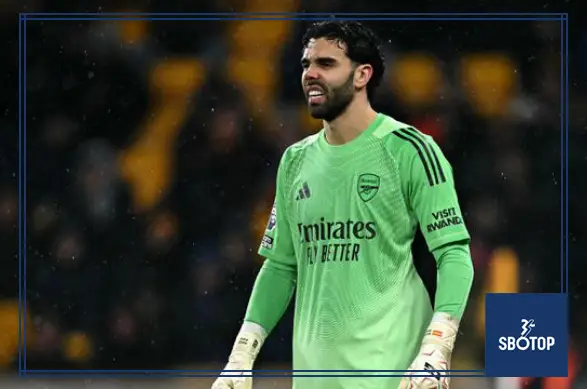
Time-wasting in football matches has become a growing concern, prompting the Premier League to consider new rules aimed at preventing tactics that disrupt the flow of the game. One such focus is goalkeepers who feign injury, allowing teammates extra time to receive instructions from the bench. The recent controversy surrounding Arsenal goalkeeper David Raya has brought this issue back into the spotlight.
Brighton & Hove Albion manager Fabian Hurzeler openly criticized the practice after his team’s narrow 0-1 defeat to Arsenal on March 5, 2026, highlighting the three instances when Raya received medical attention during the match. According to Hurzeler, these pauses not only delayed play but provided Arsenal players an opportunity to regroup and receive tactical guidance, undermining fair competition.
The “Timeout” Phenomenon in Football
This growing attention to what some call the “timeout” phenomenon has prompted the Premier League to explore solutions. Reports indicate that a trial of new rules is set to begin in the Women’s Super League starting next season. Under the proposed guidelines, if a goalkeeper receives on-field medical attention, the team must temporarily remove one outfield player for one minute.
The initiative was discussed during the recent annual meeting of the International Football Association Board (IFAB), though several details remain undecided. One consideration is whether the head coach should have the authority to choose which player leaves the pitch during the one-minute period.
Currently, the laws of the game require any player receiving medical treatment on the field to leave for 30 seconds before returning. However, this regulation does not apply to goalkeepers, allowing teams to benefit from unplanned breaks, sometimes altering the momentum of matches.
Hurzeler Voices Frustration
Fabian Hurzeler expressed his frustration following Brighton’s match against Arsenal.
“I think there was only one team really trying to play football today,” Hurzeler said. “I have to ask: have you ever seen a goalkeeper in the Premier League go down three times like that? No, right?”
He also criticized the role of referees and league officials in enforcing the rules.
“Ultimately, it’s about the rules. If the Premier League and referees allow these things to happen, it becomes very difficult. It’s almost as if teams are playing by their own rules. Right now, I feel they’re making the rules up as they go along, regardless of how they play,” he added.
Winning by Any Means? Not for Hurzeler
Hurzeler emphasized that he does not condone winning through such tactics.
“I would never be a manager who tries to win that way. I want to play football properly. I want my players to keep developing and to continue playing good football on the pitch,” he explained.
Still, he acknowledged that managing the clock is part of football strategy.
“Of course, every team will sometimes control the game and manage time,” he said. “But I believe there has to be a limit. That limit must be set by the Premier League and enforced by referees. At the moment, it seems like teams are doing whatever they want.”
The Need for Clear Regulations
The David Raya case exemplifies the growing need for precise regulations to prevent potential abuse. Medical stoppages for goalkeepers, while necessary in cases of genuine injury, have increasingly been exploited as strategic pauses. With the introduction of a trial in the Women’s Super League, football authorities hope to gauge the effectiveness of temporary player removals and assess how it impacts game flow and fairness.
IFAB’s involvement underscores the international significance of the issue. The board has historically guided major law changes in football, from offside interpretations to VAR protocols. Should the trial prove successful, similar measures could be implemented in top-tier men’s leagues, including the Premier League, to preserve the integrity of matches.
Balancing Fair Play and Player Safety
The challenge lies in balancing player safety with the integrity of competition. Genuine injuries must be respected, and medical staff should have sufficient authority to pause games. However, excessive stoppages that alter the rhythm of a match risk undermining fair play. Clear, enforceable rules, combined with referee discretion, will be critical to ensuring both safety and competitive fairness.
Conclusion: Premier League Responds to Rising Concerns
As incidents like David Raya’s continue to spark debate, the Premier League and IFAB are under pressure to modernize rules to curb time-wasting tactics. While trial implementations in the Women’s Super League will provide valuable insight, the broader goal is clear: protect the flow of the game, maintain fairness, and ensure that teams compete on equal terms.
For managers like Fabian Hurzeler, the priority remains simple—play football the right way. But in a league driven by results, rules and enforcement must evolve to keep pace with emerging strategies that threaten to distort the spirit of the sport. Whether these measures will deter strategic stoppages remains to be seen, but the conversation is now at the forefront of football governance.
ALSO READ :