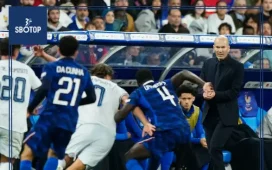
The fixture calendar in elite European football has once again become a source of tension, with Paris Saint-Germain finding themselves at the centre of a growing scheduling dispute. The controversy intensified after RC Lens rejected a request to postpone their upcoming domestic league fixture, a decision that has added further pressure ahead of PSG’s congested European commitments involving Liverpool F.C. in the UEFA Champions League.
The situation has sparked widespread debate in French football circles, raising questions about fixture fairness, player welfare, and the balance between domestic and European competitions.
The Origin of the Scheduling Dispute
The issue began when Paris Saint-Germain reportedly requested flexibility regarding a Ligue 1 fixture scheduled between their two Champions League matches against Liverpool. With the European tie considered one of the most demanding fixtures of the season, PSG’s management sought a rescheduling that would allow for better recovery time and tactical preparation.
However, RC Lens firmly rejected the proposal, insisting that the original fixture date should remain unchanged. Their stance is rooted in maintaining competitive integrity within the domestic league calendar, where consistency and fairness are considered essential principles.
The refusal has created a ripple effect across Ligue 1, with discussions emerging about how French clubs balance domestic obligations with the increasing demands of European football.
RC Lens Stand Firm on Competitive Integrity
RC Lens’ decision reflects a broader philosophy shared by many clubs outside Europe’s financial elite. From their perspective, altering the schedule to accommodate a Champions League tie could set a precedent that undermines the integrity of the domestic league.
Lens have built a reputation in recent years as a disciplined, well-structured side capable of challenging established powers. Their refusal is seen as a statement of equality, reinforcing the idea that all league fixtures should be treated with equal importance regardless of external commitments.
Club officials reportedly believe that adjusting fixtures for PSG could create competitive imbalance and open the door to future disputes.
Paris Saint-Germain’s Scheduling Challenge
For PSG, the situation presents a significant logistical and sporting challenge. Competing in both Ligue 1 and the Champions League requires careful squad management, particularly during periods of fixture congestion.
The two-legged Champions League tie against Liverpool is expected to be physically and tactically demanding. Matches against high-intensity opposition require peak conditioning, detailed preparation, and full squad availability.
PSG’s concern is that the current scheduling leaves limited recovery time between matches, potentially impacting performance levels in both domestic and European competitions.
While PSG possess one of the deepest squads in European football, even elite teams are vulnerable to fatigue when faced with tightly packed schedules.
The Champions League Factor
The involvement of Liverpool F.C. adds further significance to the situation. Liverpool are known for their high-intensity pressing style and relentless tempo, which places significant physical demands on opponents.
For PSG, preparation for such a fixture requires full focus and optimal fitness levels. Any disruption in scheduling can affect tactical training sessions, recovery cycles, and match readiness.
This is why PSG’s request for postponement was considered strategically important from their perspective. However, the rejection by RC Lens means they must now adapt their preparation within existing constraints.
Fixture Congestion in Modern Football
The controversy highlights a growing issue in modern football: fixture congestion. As domestic leagues, cup competitions, and European tournaments expand, elite clubs are increasingly required to play multiple high-intensity matches in short periods.
This raises concerns about:
- Player fatigue and injury risk
- Reduced training time
- Tactical preparation limitations
- Long-term squad sustainability
Clubs like PSG, who regularly compete deep into European competitions, are particularly affected by these scheduling pressures.
However, smaller or less financially dominant clubs often argue that altering schedules undermines fairness and consistency in domestic competitions.
The Role of Ligue 1 Authorities
The decision ultimately places attention on Ligue 1 administrators, who are responsible for fixture scheduling and dispute resolution. Their challenge is to balance the interests of clubs competing in Europe with those focused solely on domestic performance.
While UEFA competitions bring prestige and revenue to French football, domestic league integrity remains a core priority.
The governing body must now navigate a delicate situation where both PSG and RC Lens have valid but conflicting arguments.
Tactical Implications for PSG
From a tactical standpoint, PSG’s coaching staff will need to carefully manage rotation and preparation strategies. Without fixture changes, squad rotation becomes essential.
Key considerations include:
- Resting key players during domestic fixtures
- Managing workload of attacking stars
- Ensuring defensive stability despite rotation
- Maintaining rhythm between Champions League matches
Balancing these factors is particularly challenging when facing a physically demanding opponent like Liverpool.
PSG’s ability to adapt will be tested not just in individual matches, but across the broader scheduling cycle.
RC Lens’ Competitive Position
For RC Lens, the fixture represents an important opportunity to strengthen their domestic campaign. Matches against top-tier opponents like PSG carry significant weight in terms of league positioning and morale.
By refusing the postponement, Lens are also asserting their ambition and competitiveness within Ligue 1. They are demonstrating that they are not willing to accommodate scheduling changes that could be perceived as favouring bigger clubs.
This stance reinforces their identity as a disciplined and resilient team capable of competing at the highest domestic level.
Psychological Pressure on Both Clubs
The controversy adds psychological dimensions to both squads. PSG must manage frustration and maintain focus despite logistical challenges, while RC Lens must prepare for a high-profile fixture under increased scrutiny.
For PSG players, the narrative of congestion and unfair scheduling can either become a distraction or a source of motivation. Elite teams often respond to adversity by elevating performance levels.
For Lens, the challenge is to maintain composure and avoid being overwhelmed by the attention surrounding the fixture.
Fan Reactions and Public Debate
Supporters across France and Europe have reacted strongly to the situation. PSG fans generally support the idea of postponement, arguing that French clubs competing in the Champions League deserve scheduling flexibility to represent the league effectively.
On the other hand, RC Lens supporters and neutral observers emphasize fairness and consistency, arguing that all clubs should adhere to the same fixture schedule.
The debate reflects broader tensions in modern football between elite competition demands and domestic equality principles.
Historical Context of Fixture Disputes
This is not the first time fixture congestion has created controversy in European football. Similar disputes have arisen in other leagues where clubs competing in UEFA competitions request schedule adjustments.
However, governing bodies have increasingly moved toward stricter fixture regulations to avoid perceived favoritism.
The current situation involving PSG and RC Lens fits into this wider trend of standardization and resistance to fixture manipulation.
Long-Term Implications for French Football
The outcome of this situation could influence future scheduling policies in Ligue 1. If PSG’s request had been approved, it might have opened the door for similar adjustments in future seasons.
By rejecting the request, RC Lens have reinforced the principle of fixed scheduling integrity. However, it may also prompt further discussion about whether French football needs more flexible mechanisms for clubs competing in Europe.
Balancing domestic fairness with international competitiveness remains an ongoing challenge.
The Importance of Squad Depth
For PSG, one of the key advantages in managing this situation is their squad depth. With world-class players available in multiple positions, rotation becomes a viable strategy.
However, depth alone does not eliminate the challenges of fatigue and preparation time. Tactical cohesion and rhythm can still be affected by frequent changes in lineup.
The coaching staff will need to carefully decide which matches require full-strength squads and which can be managed with rotation.
Media Scrutiny and Narrative Pressure
As with most high-profile clubs, PSG’s situation is being closely analyzed by the media. Fixture disputes often generate narratives around privilege, fairness, and competitive balance.
This added scrutiny increases pressure on both players and management, as every decision is evaluated in public discourse.
RC Lens, meanwhile, are being praised in some quarters for their firm stance, further intensifying the spotlight on the fixture.
Also Read:
- Arsenal F.C. Premier League Ambition Remains Intact as Paul Merson Predicts One-Trophy Season Following Carabao Cup Final Defeat to Manchester City
- SBOTOP: Motherwell F.C. Defender Sattery Hit with Four-Match Suspension Following Disciplinary Ruling
- SBOTOP: England national football team Add Ben White and Harvey Barnes to Thomas Tuchel’s Squad for Uruguay and Japan Friendly Fixtures