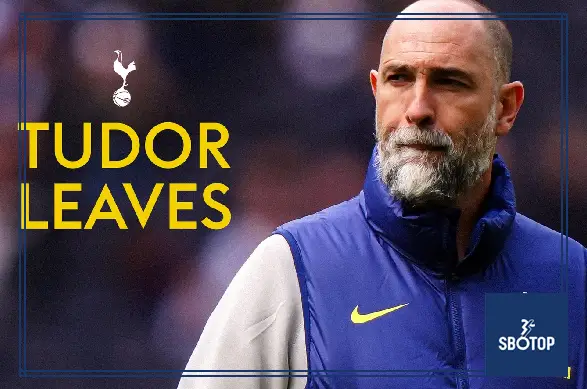
The tenure of Igor Tudor at Tottenham Hotspur has come to an abrupt and unexpected end after just 44 days in charge, with both parties agreeing to a mutual termination following a brief and turbulent spell that lasted only seven matches. What was initially presented as a bold new chapter for the North London club quickly turned into a period of instability, tactical confusion, and mounting pressure from both results and performances. In the end, the decision to part ways was described as mutual, but the underlying reality reflects a project that never truly found its footing.
A Short-Lived Appointment With High Expectations
When Igor Tudor was appointed as head coach of Tottenham Hotspur, there was cautious optimism among supporters. Known for his intense coaching style, high pressing philosophy, and tactical discipline, Igor Tudor was expected to bring structure and aggression to a team that had struggled with consistency.
His arrival was seen as a shift toward a more physically demanding and tactically rigid system. The club hierarchy believed his methods could restore competitiveness and identity, especially after a series of inconsistent seasons.
However, from the outset, implementing those ideas proved more difficult than anticipated.
Early Signs of Struggle
Tudor’s first few matches in charge hinted at both ambition and instability. While there were moments of improved pressing intensity and defensive organisation, they were often overshadowed by lapses in structure and a lack of cohesion in possession. Tottenham Hotspur struggled to adapt to the high-intensity demands of Tudor’s system. Players were frequently caught between tactical instructions, leading to confusion in transitions and spacing issues in midfield.
The attacking output also became inconsistent. While Spurs occasionally showed flashes of direct, aggressive forward play, the lack of fluid build-up often left attackers isolated.
Seven Matches That Defined the Tenure
Across seven matches in all competitions, Tottenham’s results were mixed at best and concerning at worst. The team failed to establish a clear pattern of play, and performances fluctuated from promising halves to disjointed collapses.
Under Igor Tudor, Spurs attempted to implement a high press and vertical attacking structure. However, execution often fell short due to timing issues and gaps between midfield and defence.
Opponents quickly began to exploit these weaknesses, particularly in transition moments where Tottenham’s defensive shape became stretched.
Tactical Identity Never Fully Established
One of the biggest challenges during Tudor’s brief reign was the lack of a clearly defined tactical identity.
While the intention was to create a high-energy, pressing side, the execution lacked consistency. In some matches, Spurs pressed aggressively but left too much space behind. In others, they dropped deeper but failed to counter effectively.
This inconsistency made it difficult for players to build rhythm or confidence.
Tottenham Hotspur never fully settled into a system that balanced defensive security with attacking threat. As a result, performances often felt reactive rather than controlled.
Dressing Room Adaptation Challenges
Adapting to a new managerial style is never immediate, but reports from within the squad suggested that the transition under Igor Tudor was particularly demanding.
Players were required to adjust to intense physical workloads and strict positional discipline. For some, the shift from previous tactical systems was too abrupt.
There were also concerns about communication and clarity of instruction during matches, with players occasionally appearing unsure of their roles in specific phases of play.
Although there was no suggestion of open conflict, the adaptation process clearly did not progress smoothly enough within the short timeframe.
Results Begin to Pressure the Project
As results failed to improve consistently, pressure began to mount quickly. Early optimism from the board and supporters began to fade as performances failed to translate into points.
Tottenham Hotspur found themselves struggling in matches they were expected to control. Defensive errors, lack of midfield control, and missed opportunities in front of goal all contributed to disappointing outcomes.
Each match increased scrutiny on Tudor’s methods, and questions were raised about whether the tactical approach suited the current squad.
The Final Matches Signs of Inevitable Change
By the final stretch of his brief tenure, it became increasingly apparent that a separation might be unavoidable.
Although there were isolated improvements—particularly in pressing structure and defensive aggression—the overall consistency was lacking. Spurs still struggled to maintain control over 90 minutes, often fading in second halves or conceding preventable goals.
The team’s inability to sustain performance levels ultimately became the defining issue of Tudor’s time in charge.
Mutual Decision to Part Ways
After internal discussions, Tottenham Hotspur and Igor Tudor agreed that the best course of action was to part ways.
The decision was described as mutual, reflecting a shared understanding that the project was not progressing as intended. Rather than continue a situation that risked further instability, both sides opted for an early conclusion.
For Tottenham, the focus now shifts to stabilising performances and identifying a new long-term direction. For Tudor, it marks another brief chapter in a coaching career defined by intensity and tactical conviction.
Reactions From Fans and Pundits
The news of Tudor’s departure has sparked widespread debate among supporters and analysts.
Some fans believe the club acted too quickly, arguing that managerial systems often require time to settle, especially those as demanding as Tudor’s. They point to structural issues within the squad that predated his arrival.
Others, however, argue that the decision was necessary, citing the lack of clear improvement and the risk of falling further behind in the league standings.
Pundits have also highlighted the difficulty of mid-season managerial changes, especially when introducing a radically different tactical philosophy.
Tactical Lessons From the Short Spell
Despite its brevity, Tudor’s time at Tottenham Hotspur offers several tactical insights:
- High pressing systems require full squad adaptation and time to embed
- Transition defence is critical when playing aggressive football
- Midfield structure must be stable to support vertical attacking play
- Communication clarity is essential during high-intensity systems
These lessons will likely inform both the club’s next appointment and future squad planning.
What Went Wrong
The failure of the project cannot be attributed to a single factor. Instead, it appears to be a combination of timing, tactical mismatch, and insufficient adaptation period.
Igor Tudor brought clear ideas and a strong coaching identity, but the squad’s readiness to implement those ideas immediately was limited.
At the same time, the Premier League’s competitive intensity leaves little room for gradual transitions, making early results crucial.
The Road Ahead for Tottenham
For Tottenham Hotspur, the priority now is stability. The club must regroup quickly, both tactically and psychologically, to avoid further disruption to the season.
An interim solution or swift appointment of a new permanent manager is expected, with emphasis likely placed on tactical flexibility and familiarity with the league.
Squad morale will also be an important factor, as players adjust once again to new leadership and expectations.
Tudor’s Next Steps
For Igor Tudor, this short spell in England adds to a coaching résumé marked by both promise and volatility. His reputation for intensity and tactical discipline remains intact, but questions about fit and timing will inevitably follow him.
It is unlikely that this setback will deter him from future opportunities, particularly in environments better suited to his high-pressing philosophy.
Many observers believe he will return to management in a setting where he has more time to implement his ideas.
Also Read:
- SBOTOP: Chelsea Survive Seven-Goal Chaos Against Aston Villa to Win 4-3 and Climb Back Into Second in WSL Standings
- SBOTOP: Late Junya Ito Strike Sinks Scotland as Japan Claim 1-0 Victory in World Cup Warm-Up at Hampden Park
- SBOTOP: Thomas Tuchel Ranks Four Centre-Backs Above Harry Maguire in England Selection Hierarchy