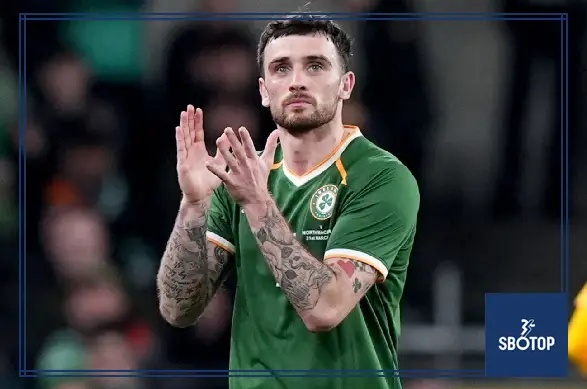
The Republic of Ireland were left frustrated after being held to a 0-0 draw by North Macedonia in a tense and controversial international fixture that will be remembered more for what didn’t count than what did. The match featured two disallowed goals for Ireland striker Troy Parrott, both ruled out under contentious circumstances, as Ireland failed to convert their dominance into a crucial victory.
While the performance showed signs of structure, energy, and attacking intent, the lack of finishing precision and officiating decisions combined to deny Ireland a result that many felt they deserved.
A Night of Frustration for Ireland
From the opening whistle, Ireland approached the match with urgency. Playing at home and needing points in their qualification campaign, they pressed high and looked to impose themselves early against a disciplined North Macedonia side.
The first half saw Ireland dominate possession, with midfielders controlling the tempo and full-backs pushing forward to create width. However, despite territorial advantage, clear chances were difficult to come by.
North Macedonia, meanwhile, remained compact and organized, relying on counter-attacks and set pieces to threaten Ireland’s defensive structure.
The tone of the match was set early: Ireland attacking, North Macedonia defending deep, and tension steadily building as chances came and went.
Troy Parrott’s Disallowed Goals Spark Debate
The main talking point of the night revolved around Troy Parrott and two goals that were disallowed under disputed circumstances. Parrott, who led the line with determination and movement, thought he had opened the scoring midway through the first half. After reacting quickly inside the box, he finished clinically, only for the referee to rule the goal out following a marginal offside decision.
Replays suggested a very tight call, and Irish players immediately protested the decision, arguing that the striker had timed his run perfectly.
Later in the second half, Parrott again found the net after a well-worked team move involving quick passing in the final third. This time, the goal was ruled out for a foul in the buildup phase, a decision that left Ireland’s players and coaching staff visibly frustrated.
Two disallowed goals in a single match made Parrott the central figure in a night of controversy, even though his overall performance was full of energy and attacking intent.
North Macedonia’s Defensive Discipline
Credit must also go to North Macedonia, who executed their game plan effectively. Their defensive structure was compact and well-drilled, making it extremely difficult for Ireland to find space between the lines.
The visitors relied on:
- Deep defensive blocks
- Aggressive pressing in midfield zones
- Quick clearances under pressure
- Tactical fouls to disrupt rhythm
While they did not create many clear chances, North Macedonia succeeded in frustrating Ireland and slowing down their attacking flow.
Their ability to maintain discipline under sustained pressure played a key role in securing a valuable away point.
Ireland’s Attacking Patterns Show Promise
Despite the lack of goals, Ireland did show encouraging attacking patterns throughout the match. The team worked the ball into wide areas effectively and frequently delivered crosses into dangerous positions.
Midfielders attempted to link play between defense and attack, with several promising combinations breaking through North Macedonia’s lines.
Key attacking features included:
- Overlapping full-back runs
- Quick one-touch passing in midfield
- Direct balls into the striker
- Pressing high to force turnovers
However, the final execution often fell short, either through rushed decisions or strong defensive interventions.
Midfield Control but Limited Penetration
Ireland’s midfield unit controlled large portions of the game but struggled to convert possession into decisive chances.
While passing accuracy remained high, much of the play occurred in non-threatening areas. North Macedonia’s compact shape forced Ireland to circulate the ball without breaking defensive lines effectively.
This highlighted a recurring issue in Ireland’s attacking structure: dominance in possession does not always translate into clear goal-scoring opportunities.
Defensive Stability Keeps Ireland in Control
On the defensive side, Ireland delivered a solid performance. The back line remained organized throughout and limited North Macedonia to very few clear chances.
The defensive positives included:
- Strong aerial duels
- Effective marking in the box
- Good recovery speed in transitions
- Calm distribution under pressure
Goalkeeper involvement was minimal, reflecting Ireland’s control of territorial play.
Despite the frustration in attack, Ireland’s defensive discipline ensured they did not fall behind.
Tactical Battle Between Two Disciplined Teams
The match was effectively a tactical chess game between two well-organized sides. Ireland attempted to break down a compact defensive block, while North Macedonia looked to absorb pressure and strike on the counter.
Ireland’s strategy focused on:
- High pressing to regain possession quickly
- Wide overloads to stretch the defense
- Fast transitions through midfield
North Macedonia responded with:
- Compact defensive lines
- Time management tactics
- Physical duels in midfield
- Disruption of attacking rhythm
The result was a match with few clear chances but plenty of tactical intensity.
The Refereeing Decisions Under Scrutiny
While Ireland’s performance had areas for improvement, the officiating became a major talking point. The two disallowed goals for Troy Parrott dominated post-match discussions.
The first decision, involving a tight offside call, was particularly controversial due to the marginal nature of the ruling. The second, which involved a foul in the buildup, also raised questions about consistency and interpretation.
Such decisions often define international fixtures, and on this occasion, they left Ireland feeling hard done by.
Troy Parrott’s Growing Importance
Despite the frustration, Troy Parrott’s performance highlighted his growing importance to the national team. His movement, positioning, and willingness to take responsibility made him Ireland’s most dangerous attacking player on the night.
Even though the goals did not stand, his ability to find space and finish chances remains a positive sign for the team moving forward.
Parrott’s performance included:
- Intelligent runs behind defenders
- Strong link-up play with midfielders
- Constant pressure on the opposition back line
- Composed finishing instincts
If Ireland are to improve their attacking output, Parrott will continue to play a central role.
Missed Opportunities and Final Third Concerns
One of the biggest takeaways from the match was Ireland’s inefficiency in the final third. Despite controlling possession and creating positions of advantage, they struggled to convert pressure into goals.
Key issues included:
- Poor final passes in key moments
- Overhit crosses
- Lack of clinical finishing
- Slow decision-making under pressure
These problems will need to be addressed if Ireland are to progress in their qualification campaign.
North Macedonia’s Valuable Point
For North Macedonia, the draw represents a well-earned result. While they did not dominate possession or create many chances, their defensive discipline and resilience ensured they left with a valuable point.
In tightly contested qualification groups, such results can prove crucial.
What This Means for Ireland Moving Forward
Although the result was disappointing, there are positives Ireland can take from the performance:
- Strong defensive organization
- Consistent midfield control
- Promising attacking movement
- Emerging leadership in key players
However, the team must improve in converting dominance into goals and maintaining composure in the final third.
Also Read:
- SBOTOP: England U21 Dominate Moldova 4-1 as Arsenal Pair Ethan Nwaneri and Myles Lewis-Skelly Power Young Lions to Impressive Win
- SBOTOP: Ivory Coast Edge Scotland 1-0 as Steve Clarke Faces Consecutive Friendly Defeats Ahead of World Cup Campaign
- SBOTOP: Tottenham Fans Trust Raises Concerns Over Roberto De Zerbi Link-Up Amid Backlash Over Mason Greenwood Remarks