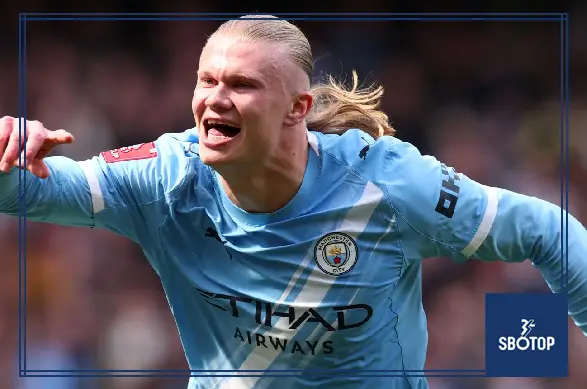
The quarter-final stage of the FA Cup delivered another unforgettable night of drama as Manchester City produced a ruthless performance to dismantle Liverpool FC with a commanding 4-0 victory.
At the heart of the spectacle was Erling Haaland, whose clinical hat-trick underlined his status as one of world football’s most devastating forwards. The match also featured a pivotal missed penalty from Mohamed Salah, a moment that symbolized Liverpool’s struggles on a night where nothing seemed to go their way.
For Manchester City, this was a statement of dominance. For Liverpool FC, it was a harsh reminder of the fine margins at the highest level.
A High-Pressure FA Cup Quarter-Final Stage
The FA Cup is renowned for its unpredictability, but this quarter-final quickly turned into a showcase of control and efficiency from Manchester City.
Both teams arrived with expectations of reaching Wembley, but the intensity of knockout football meant that any mistake would be punished. In the end, it was City who imposed their authority from the opening whistle.
Manchester City dictated possession, controlled tempo, and exploited space with precision, while Liverpool FC struggled to cope with the relentless pressure.
Erling Haaland’s Ruthless Hat-Trick Performance
The defining storyline of the night was Erling Haaland’s extraordinary hat-trick. The Norwegian striker once again demonstrated why he is considered one of the most lethal finishers in modern football.
His movement inside the box, anticipation, and composure in front of goal were simply too much for Liverpool’s defensive line. Each of his goals showcased a different aspect of his attacking skillset—power, positioning, and precision.
For Manchester City, Haaland’s presence provides a constant threat that forces opposition defenses into uncomfortable positions throughout the match.
Manchester City’s Tactical Masterclass
Under their established system, Manchester City delivered a tactical performance built on possession control, positional rotation, and high pressing.
Their ability to suffocate Liverpool in midfield was a key factor in the result. By dominating possession, City limited Liverpool’s attacking transitions and forced them into defensive phases for extended periods.
The structure of their play ensured that Haaland received consistent service in dangerous areas, allowing him to capitalize on even the smallest defensive lapses.
Liverpool’s Missed Opportunity and Salah’s Penalty Moment
For Liverpool FC, the night was defined by frustration. One of the key turning points came when Mohamed Salah missed a penalty, a moment that could have shifted momentum.
Penalty situations in knockout matches often carry immense psychological weight, and this miss proved costly as it prevented Liverpool from gaining a foothold in the game.
From that moment onward, Liverpool struggled to regain control, and their defensive vulnerabilities were repeatedly exposed by City’s attacking movement.
Midfield Battle Lost by Liverpool
The midfield contest proved to be a decisive factor in the match. Manchester City dominated this area with fluid passing and intelligent positioning.
Liverpool’s midfield unit found it difficult to contain City’s rotations, often being pulled out of shape and leaving gaps for attackers to exploit.
This control allowed City to dictate rhythm, accelerate play when needed, and maintain sustained pressure throughout the match.
Defensive Breakdown Under Pressure
For Liverpool FC, defensive organization became increasingly unstable as the match progressed.
Haaland’s movement constantly stretched their back line, forcing defenders into uncomfortable one-on-one situations. The lack of defensive compactness allowed City to create high-quality chances repeatedly.
In contrast, Manchester City’s defensive structure remained disciplined, limiting Liverpool’s opportunities to counterattack effectively.
Momentum Shifts and Psychological Collapse
Once Haaland opened the scoring, the momentum quickly shifted in favor of Manchester City.
Liverpool’s response lacked conviction, and the missed penalty further deepened their psychological struggle. In knockout football, confidence is crucial, and City’s growing dominance only increased the pressure on Liverpool’s players.
Each subsequent goal reinforced the imbalance, turning the match into a one-sided contest despite the high expectations entering the fixture.
The Importance of Finishing Efficiency
One of the key differences between the two sides was finishing efficiency.
Manchester City converted their chances with clinical precision, led by Haaland’s sharp instincts in front of goal.
Meanwhile, Liverpool FC failed to capitalize on their limited opportunities, with the missed penalty serving as the clearest example of their inefficiency.
Pep Guardiola’s Influence on the Performance
The tactical structure implemented by Manchester City reflects the long-term influence of manager Pep Guardiola’s philosophy.
His emphasis on positional play, control, and intelligent pressing continues to shape City’s dominance in domestic competitions.
This quarter-final performance highlighted how effectively his system can dismantle even the strongest opposition when executed at a high level.
Liverpool’s Struggles in Transition
One of the most damaging aspects of Liverpool FC’s performance was their inability to transition effectively from defense to attack.
City’s high pressing limited their time on the ball, forcing rushed decisions and inaccurate passing.
As a result, Liverpool struggled to build sustained attacking sequences, often losing possession before entering dangerous areas.
Haaland’s Impact Beyond Goals
While the hat-trick was the headline, Erling Haaland’s influence extended beyond scoring.
His presence constantly occupied defenders, creating space for teammates and disrupting Liverpool’s defensive structure.
For Manchester City, this type of forward play adds a multidimensional threat that goes beyond simple goal scoring.
Tactical Lessons for Liverpool
The defeat will force Liverpool FC to reflect on several tactical issues, including defensive spacing, midfield control, and attacking efficiency.
Improving defensive compactness and decision-making under pressure will be essential moving forward, especially in high-stakes knockout matches.
The performance highlighted the gap that can emerge when facing a team as structured and clinical as Manchester City.
What This Means for Manchester City
For Manchester City, this victory reinforces their status as one of the strongest contenders in the FA Cup.
Their combination of tactical discipline and attacking firepower makes them a formidable force in any competition.
With Haaland in peak form, City’s ambitions for silverware remain firmly on track.
Also Read:
- SBOTOP: Rudoni Shines with Brace as Coventry Edge Derby 3-2 in Promotion Push for Frank Lampard’s Side
- SBOTOP Championship Round-Up: Millwall Shake Up Automatic Promotion Race as Wrexham Storm Back into Playoff Spots
- SBOTOP FA Cup Quarter-Final Preview: West Ham Tipped to Seal Wembley Spot Against Leeds United