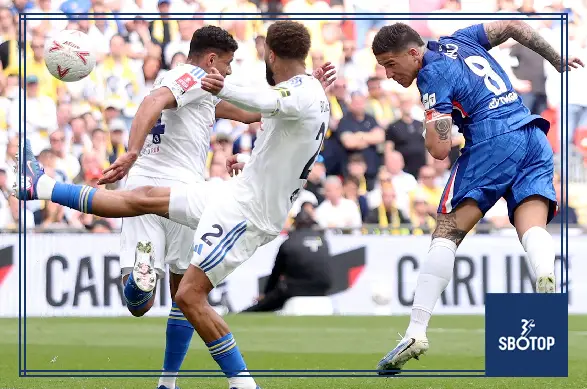
The FA Cup semi-final delivered exactly the kind of tension expected at this stage of the competition, as Chelsea FC secured a hard-fought 1-0 victory over Leeds United FC, booking their place in the final thanks to a decisive header from Enzo Fernández.
It was not a comfortable performance, nor a dominant one, but it was efficient, disciplined, and ultimately successful. In knockout football, especially at Wembley, results matter more than aesthetics.
The match also came against a backdrop of off-pitch disruption following the departure of Liam Rosenior, whose exit added an unusual layer of instability around the fixture narrative.
For Chelsea, it was a step closer to silverware. For Leeds, it was a painful reminder of how fine the margins are at the highest level.
Wembley Pressure and FA Cup Expectations
The FA Cup semi-final stage is always steeped in pressure. Wembley Stadium amplifies every moment, every touch, and every mistake.
Chelsea arrived with the weight of expectation. A club of their stature is measured by trophies, and this competition represented a realistic route to silverware in a season of transition.
Leeds, meanwhile, embraced the underdog role. Their journey to the semi-final had already exceeded expectations, and they entered the match with belief rather than pressure.
That difference in psychological framing shaped much of the early tempo.
Early Stages Tactical Caution and Midfield Battles
The opening 20 minutes were defined by caution. Both sides focused on structure rather than risk. Chelsea attempted to control possession through midfield, circulating the ball patiently and probing for gaps. Leeds United responded with a compact defensive shape, prioritizing discipline over aggression.
The midfield battle was central. Chelsea looked to dominate through technical superiority, while Leeds relied on energy, pressing intensity, and quick transitions.
Clear chances were limited, but tension was constant.
Leeds’ Defensive Organization
Leeds’ approach was built on resilience.
They dropped into a compact block, denying space between the lines and forcing Chelsea wide. Their defensive shape was disciplined, and they worked collectively to close passing lanes.
Whenever Chelsea attempted to accelerate play, Leeds responded with immediate pressure.
This made it difficult for Chelsea to find rhythm in the final third.
Despite limited possession, Leeds remained dangerous on counterattacks, particularly when exploiting space behind advanced Chelsea full-backs.
Chelsea Struggle for Breakthrough
Chelsea’s dominance in possession did not immediately translate into chances.
Their attacking sequences often broke down at the edge of the box, where Leeds defended with numbers and physical commitment.
Crosses were cleared, through balls intercepted, and shots blocked.
Frustration began to grow as Chelsea struggled to convert control into penetration.
However, patience remained key. In knockout football, forcing the game too early can lead to mistakes.
Chelsea maintained structure, trusting that chances would eventually come.
The Decisive Moment Fernández Rises
The breakthrough arrived through precision and timing.
A well-delivered set-piece created the opportunity, and Enzo Fernández rose above the defensive line to power a header into the net.
It was a moment of quality under pressure—calm execution in a high-stakes environment.
The goal changed everything.
Chelsea were now in control of the tie, while Leeds were forced to adjust their approach and chase the game.
Leeds Respond With Urgency
After conceding, Leeds increased their attacking intent.
Their pressing became more aggressive, and they pushed higher up the pitch in search of an equalizer.
This shift opened up the game slightly, creating more transitional moments.
Leeds came close on a couple of occasions, testing Chelsea’s defensive structure and goalkeeper with dangerous attempts.
However, the final touch was missing.
Chelsea’s Game Management
As the match progressed into the second half, Chelsea demonstrated strong game management.
They slowed the tempo when needed, retained possession effectively, and avoided unnecessary risks.
Defensively, they remained organized and compact, ensuring Leeds had limited clear opportunities.
The balance between control and caution was crucial.
Rather than chasing a second goal recklessly, Chelsea focused on protecting their advantage.
Post-Rosenior Context A Shadow Over the Fixture
The match carried an unusual emotional backdrop due to the departure of Liam Rosenior.
Although not directly involved in the fixture, his exit created wider discussion around coaching stability and squad focus.
Such disruptions often influence preparation and mindset, even indirectly.
Leeds, in particular, had to manage external noise while preparing for one of the biggest matches of their season.
Chelsea, meanwhile, remained focused on the task at hand, minimizing distractions.
Midfield Control Defines the Match
One of the defining tactical elements was Chelsea’s midfield control.
They consistently outperformed Leeds in:
- Ball retention
- Passing accuracy under pressure
- Spatial awareness in central areas
This allowed Chelsea to dictate rhythm even without creating constant chances.
Leeds’ midfield worked tirelessly, but the physical and technical gap became more visible as the match progressed.
Defensive Solidity Secures Progress
Chelsea’s defensive unit played a crucial role in the victory.
They remained alert to Leeds’ counterattacks and managed transitions effectively.
Clearances were decisive, positioning was disciplined, and communication remained strong throughout.
Even when Leeds pushed forward in the final stages, Chelsea maintained structure and composure.
The Psychology of a One-Goal Lead
A 1-0 lead in a semi-final is both an advantage and a vulnerability.
For Chelsea, it required careful balance. Too defensive, and pressure increases. Too aggressive, and space opens up.
For Leeds, it provided hope. One moment could change everything.
This psychological tension defined the closing stages of the match.
Every pass, tackle, and clearance carried increased importance.
Key Performers Beyond the Scorer
While Enzo Fernández delivered the decisive goal, Chelsea’s victory was built on collective performance.
The defensive line ensured stability, while midfielders controlled tempo and disrupted Leeds’ rhythm.
Wide players contributed both defensively and offensively, helping maintain balance across the pitch.
Football at this level is rarely about one individual—it is about coordinated execution.
Leeds’ Missed Opportunities
Despite defeat, Leeds can reflect on moments where the match could have shifted.
Their defensive structure worked well for large portions of the game, and they limited Chelsea’s clear chances effectively.
However, inefficiency in attacking moments proved costly.
In knockout football, converting limited chances is often the difference between progress and elimination.
Road to the Final
Chelsea now turn their attention to the FA Cup final, where they will have the opportunity to secure silverware and cap off a demanding season.
Their journey to this stage has required resilience, tactical adaptation, and composure under pressure.
Reaching the final is an achievement in itself—but the ultimate goal remains within reach.
What This Means for Chelsea’s Season
This victory reinforces several key themes in Chelsea’s campaign:
- Ability to win tight matches
- Strength in set-piece situations
- Defensive discipline in knockout scenarios
It also highlights their growing ability to manage pressure in high-stakes games.
What Comes Next for Leeds
For Leeds, the focus now shifts back to domestic priorities.
Despite the disappointment, reaching the semi-final represents progress and a strong cup run.
The challenge moving forward will be maintaining consistency and building on the positives from this campaign.
Also Read:
- SBOTOP: Manchester City’s Treble Charge Continues as They Gain Edge in Premier League Title Battle Over Arsenal
- SBOTOP: Scottish Premiership Title Race Heats Up as Kris Boyd Says Rangers Must Defeat Hearts to Keep Championship Hopes Alive After Dramatic Weekend
- SBOTOP: Hearts Edge Hibernian 2-1 as Blair Spittal’s Late Strike Against Nine Men Sends Visitors Three Points Clear at the Top