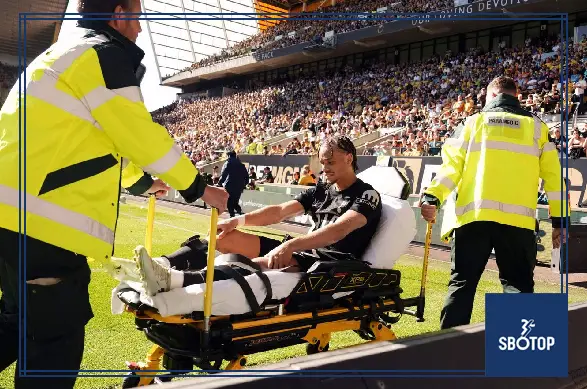
What began as an intense Premier League clash quickly turned into a night of concern for Tottenham Hotspur FC, as their creative midfield star Xavi Simons was forced off on a stretcher during the match against Wolverhampton Wanderers FC.
The incident, which occurred in a fast-paced second half, immediately silenced the away supporters. Simons, who had been central to Tottenham’s attacking rhythm, went down after an awkward challenge and was unable to continue. Medical staff rushed onto the pitch, and after several minutes of assessment, he was stretchered off, visibly distressed.
Initial fears around the severity of the injury were quickly confirmed in the days that followed: Simons will miss the remainder of the season and is also ruled out of the upcoming FIFA World Cup campaign with the Netherlands national football team.
The news has sent shockwaves through both club and international football circles.
The Moment That Changed Everything
The turning point came in a seemingly routine midfield duel. Xavi Simons, known for his agility and quick directional changes, attempted to evade pressure when his leg appeared to twist under contact.
There was no immediate foul that drew dramatic reaction, but the aftermath was clear. He stayed on the ground, clutching his lower leg, before signaling for medical attention.
Players from both sides paused as the seriousness of the situation became apparent. Tottenham’s medical team entered quickly, and after an initial assessment, the decision was made to remove him from the pitch immediately.
For a player who has built his reputation on balance, acceleration, and technical fluidity, the nature of the injury felt particularly cruel.
Tottenham’s Creative Engine Suddenly Removed
At Tottenham Hotspur FC, Simons had become a key figure in the team’s attacking structure. His ability to operate between the lines, link midfield and attack, and unlock compact defenses had made him indispensable in recent months.
His absence leaves a significant tactical gap. Tottenham lose:
- A primary creative midfielder
- A progressive ball carrier in tight spaces
- A player capable of breaking defensive blocks
- A high-intensity pressing contributor
Without him, Tottenham’s attacking rhythm will need recalibration.
How Simons Transformed Tottenham’s Midfield
Since joining Spurs, Simons has evolved into more than just a promising talent. He became the creative heartbeat of the team.
His role combined multiple responsibilities:
- Dropping deep to collect possession
- Driving forward through midfield lines
- Creating chances in the final third
- Linking with forwards in tight attacking spaces
This versatility made him one of the most dynamic midfielders in the Premier League. His presence often dictated how opponents structured their defensive approach.
Without him, Tottenham lose a player who directly influences both build-up play and final execution.
Wolves Match Context and Physical Demands
The fixture against Wolverhampton Wanderers FC was always expected to be physically demanding. Wolves are known for their aggressive pressing structure and compact defensive shape, often forcing opponents into quick decision-making under pressure.
Simons had already been heavily involved in the match before the injury occurred. The pace of transitions, combined with repeated duels in midfield, contributed to a high-intensity environment.
While the exact cause of the injury is still being assessed, early analysis suggests a combination of fatigue and awkward landing during contact may have contributed.
Medical Verdict Season Over and International Dream Delayed
The most significant confirmation came shortly after initial scans were completed: Simons will miss the remainder of the club season and will also be unavailable for the Netherlands’ World Cup campaign.
For the Netherlands national football team, this is a major setback. Simons had been expected to play a central role in their midfield setup during the FIFA World Cup, bringing creativity and energy to their attacking transitions.
Instead, the focus now shifts entirely to recovery and rehabilitation.
Emotional Impact on Player and Club
Injuries of this magnitude are not only physical setbacks but emotional ones as well. For Simons, the timing could not be worse. A breakthrough season at club level, combined with an anticipated international tournament, has now been interrupted abruptly.
At Tottenham, the reaction has been one of concern and support. Teammates and coaching staff recognize his importance not just as a player, but as a personality within the squad.
Moments like this often test team cohesion, especially when a key creative figure is suddenly removed from the equation.
Tactical Repercussions for Tottenham
From a tactical standpoint, Tottenham must now adjust their system. Simons’ role cannot be replaced like-for-like, meaning structural changes are likely.
Possible adjustments include:
- Shifting creativity responsibility to wider attackers
- Increasing midfield rotation to compensate for lost progression
- Relying more on direct attacking transitions
- Adjusting pressing structure to maintain balance without him
The challenge is not just replacing output, but replacing unpredictability.
Simons brought a unique blend of technical flair and tactical intelligence that is difficult to replicate.
Opportunities for Other Players
While the injury is a setback, it also opens opportunities for other squad members at Tottenham Hotspur FC.
Young midfielders and rotation options may now be called upon to step into more prominent roles. This often leads to tactical experimentation, as managers search for new combinations that restore balance.
However, replacing Simons’ influence is not a simple one-to-one adjustment. It requires collective adaptation rather than individual substitution.
Netherlands’ World Cup Plans Disrupted
The absence of Simons is equally significant for the Netherlands national setup. He was expected to be part of a dynamic midfield core heading into the FIFA World Cup.
His profile—technical, mobile, and creative—fits modern international football demands. Without him, the Dutch squad loses a player capable of breaking defensive lines in congested matches.
Coaching staff will now need to reassess midfield combinations and tactical flexibility ahead of the tournament.
The Nature of Football Injuries at Elite Level
Simons’ injury is another reminder of the physical demands placed on elite footballers. The combination of fixture congestion, high-intensity pressing systems, and constant acceleration creates an environment where muscular injuries are increasingly common.
Even in non-contact situations, small imbalances or awkward movements can result in significant damage.
For players who rely heavily on agility and explosive movement, the risk is even higher.
Recovery Timeline and Uncertainty
While the club has confirmed he will miss the rest of the season, the long-term outlook remains focused on full recovery rather than return dates.
Rehabilitation for injuries of this nature typically involves:
- Initial rest and inflammation control
- Gradual strength rebuilding
- Controlled running progression
- Full training reintegration
- Match fitness restoration
However, timelines vary significantly depending on individual response.
What This Means for Tottenham’s Season Ambitions
The timing of Simons’ injury has broader implications for Tottenham’s season goals. Competing at the top level of the Premier League requires depth and consistency, especially during critical phases.
Without one of their most influential creators, Spurs must find new ways to maintain attacking fluidity.
The coming weeks will test their adaptability and squad depth.
Also Read:
- SBOTOP: Mohamed Salah Injury Raises Uncertainty as Liverpool Icon Faces Possible Final Appearance After Hamstring Setback in Crystal Palace Victory
- SBOTOP: Manchester City and Manchester United Drop Points in Women’s Super League as Title Race Implications Intensify
- SBOTOP Shock Exit Looms: Liverpool Midfield Talent Eyes Unexpected Move to Italy This Summer