The intersection of global politics and international sport has once again taken center stage, as Donald Trump publicly backed Iran’s participation in the upcoming FIFA World Cup hosted in North America. His remarks came shortly after confirmation from FIFA and its president Gianni Infantino that Iran would indeed compete—and crucially, play matches on U.S. soil.
What might seem like a routine sporting confirmation has quickly evolved into a complex global conversation involving diplomacy, security, governance, and the unifying power of football. The situation reflects how deeply intertwined sport and politics have become, especially when global tournaments are staged amid geopolitical tension.
FIFA’s Firm Stance Football Must Go On
At the heart of the issue is FIFA’s unwavering position: Iran has qualified for the World Cup and will participate as scheduled. Gianni Infantino made this clear during FIFA’s official congress, emphasizing that the tournament must remain a platform for unity rather than division.
He confirmed that Iran’s matches would take place in the United States, one of the host nations for the 2026 World Cup, alongside Canada and Mexico. This decision came despite rising concerns over political tensions and security risks.
FIFA’s stance is rooted in its long-standing philosophy—football should transcend politics. By confirming Iran’s participation, the governing body reinforced its commitment to sporting merit and global inclusion.
Trump’s Shift From Concern to Acceptance
The involvement of Donald Trump adds a significant political dimension to the story. Initially, his stance on Iran’s participation was uncertain, even cautious. At one point, he expressed concerns about whether it was appropriate for Iran to play in the tournament, citing safety issues.
However, following FIFA’s confirmation, Trump publicly shifted his position.
He stated that he was “OK” with Iran playing and added a simple but telling phrase: “Let them play.”
This statement signaled a willingness to align with FIFA’s decision, despite the broader geopolitical complexities. It also demonstrated how international sporting events can influence political narratives, encouraging a more conciliatory tone—even if only temporarily.
A Tournament Shadowed by Tension
Iran’s participation has been under scrutiny due to ongoing geopolitical tensions, particularly involving the United States and its allies. Military developments earlier in the year raised serious questions about whether Iran would be able—or willing—to compete in a tournament hosted partly by the U.S.
These concerns extended beyond politics into practical issues:
- Player and staff safety
- Travel logistics
- Fan security
- Diplomatic relations
Despite these challenges, FIFA has consistently maintained that the tournament will proceed with all qualified teams.
The situation highlights a recurring dilemma in global sport: how to balance inclusivity with real-world political realities.
The Power of Qualification
It is important to remember that Iran’s place in the World Cup is not symbolic—it is earned. The national team secured qualification through strong performances in the Asian qualifiers, reinforcing their status as one of the region’s top footballing nations.
This achievement carries significant weight. FIFA’s rules are clear: qualification on merit must be respected unless extraordinary circumstances arise.
By upholding Iran’s participation, FIFA is protecting the integrity of its competition. Any deviation could set a precedent with far-reaching consequences for future tournaments.
Trump Infantino and the Politics of Sport
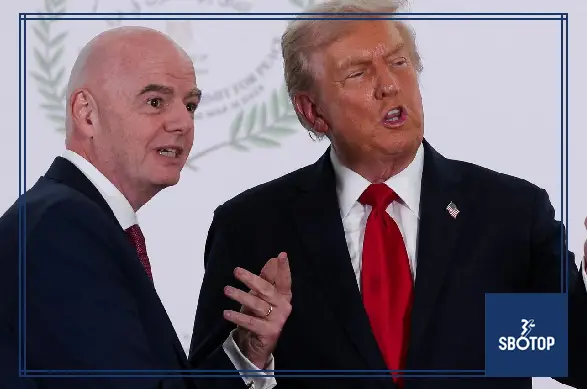
The relationship between Donald Trump and Gianni Infantino has also drawn attention. Their interactions reflect a broader dynamic between political leadership and sports governance.
Infantino’s role is to ensure the smooth operation of the tournament, while Trump, as the leader of a host nation, must address both logistical and political concerns.
In this case, the alignment between the two figures was crucial. Infantino’s confirmation provided a foundation, and Trump’s endorsement added political legitimacy to the decision.
This coordination illustrates how major sporting events often require cooperation across multiple layers of authority.
Iran’s Perspective Participation Amid Uncertainty
From Iran’s standpoint, the situation is equally complex. While the team has qualified and is expected to compete, internal discussions have reportedly considered the implications of playing in the United States.
Concerns include:
- Security for players and officials
- Public perception within Iran
- Diplomatic messaging
Despite these factors, the opportunity to compete on the world stage remains significant. The World Cup is not just a tournament—it is a global platform for national pride and international visibility.
The Role of the World Cup as a Unifying Force
One of FIFA’s core arguments is that football has the power to unite people, even in times of conflict. The World Cup, as the sport’s most prestigious event, embodies this principle.
Historically, the tournament has brought together nations with strained relationships, offering a rare space for peaceful competition.
Trump’s eventual support for Iran’s participation can be seen, in part, as an acknowledgment of this unifying potential.
While political differences remain, the World Cup provides a stage where those differences can be set aside—at least temporarily.
Security Considerations A Real Concern
Despite the optimistic messaging, security remains a central issue. Hosting a team from a politically sensitive nation requires extensive planning and coordination.
Authorities must ensure:
- Safe travel arrangements
- Secure accommodations
- Controlled matchday environments
- Protection for fans and officials
These measures are standard for major tournaments but take on added complexity in this context.
The success of Iran’s participation will depend heavily on how effectively these challenges are managed.
Media Reaction and Global Debate
The announcement has sparked widespread discussion across media outlets and fan communities.
Some view it as a positive step, emphasizing the importance of keeping sport separate from politics. Others question whether the risks involved justify the decision.
The debate reflects broader tensions within global sport—between ideals of unity and the realities of international conflict.
Trump’s involvement has only amplified this conversation, given his influence and the evolving nature of his statements on the issue.
Potential Scenarios During the Tournament
As the World Cup approaches, several scenarios could unfold:
- Smooth Participation
Iran competes without major incidents, reinforcing FIFA’s position. - Heightened Tensions
Political developments influence the atmosphere surrounding matches. - Diplomatic Symbolism
Matches involving Iran become symbolic moments of global attention.
Each scenario carries implications not only for the tournament but also for international relations.
The Broader Impact on Football Governance
This situation also raises questions about the role of governing bodies like FIFA in navigating political challenges.
Should football remain strictly neutral, or should it adapt to geopolitical realities?
FIFA’s decision suggests a commitment to neutrality, but the complexities involved indicate that this stance is not always easy to maintain.
Future tournaments may face similar challenges, making this case an important reference point.
A Defining Moment for the 2026 World Cup
The inclusion of Iran adds a layer of intrigue to the upcoming tournament. Beyond the matches themselves, it introduces a narrative that extends far beyond the pitch.
For players, it is an opportunity to represent their country on the world stage. For fans, it is a chance to witness football’s power to bring people together.
For organizers, it is a test of their ability to manage complexity at the highest level.
Also Read:
- SBOTOP: Mikel Arteta Rages at ‘Unacceptable’ VAR Call as Arsenal Penalty for Eberechi Eze Is Dramatically Overturned in Atletico Clash
- SBOTOP: Mohamed Salah Set for Swift Comeback as Liverpool Star Nears Return from Minor Muscle Injury Before Season’s End
- SBOTOP: Mykhailo Mudryk Set to Challenge Four-Year Doping Ban with Appeal to Court of Arbitration for Sport