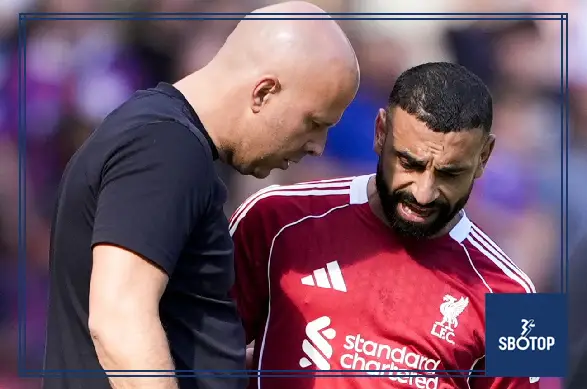
As Liverpool approach the final match of the season, attention has shifted from tactics and team selection to a fascinating discussion surrounding mentality, leadership, and ambition. At the center of the debate is Mohamed Salah, whose candid comments ahead of Liverpool’s season finale sparked widespread reaction across the football world.
Among those weighing in was former Liverpool defender and pundit Jamie Carragher, who admitted he was not surprised by Salah’s remarks, describing the Egyptian forward’s mentality as naturally “self-focused” in the context of elite-level football.
The comments immediately divided opinion. Some supporters viewed Salah’s honesty as evidence of the ruthless mentality required to remain world-class for so many years. Others questioned whether such statements reflect a broader tension between personal ambition and collective responsibility within modern football.
Yet beyond the headlines and social media reactions lies a deeper conversation about what truly drives elite athletes—and whether so-called “selfishness” is actually a necessary ingredient for greatness.
Salah’s Comments and Why They Created Headlines
Ahead of Liverpool’s final match of the campaign, Salah spoke openly about his individual ambitions, performances, and desire to continue achieving personal milestones despite the broader context of the team’s season.
Rather than delivering standard media-trained answers focused entirely on the collective, Salah’s remarks appeared more direct and personal. He discussed goals, standards, and expectations from his own performances, emphasizing the importance of maintaining elite consistency regardless of circumstances.
Those comments quickly became headline material.
Critics interpreted the tone as overly individualistic, suggesting that the forward appeared more concerned with personal recognition than team outcomes. Supporters, however, argued that Salah’s mentality is exactly what has made him one of the most productive players in world football over the past decade.
Carragher’s reaction added another layer to the discussion.
Jamie Carragher’s Perspective
Jamie Carragher’s response was notable not because he criticized Salah harshly, but because he framed the issue differently.
According to Carragher, elite forwards often possess a degree of “selfishness” that separates them from ordinary players. He suggested that this mentality is not necessarily negative—in fact, it may be essential for sustaining world-class standards year after year.
Carragher explained that top attackers are driven by goals, records, and influence. They constantly measure themselves against elite benchmarks, and that obsession naturally creates a self-focused mindset.
Importantly, Carragher emphasized that he was “not surprised” by Salah’s comments because the Liverpool star has always displayed extraordinary ambition and confidence.
Rather than portraying Salah’s mentality as destructive, Carragher appeared to frame it as part of the psychology required to compete at the highest level.
The Thin Line Between Confidence and Selfishness
Football has always struggled with the balance between individual brilliance and collective identity. Fans celebrate players who decide matches single-handedly, yet often criticize those same players when their ambition appears too personal.
This contradiction is especially visible in attacking players.
Strikers and forwards are often expected to be selfish in key moments. The willingness to shoot instead of pass, to take responsibility under pressure, and to constantly chase goals is part of what defines elite attackers.
Salah’s comments reopened this long-standing debate:
Where is the line between confidence and selfishness?
For some, the answer depends entirely on results. When goals are flowing and trophies are won, ambition is celebrated. During difficult periods, however, the same mentality can quickly be portrayed negatively.
Mohamed Salah’s Legacy at Liverpool
Regardless of opinion surrounding his comments, Salah’s contribution to Liverpool is beyond dispute.
Since arriving at Liverpool F.C., Salah has transformed into one of the most influential players in Premier League history. His goals, assists, consistency, and durability have been central to Liverpool’s success in domestic and European competitions.
He has delivered:
- Premier League titles
- Champions League success
- Domestic cup victories
- Record-breaking goal tallies
- Iconic moments in major matches
Very few players sustain elite productivity for as long as Salah has.
That consistency is not accidental. It comes from relentless standards, discipline, and internal pressure—traits often associated with highly self-driven athletes.
Why Elite Athletes Think Differently
Carragher’s comments highlight an important truth about elite sport: the mentality required to reach the top is often misunderstood from the outside.
The greatest athletes in history frequently possess traits that can appear obsessive or self-centered:
- Constant focus on personal performance
- Obsession with improvement
- Refusal to accept decline
- Relentless pursuit of records
In football, attackers especially are judged by measurable outcomes—goals, assists, and decisive moments.
This naturally creates a mindset where personal performance becomes inseparable from identity.
Salah’s mentality fits this pattern. He demands high standards from himself because his career has been built on extraordinary consistency rather than occasional brilliance.
Liverpool’s Transition Period Adds Context
The timing of Salah’s comments also matters. Liverpool are currently navigating a period of transition, with squad evolution, tactical adjustments, and questions surrounding the future direction of the team.
In such moments, individual leadership becomes more visible.
Veteran players often respond differently during transitional periods. Some become more vocal. Others focus inward, attempting to maintain their own standards amid uncertainty.
Salah’s comments may reflect that environment. Rather than lowering expectations, he appears determined to maintain elite output regardless of broader instability.
That mindset can either inspire teammates—or create tension depending on interpretation.
Fans Divided Over the Debate
Unsurprisingly, Liverpool supporters have been divided in their reaction.
Some fans admire Salah’s honesty and competitive mentality. They view his self-belief as part of what makes him indispensable to the team.
Others worry that excessive focus on individual goals can undermine collective harmony, especially during periods when the squad requires unity and shared accountability.
Social media amplified both perspectives, with debates quickly evolving into broader discussions about leadership styles in modern football.
Yet many supporters ultimately returned to the same conclusion: Salah’s performances over the years have earned him credibility.
The Pressure of Being Liverpool’s Main Star
Being Liverpool’s biggest attacking figure brings enormous pressure.
Every season, expectations surrounding Salah are extraordinary:
- Score consistently
- Deliver in big matches
- Lead younger players
- Maintain fitness
- Handle media scrutiny
Few players carry such responsibility for so many consecutive years.
This pressure can naturally create a stronger focus on personal standards because the team often depends on individual excellence during difficult periods.
Salah’s comments may therefore reflect not arrogance, but responsibility.
Carragher’s Understanding of Dressing Room Psychology
As a former Liverpool captain and long-time defender, Carragher understands dressing room dynamics better than most pundits.
His reaction suggests he sees Salah’s mentality as normal within elite football environments.
Great forwards, Carragher implied, are rarely passive personalities. They are driven by ego, ambition, and belief in their own ability to decide matches.
Without those traits, they may never reach the highest level.
This perspective is important because it separates emotional public reaction from the psychological realities of elite competition.
Modern Football and Individual Branding
Another factor shaping this debate is the evolution of football culture itself.
Modern players are not only athletes—they are global brands. Social media, sponsorships, and international fanbases increase focus on individual narratives.
As one of football’s biggest global stars, Salah operates in an environment where personal achievements receive enormous attention.
This does not necessarily conflict with team success, but it does create a more individual-centered media culture than previous eras.
Comments that once might have passed unnoticed now become global headlines within minutes.
Leadership Through Performance
One argument frequently made in Salah’s defense is that he leads primarily through performance rather than emotional speeches or public gestures.
Not all leaders communicate the same way.
Some inspire through vocal authority. Others lead through consistency, professionalism, and relentless output.
Salah’s leadership style appears rooted in example:
- Elite physical preparation
- Consistent availability
- High productivity
- Competitive mentality
For many teammates, that kind of leadership can be just as influential as traditional captaincy behavior.
The Final Match and What It Represents
As Liverpool prepare for the final game of the season, Salah’s comments add extra intrigue to the occasion.
The match now represents more than just another fixture. It becomes a symbolic conclusion to a season filled with transition, expectation, and scrutiny.
For Salah personally, it is another opportunity to reinforce why he remains one of the world’s elite forwards.
For Liverpool, it is a chance to close the season positively while preparing for the next chapter.
Also Read:
- SBOTOP Premier League 2026/27 Season Guide: Key Dates Fixture Release Final Day and Sky Sports Live Schedule Breakdown
- SBOTOP Trubin Speaks Out: Benfica’s No.1 on Mourinho De Zerbi and His Iconic Champions League Moment
- SBOTOP: Havertz Strike Secures Narrow Arsenal Win Over Burnley as Gunners Edge Closer to Premier League Glory Amid Red Card Debate