Manchester United have officially appointed Michael Carrick as their permanent manager following an impressive interim spell that dramatically reshaped the club’s season. The decision was confirmed on Friday local time after an extensive internal review involving several high-profile European candidates.
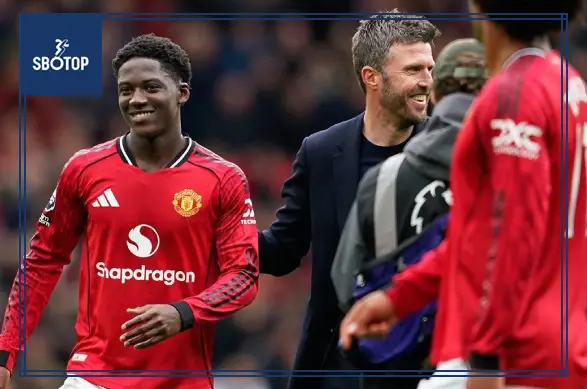
Carrick’s impact went far beyond results. He restored stability inside the dressing room, rebuilt confidence across the squad, and played a crucial role in the development of key players—most notably Kobbie Mainoo and Bruno Fernandes. Strong backing from senior players is also believed to have been a decisive factor in the club’s final decision.
The appointment marks a clear shift in direction for Manchester United following the turbulent Ruben Amorim era, which was defined by inconsistency and growing tension within the squad.
How Michael Carrick Changed the Culture at Manchester United
Since returning to the dugout in January, Carrick immediately focused on rebuilding communication between players and coaching staff. One of his first steps was holding individual conversations with players to understand their preferred roles and tactical comfort zones.
While Carrick already had a strong internal idea of each player’s best position, he deliberately chose to listen first before making final tactical decisions. This approach created a more collaborative environment within the squad.
The contrast with the previous regime under Ruben Amorim was quickly noticed. Where Amorim was described as more distant in pursuit of discipline, Carrick adopted a more open and interactive leadership style. Many players reportedly felt more trusted and more confident under his guidance.
That trust soon translated into strong dressing room support. Senior figures such as Casemiro, Mason Mount, Amad Diallo, and Bruno Fernandes all publicly or privately expressed approval of Carrick’s methods during the second half of the season.
Carrick also earned praise for his detailed video analysis sessions. Players highlighted his ability to simplify complex tactical ideas, whether in small group meetings or full squad briefings.
One particularly symbolic moment came during the Munich Air Disaster remembrance in February, when Carrick instructed the club’s staff to prepare a dedicated historical presentation for the squad. The gesture was widely appreciated for helping younger and foreign players better understand Manchester United’s identity and culture.
Kobbie Mainoo: The Clearest Proof of Carrick’s Impact
The most visible transformation under Carrick has been the resurgence of Kobbie Mainoo. The 21-year-old midfielder had previously found himself on the fringes of the squad during Amorim’s tenure and was even close to leaving the club.
Mainoo reportedly requested a loan move in both the summer and winter windows in search of regular first-team football after struggling for minutes.
Napoli made two serious attempts to sign him, while Chelsea also explored a permanent deal worth around £40 million. However, Mainoo ultimately never pushed for a permanent departure from Old Trafford.
His situation changed after Amorim’s dismissal. Darren Fletcher initially reintegrated him into the squad before Carrick took full advantage of his abilities.
Under Carrick, Mainoo has flourished into one of the Premier League’s standout young midfielders. His market value has surged, and Manchester United now consider him untouchable for the foreseeable future.
A new long-term contract running until 2031 further underlines how central he has become to the club’s future plans. Ironically, only months earlier, during a dramatic 4-4 draw with Bournemouth, his family had drawn attention with a “Free Kobbie Mainoo” shirt message—symbolising how close he once was to leaving.
The Long Road to Carrick’s Appointment
Despite his success, Carrick’s path to becoming permanent manager was far from straightforward. Manchester United conducted a wide-ranging search before settling on their final choice.
Thomas Tuchel was initially considered but committed his future to the England national team. Carlo Ancelotti was also unavailable after signing a new contract with Brazil.
Julian Nagelsmann emerged as a strong internal candidate, supported by recruitment director Christopher Vivell and the club’s data analytics department. However, his commitment to Germany ahead of the World Cup made negotiations difficult.
The club also evaluated Andoni Iraola and revisited interest in Unai Emery. Yet concerns over experience, compensation costs, and tactical transition risks ultimately weighed against them.
In the end, Carrick’s performances carried the most influence. Football director Jason Wilcox reportedly received overwhelmingly positive feedback from the dressing room after consulting players about Carrick’s potential promotion.
The final decision was made by Sir Jim Ratcliffe during an executive meeting in Monaco on 12 May, with full agreement from the club’s hierarchy.
Carrick’s Impressive Statistics Seal the Deal
Manchester United’s decision was strongly supported by Carrick’s outstanding numbers during his interim spell.
Across 17 matches in charge, Carrick recorded 12 wins, 3 draws, and only 2 defeats. During that period, United collected 39 points—more than any other Premier League team, including a three-point advantage over Arsenal.
Over a full season equivalent, that form translates to an estimated 87-point pace, typically enough to compete for a league title.
Defensively and offensively, the improvement was also significant. United’s goal difference shifted from -10 in the previous season to +19 under Carrick’s guidance—the club’s best return since the Ole Gunnar Solskjær era five years earlier.
Most importantly, Carrick guided Manchester United back into the UEFA Champions League, reinforcing belief that he is the right figure to lead the club into a long-term rebuilding project.
The Next Challenge for Michael Carrick at Manchester United
Now officially in charge, Carrick faces his biggest test yet: maintaining squad harmony while transforming Manchester United into genuine contenders for major European and domestic honours.
With expectations rising and pressure increasing, the club will look to build on the momentum created during his transformative interim spell.
ALSO READ :