


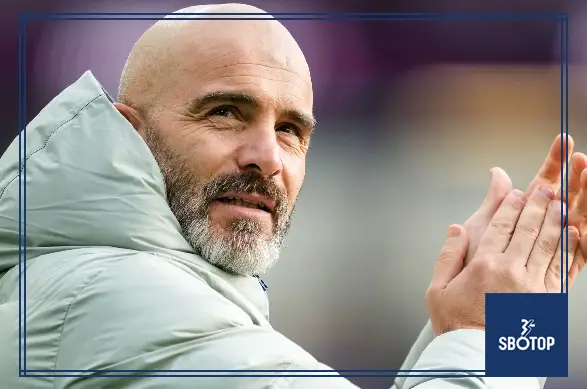
Manchester City are reportedly intensifying discussions with Enzo Maresca as the club begins preparing for a future beyond Pep Guardiola. The former Chelsea manager has emerged as one of the strongest candidates to potentially inherit one of the most demanding jobs in world football, sparking major debate about the next era at the Etihad Stadium.
Few managerial transitions in modern football carry as much significance as replacing Guardiola. The Spanish coach has transformed Manchester City into a dominant force in English and European football, redefining tactical standards and setting unprecedented expectations. Whoever follows him will inherit not only a world-class squad, but also the pressure of maintaining a footballing empire built on perfection.
Maresca’s growing connection to the role is therefore more than a routine managerial rumor—it represents the possibility of continuity, evolution, and perhaps the beginning of a new tactical chapter for Manchester City.
The Guardiola Legacy at Manchester City
Pep Guardiola’s influence on Manchester City cannot be overstated.
Since arriving at the club, he has reshaped every aspect of the football operation, from recruitment and tactical identity to training methodology and positional philosophy. Under Guardiola, City evolved from title contenders into one of the most sophisticated football teams ever assembled.
The club’s dominance has not been based solely on trophies, but on the consistency of performance and the evolution of tactical innovation.
Replacing such a figure is an enormous challenge.
Managers who follow legendary coaches often struggle under the weight of comparison, especially when expectations remain unchanged. At Manchester City, success is now measured not simply by winning, but by controlling matches, dominating possession, and competing for every major trophy available.
Why Enzo Maresca Fits the Conversation
Enzo Maresca’s name has become increasingly linked with Manchester City because of both his tactical philosophy and his previous connection to the club.
Having previously worked within City’s coaching structure, Maresca understands the principles that define Guardiola’s football model. This familiarity makes him a logical candidate for continuity.
Unlike an external appointment requiring complete structural adaptation, Maresca already possesses insight into the tactical culture, expectations, and operational standards at Manchester City.
That alignment matters enormously.
Modern elite football clubs increasingly prioritize continuity over dramatic reinvention when planning managerial succession.
Tactical Similarities Between Maresca and Guardiola
One of the main reasons Maresca is viewed as a serious candidate is his tactical approach.
His teams often emphasize:
- Controlled possession
- Positional rotations
- Structured pressing systems
- Build-up play from the back
- Midfield overloads
These principles closely mirror the footballing identity Guardiola established at Manchester City.
However, Maresca is not simply an imitation of Guardiola. He also brings his own tactical nuances, particularly regarding vertical progression and transitional balance.
This combination of familiarity and individuality could make him an appealing long-term option.
The Challenge of Following a Football Icon
Replacing Guardiola is arguably one of the most difficult managerial tasks in modern football.
The challenge is not only tactical but psychological.
Players, supporters, and executives have become accustomed to an extraordinary level of success and consistency. Any dip in performance—even temporary—would invite immediate scrutiny.
Maresca would therefore face enormous pressure from day one.
Every tactical decision, substitution, and result would inevitably be compared to Guardiola’s standards.
History shows that succeeding legendary managers is rarely straightforward, regardless of coaching quality.
Why Continuity Matters for Manchester City
Manchester City’s leadership structure has consistently prioritized long-term planning.
Rather than waiting for sudden change, the club often prepares succession strategies years in advance. This proactive approach reduces instability and helps maintain competitive continuity.
Appointing someone familiar with the club’s tactical ecosystem would minimize disruption.
Players already trained in positional football principles would not need to completely relearn systems or structures.
This continuity could help preserve performance levels during a managerial transition period.
Maresca’s Growth as a Manager
Enzo Maresca’s coaching reputation has grown steadily over recent years.
While his managerial journey has included both successes and challenges, he has consistently been recognized for tactical intelligence and progressive football ideas.
His ability to organize possession-based systems while maintaining defensive structure has drawn attention across Europe.
Importantly, Maresca has also shown adaptability—a trait essential for managing at elite level.
Modern football managers must balance philosophy with pragmatism, especially when competing across multiple competitions.
The Chelsea Experience and Lessons Learned
Maresca’s time at Chelsea contributed significantly to his development as a top-level coach.
Managing a club with enormous expectations and constant scrutiny provides valuable experience, even when results fluctuate.
Chelsea’s environment requires managers to handle pressure, media attention, dressing room dynamics, and tactical demands simultaneously.
These experiences likely strengthened Maresca’s understanding of elite football management.
If he were to move to Manchester City, those lessons could prove invaluable in handling one of football’s most demanding environments.
Player Relationships and Dressing Room Authority
One of the most important factors in elite football management is authority within the dressing room.
Manchester City’s squad contains world-class players accustomed to winning major trophies. Managing such a group requires tactical credibility, communication skills, and emotional intelligence.
Maresca’s previous involvement with City’s structure may help establish trust more quickly.
Familiarity with certain players and staff could ease the transition process, particularly during the early stages of a new managerial era.
The Tactical Future of Manchester City
A managerial change always raises questions about tactical evolution.
Would Manchester City continue playing the same possession-heavy style? Or would a new coach introduce different principles?
With Maresca, the expectation would likely be evolution rather than revolution.
The core identity—control, positional discipline, technical superiority—would probably remain intact. However, subtle adjustments in pressing intensity, attacking transitions, or defensive structure could emerge over time.
This gradual evolution might be the most sustainable path forward.
Recruitment and Squad Planning
Managerial succession also affects recruitment strategy.
Manchester City’s transfer model is closely aligned with tactical philosophy. Players are recruited not only for talent but also for suitability within specific positional systems.
If Maresca were appointed, the club could maintain continuity in recruitment profiles.
Technical midfielders, versatile defenders, and intelligent positional players would likely remain priorities.
This consistency would reduce the need for large-scale squad restructuring.
Pressure From Supporters and Media
Few clubs generate as much attention as Manchester City, particularly during moments of transition.
Supporters will naturally compare any future manager to Guardiola’s achievements. Media scrutiny would also intensify immediately.
Maresca’s tactical decisions, communication style, and results would all be analyzed constantly.
Handling this pressure is essential for long-term success.
Elite management increasingly requires emotional resilience as much as football intelligence.
European Expectations Will Remain Massive
Manchester City’s ambitions extend far beyond domestic competition.
The UEFA Champions League remains central to the club’s identity and expectations. Any successor to Guardiola would immediately face pressure to compete for Europe’s biggest prize.
Knockout football presents unique tactical challenges that test managerial adaptability and in-game decision-making.
Maresca’s ability to manage high-pressure European nights would therefore become one of the defining aspects of his tenure if appointed.
The Importance of Timing
Timing is critical in football succession planning.
Manchester City must carefully decide when the Guardiola era should end and how smoothly the transition can occur.
An early announcement could create instability, while delayed planning risks uncertainty.
By reportedly holding discussions with Maresca now, the club appears focused on long-term preparation rather than reactive decision-making.
This reflects the organizational structure that has defined City’s modern success.
Can Anyone Truly Replace Guardiola
Perhaps the most important question surrounding this situation is whether any manager can truly replace Guardiola.
The answer may be no—not directly.
Guardiola’s influence on football extends beyond trophies. He changed tactical thinking across the sport and built one of the most dominant club systems in history.
Rather than replacing Guardiola, Manchester City may instead be seeking someone capable of carrying forward his principles while gradually building a new identity.
Maresca’s profile fits that objective more naturally than many alternatives.
The Emotional Dimension of Transition
Football transitions are not purely tactical or strategic—they are emotional.
Players develop strong relationships with managers, especially under long-term projects like Guardiola’s. Supporters also associate eras of success with specific personalities.
A managerial change therefore affects club identity as much as results.
Maresca would need to balance respect for Guardiola’s legacy with the confidence to establish his own authority and direction.
That balance is often one of the hardest parts of succeeding a legendary coach.
Also Read:
- SBOTOP Manchester City Transfer Watch: Latest Deals Contract Talks Loan Moves and Rumour Updates Shaping the Squad
- SBOTOP: Kasper Schmeichel Calls Time on Legendary Career as Celtic and Leicester Hero Officially Retires from Football
- SBOTOP: Alexia Putellas Set for Barcelona Exit as London City Lionesses Enter ‘Positive Talks’ for Blockbuster Move








