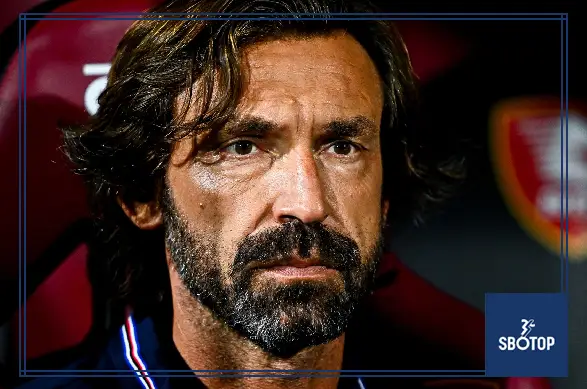
Few players in football history have represented elegance, intelligence, and composure quite like Andrea Pirlo. The legendary Italian midfielder built his career on vision, timing, technical brilliance, and tactical understanding rather than physical explosiveness. Yet in a revealing discussion about the modern game, Pirlo acknowledged that football has evolved dramatically from the era in which he dominated Europe.
Speaking about the rise of speed-driven systems and the tactical transformation of elite football, Pirlo highlighted how clubs like Paris Saint-Germain have embraced a new generation of athletic, high-intensity football built around pace, pressing, and rapid transitions.
According to Pirlo, modern teams increasingly prioritize players capable of operating at extreme physical intensity while maintaining tactical intelligence. The game, he explained, no longer allows much time on the ball, and every tactical phase now unfolds at much greater speed.
His reflections provide a fascinating comparison between football’s past and present—and reveal why modern tactical evolution has changed how clubs build squads, develop players, and compete at the highest level.
Pirlo’s Era Football Built on Rhythm and Control
During Pirlo’s peak years, football was still heavily influenced by positional rhythm, patient buildup play, and technical orchestration from deep midfield areas. Pirlo himself became the symbol of that style. Whether playing for AC Milan, Juventus, or the Italy national football team, he controlled matches through anticipation and passing intelligence rather than raw athleticism.
The game in that period often allowed elite playmakers to dictate tempo through:
- Long passing sequences
- Positional patience
- Slower midfield buildup
- Tactical spacing
- Controlled possession structures
Midfielders were expected to think faster than opponents, but the physical speed of matches remained different from today’s relentless intensity.
Modern Football’s Obsession with Speed
Andrea Pirlo comments about needing “players who are fast” capture one of the defining truths of modern football.
Speed now influences nearly every tactical phase of elite competition.
Modern teams prioritize:
- Fast transitions
- High pressing intensity
- Explosive counter-attacks
- Rapid defensive recovery
- Athletic positional rotations
The physical pace of matches has accelerated dramatically over the last decade.
Teams no longer simply attack quickly—they defend quickly, recover quickly, and reorganize quickly.
This evolution has transformed recruitment priorities across world football.
Why PSG Represent the New Football Model
Pirlo specifically referenced Paris Saint-Germain as an example of how modern football has shifted toward speed-oriented tactical systems.
PSG’s squad construction increasingly reflects modern football priorities:
- Dynamic attackers
- Rapid wide players
- Aggressive pressing structures
- High-tempo transitions
- Athletic midfield coverage
Rather than relying solely on technical artistry, elite teams now combine technical quality with explosive physical capability.
PSG’s evolution demonstrates how even traditionally possession-focused clubs have adapted to football’s changing tactical demands.
The Decline of Time and Space in Midfield
One of Pirlo’s most important observations concerns the disappearance of time and space in central areas.
Modern pressing systems have dramatically reduced the freedom once enjoyed by deep-lying playmakers.
Today’s midfielders face:
- Immediate pressure after receiving possession
- Aggressive counter-pressing
- Constant positional tracking
- Reduced passing windows
- Faster defensive recoveries
This means technical skill alone is no longer enough.
Players must now process information and execute decisions at extraordinary speed.
Tactical Pressing Changed Everything
The rise of coordinated pressing systems has perhaps been the biggest tactical revolution in modern football.
Teams coached by managers such as:
- Pep Guardiola
- Jürgen Klopp
- Luis Enrique
have accelerated football’s physical and tactical demands significantly.
Modern pressing systems require:
- Constant movement
- Collective defensive intensity
- Immediate transition reactions
- High physical endurance
Pirlo’s era valued tactical intelligence enormously, but the physical workload demanded from modern midfielders is now even greater.
Why Speed Matters More Than Ever
When Pirlo discusses speed, he is not referring only to sprinting ability.
Modern football values multiple forms of speed:
-
Physical Speed
Players must cover ground rapidly and sustain high-intensity movement throughout matches.
-
Decision-Making Speed
The game now unfolds so quickly that players must process tactical information instantly.
-
Positional Speed
Teams constantly rotate shape and structure, requiring immediate adaptation.
-
Transition Speed
Winning and losing possession now triggers immediate tactical reactions.
This combination defines elite football today.
Could Pirlo Thrive in the Modern Game
One fascinating question raised by Pirlo’s comments is whether players of his style would still dominate modern football.
The answer is likely yes—but with adaptation.
Pirlo possessed qualities that remain timeless:
- Elite vision
- Tactical intelligence
- Passing precision
- Spatial awareness
However, modern tactical systems would likely require him to operate within more aggressive pressing structures and higher physical demands.
Even the greatest playmakers today must contribute defensively and athletically at much higher levels than in previous eras.
PSG’s Evolution Beyond Star Power
Pirlo’s praise for PSG also reflects how the French giants have evolved strategically.
For years, PSG were often viewed primarily as a collection of superstar individuals. However, modern European football increasingly rewards collective tactical structure over isolated brilliance.
PSG’s newer direction emphasizes:
- Tactical balance
- Positional intensity
- Collective pressing
- Faster transitions
- Team-wide athleticism
This evolution mirrors broader trends across elite football.
The Physical Demands on Modern Midfielders
The modern midfielder faces arguably the most difficult role in football.
Players are now expected to:
- Press aggressively
- Build attacks calmly
- Defend transitions
- Cover wide spaces
- Maintain technical quality under pressure
This combination requires extraordinary physical preparation.
Sports science, nutrition, and conditioning now play much larger roles in football development than during Pirlo’s playing career.
Why Tactical Intelligence Still Matters
Despite football’s increasing athletic demands, Pirlo emphasized that intelligence remains essential.
Speed without tactical understanding creates chaos rather than control.
Elite teams still require players capable of:
- Reading positional spaces
- Anticipating transitions
- Controlling tempo
- Making efficient decisions
Modern football therefore rewards complete players—those capable of combining technical quality, tactical understanding, and athletic intensity.
Football’s Shorter Attention Spans
Another major difference between eras involves how quickly matches now change.
Modern football produces rapid momentum swings due to:
- Aggressive pressing
- Faster attacking transitions
- High defensive lines
- Increased vertical play
Games can transform completely within seconds.
Pirlo’s era often featured more controlled tactical rhythms, whereas modern matches frequently feel chaotic and explosive.
The Influence of Data and Analytics
Modern football evolution has also been shaped by advanced analytics and sports science.
Clubs now analyze:
- Sprint distances
- Pressing intensity
- Positional efficiency
- Recovery speed
- Transition effectiveness
This data-driven environment encourages teams to prioritize athletic profiles capable of sustaining high-intensity systems.
Pirlo’s comments reflect awareness that football has become far more physically optimized than during previous generations.
Why Young Players Must Adapt Earlier
Today’s young footballers develop in completely different environments compared to Pirlo’s generation.
Academy systems now prioritize:
- Athletic explosiveness
- Pressing coordination
- Tactical flexibility
- Positional adaptability
Young players are introduced to high-intensity football concepts far earlier in their development.
The modern game leaves little room for specialists unable to contribute across multiple phases.
The Emotional Side of Football Evolution
Pirlo’s reflections also carry emotional significance for many football fans.
Supporters often romanticize older football eras characterized by slower buildup, elegant playmakers, and greater creative freedom.
Modern football’s relentless pace can sometimes feel less artistic and more mechanical.
However, the modern game also offers:
- Extraordinary athletic spectacle
- Tactical sophistication
- Faster transitions
- Greater collective organization
Football has not necessarily lost beauty—it has simply evolved into a different form.
PSG’s Role in the Future of European Football
Pirlo’s praise suggests PSG may represent where elite football is heading strategically.
The most successful modern teams increasingly combine:
- Technical quality
- Tactical flexibility
- Physical explosiveness
- Collective pressing intensity
This blend appears essential for competing consistently at the highest European level.
PSG’s continued evolution may therefore influence how other major clubs build future squads.
Pirlo’s Lasting Relevance in Football Culture
Even as football evolves, Pirlo remains one of the game’s most respected tactical thinkers.
His perspective carries unique credibility because he succeeded through intelligence rather than athletic dominance.
When a player of Pirlo’s style acknowledges the growing importance of speed and physical intensity, it reinforces just how dramatically football has changed.
Yet his legacy also reminds modern football that technical brilliance and tactical intelligence remain irreplaceable qualities.
Also Read:
- SBOTOP: Manchester United Edge Closer to Midfield Reinforcement as Ederson Nears Atalanta Exit
- SBOTOP: Manchester United’s Financial Report Shows £16.7m Cost of Ruben Amorim Exit Despite Signs of Long-Term Recovery
- SBOTOP: Manchester City Shift Midfield Focus as Elliot Anderson Emerges Ahead of Enzo Fernandez in Transfer Plans