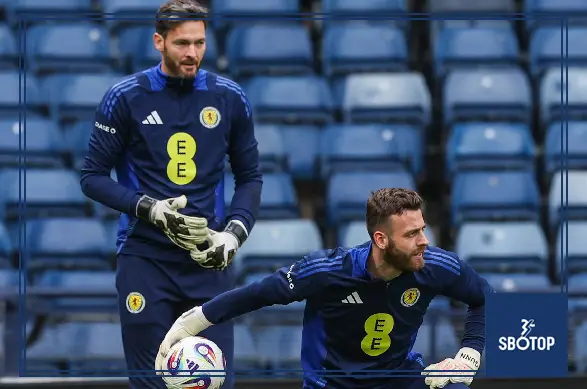
As anticipation builds ahead of the 2026 FIFA World Cup, every decision made by national team coaches carries significance. While squad number announcements are often viewed as a routine administrative task, they can reveal valuable insights into a team’s hierarchy, tactical plans, and leadership structure. Scotland’s latest squad number reveal has generated considerable discussion after goalkeeper Angus Gunn was handed the prestigious No. 1 jersey ahead of veteran shot-stopper Craig Gordon.
The decision may appear symbolic on the surface, but within international football, the allocation of the No. 1 shirt traditionally signals a manager’s confidence in a goalkeeper’s role as the team’s primary option. By awarding the jersey to Gunn, Scotland has provided an indication of how the goalkeeping hierarchy could look as the nation prepares for one of the biggest tournaments in its modern football history.
The announcement highlights an intriguing battle between experience and continuity, youth and leadership, and the challenges national team managers face when balancing loyalty with long-term planning. As Scotland looks ahead to the global stage, the decision represents more than a simple number assignment—it reflects the evolution of a squad eager to compete among the world’s elite.
Scotland’s Return to Football’s Biggest Stage
For much of modern football history, Scotland has been recognized as a nation with a rich footballing tradition. Passionate supporters, historic rivalries, and a proud sporting culture have long defined Scottish football.
However, qualification for major international tournaments has not always come easily. For years, Scottish supporters endured disappointment as the national team struggled to secure places at football’s biggest events. Recent progress has helped restore optimism and belief throughout the country.
The road to the 2026 World Cup represents another important chapter in Scotland’s football journey. The tournament’s expanded format has increased opportunities for nations outside the traditional global powers, but qualification remains highly competitive.
As Scotland continues building momentum, every aspect of squad preparation receives increased attention. Squad numbers may not determine results on the field, but they often provide clues regarding internal team dynamics and coaching decisions.
The assignment of the No. 1 jersey to Angus Gunn is one such example.
Understanding the Importance of the No. 1 Shirt
In football culture, certain squad numbers carry special meaning. The No. 10 shirt is often associated with creativity and playmaking brilliance. The No. 9 jersey traditionally belongs to the team’s primary striker.
For goalkeepers, the No. 1 shirt represents status, responsibility, and trust.
Historically, the goalkeeper wearing the No. 1 jersey has been viewed as the first-choice option entering a tournament. While modern football has become more flexible regarding squad numbers, the symbolism remains powerful.
Players recognize the significance. Supporters understand the message. Media outlets frequently interpret such decisions as indicators of a manager’s preferred starting lineup.
Therefore, Scotland’s decision to award the shirt to Angus Gunn naturally attracted attention.
Although squad numbers alone do not guarantee playing time, they often reflect current managerial thinking and provide insight into the team’s internal structure.
Angus Gunn’s Journey to Scotland’s Number One
The story of Angus Gunn’s rise within Scottish football is both unique and compelling.
Born into a footballing family, Gunn inherited a strong sporting background. His father, Bryan Gunn, enjoyed a successful professional career and became a respected figure in British football.
From an early age, Angus demonstrated the qualities necessary to succeed as a goalkeeper. His technical ability, composure under pressure, and athleticism attracted attention from top clubs.
Through years of development, he refined his game and gained valuable experience competing at high levels of club football. Exposure to demanding environments accelerated his growth and prepared him for international competition.
When he committed to representing Scotland at senior level, many observers viewed the decision as a significant boost for the national team.
Since then, Gunn has worked steadily to establish himself within Scotland’s setup. His performances have demonstrated consistency, confidence, and reliability—qualities highly valued in international football.
Receiving the No. 1 shirt can therefore be interpreted as recognition of both his contributions and his growing importance to the national team.
Craig Gordon’s Enduring Legacy
While Gunn’s selection has generated headlines, it is impossible to discuss Scotland’s goalkeeping situation without acknowledging Craig Gordon’s remarkable career.
Few footballers demonstrate the resilience Gordon has shown throughout his journey.
Over the years, he has overcome serious injuries, career setbacks, and intense competition to remain a respected figure within Scottish football. His determination has earned admiration from teammates, coaches, and supporters alike.
Gordon’s experience is invaluable. Having spent years competing at the highest levels, he brings leadership and professionalism that extend beyond matchday performances.
Many younger players benefit from his guidance and example. Within any national team environment, experienced veterans often play critical roles in maintaining standards and supporting squad unity.
Even if Gunn currently occupies the top position in the hierarchy, Gordon remains an essential component of Scotland’s setup.
His influence cannot be measured solely through appearances or squad numbers.
Experience Versus Continuity
One of the most challenging decisions facing any international manager involves balancing experience against long-term continuity.
Veteran players provide leadership, composure, and proven reliability. Younger players offer longevity, athleticism, and opportunities for future development.
Scotland’s goalkeeping situation perfectly illustrates this dilemma.
Craig Gordon possesses unmatched experience and has repeatedly delivered outstanding performances throughout his career.
Angus Gunn, meanwhile, represents the future while also providing current quality and consistency.
Managers must consider numerous factors when making such decisions:
- Recent performances
- Fitness levels
- Tactical suitability
- Communication skills
- Distribution ability
- Long-term planning
- Squad chemistry
The assignment of the No. 1 shirt suggests Scotland views Gunn as the preferred choice moving forward, but it does not diminish Gordon’s value to the squad.
Instead, it reflects an effort to establish continuity heading toward one of football’s most important competitions.
The Evolution of Modern Goalkeeping
Goalkeeping has changed dramatically over the past two decades.
In previous eras, shot-stopping ability was often considered the primary requirement for success. While that skill remains essential, modern goalkeepers must contribute in numerous additional ways.
Today’s elite goalkeepers are expected to:
- Build attacks from the back
- Maintain possession under pressure
- Communicate defensive instructions
- Sweep behind defensive lines
- Handle high-intensity pressing systems
- Adapt to varying tactical approaches
These expanded responsibilities have transformed the position.
National team managers increasingly evaluate goalkeepers based on how they fit within broader tactical systems rather than focusing exclusively on traditional shot-stopping metrics.
Gunn’s skill set aligns well with many modern football principles. His comfort in possession and ability to participate in build-up play may have influenced Scotland’s planning as the team prepares for elite international competition.
What the Decision Means for Team Dynamics
Squad number announcements can influence perception both inside and outside the dressing room.
However, successful teams understand that competition is healthy.
Goalkeepers in particular must maintain professionalism regardless of selection outcomes. The position requires mental strength, patience, and readiness to perform whenever called upon.
Scotland’s coaching staff will undoubtedly emphasize unity and collective responsibility.
Whether starting or serving as backup, every player contributes to tournament preparation.
Healthy competition between Gunn and Gordon can strengthen the squad by encouraging high standards and accountability.
Rather than creating division, such competition often improves performance across the entire goalkeeping group.
Scotland’s Defensive Foundation
Goalkeepers rarely succeed in isolation.
Their effectiveness depends heavily on the defensive structure surrounding them.
Scotland has worked hard to establish a disciplined defensive identity capable of competing against stronger opponents. Organization, communication, and teamwork remain central pillars of the team’s approach.
The relationship between goalkeeper and defenders is especially important in international football, where preparation time is limited compared to club football.
Trust becomes essential.
Goalkeepers must understand defensive tendencies, anticipate movements, and communicate effectively during high-pressure situations.
By clarifying the goalkeeping hierarchy early, Scotland may be seeking to strengthen these relationships ahead of crucial World Cup fixtures.
Consistency can help build familiarity and confidence throughout the defensive unit.
Also Read: