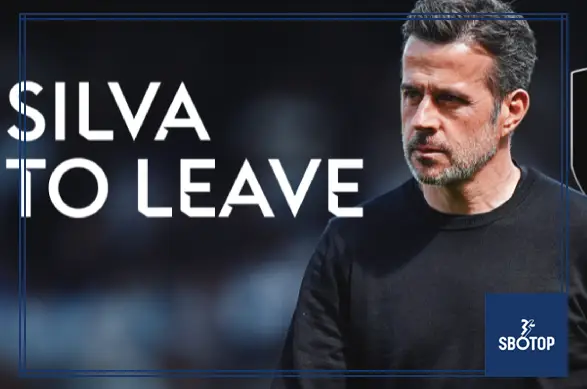
Few managerial appointments in recent Fulham history have delivered the stability, progress, and renewed ambition that Marco Silva brought to Craven Cottage. Since arriving in West London, the Portuguese coach has transformed the club from a side struggling for consistency into a respected Premier League competitor capable of challenging established teams on any given weekend.
Now, as speculation surrounding a potential move to Benfica continues to grow, Silva’s future has become one of the most discussed topics among Fulham supporters and football observers alike. Reports linking the experienced coach with a return to Portugal have fueled questions about whether his successful spell in England is nearing its natural conclusion.
While no managerial departure is ever straightforward, the situation has prompted reflection on Silva’s achievements, Fulham’s development under his leadership, and what both parties might face if their partnership comes to an end.
The story is not merely about a coach leaving a club. It is about the legacy of a manager who helped reshape expectations and restore belief within an ambitious football institution.
Arriving at Fulham During a Critical Period
When Marco Silva accepted the challenge of managing Fulham, the club found itself at a crossroads. The team had experienced the frustrations of promotion and relegation cycles, struggling to establish long-term stability in the Premier League.
Supporters wanted more than brief appearances in the top flight. They wanted sustainability, identity, and progress.
Silva arrived with a reputation built through experiences at multiple clubs across Europe and England. His managerial journey had included moments of success, setbacks, and valuable lessons. Fulham represented an opportunity not only to rebuild a team but also to strengthen his own standing within the game.
From the outset, he focused on creating a clear footballing philosophy. Rather than relying solely on survival tactics, Silva emphasized proactive football, structured attacking patterns, and tactical discipline.
His vision quickly began to influence every aspect of the club.
Establishing a Winning Culture
One of Silva’s most important achievements was creating a culture centered on accountability and ambition. Successful clubs are rarely built solely through tactics. They are built through standards that extend beyond matchdays. Training intensity, professionalism, preparation, and consistency all became key components of Fulham’s identity under Silva.
Players understood their responsibilities.
Competition for places increased.
Expectations rose.
This cultural shift proved essential in transforming Fulham into a side capable of competing at a higher level.
Rather than accepting the role of underdog, the club gradually developed the confidence to challenge stronger opponents and dictate matches against teams with greater financial resources.
Championship Dominance and Promotion Success
One of the defining moments of Silva’s Fulham tenure came during the club’s promotion-winning campaign.
The team produced an attacking style of football that entertained supporters while delivering outstanding results. Goals flowed regularly, performances were consistent, and Fulham emerged as one of the most dominant teams in the division.
Promotion itself was a significant achievement, but the manner in which it was secured was equally impressive.
The squad displayed tactical flexibility, resilience, and attacking creativity throughout the campaign.
Silva’s ability to maximize the strengths of his players while maintaining a clear collective structure became one of the hallmarks of his coaching approach.
The success of that season laid the foundation for what followed.
Changing Expectations in the Premier League
Many newly promoted clubs enter the Premier League focused solely on survival. Silva encouraged Fulham to aim higher.
While avoiding relegation remained important, he wanted the team to compete with confidence rather than fear.
This mentality became evident through Fulham’s performances against some of the league’s most established clubs. The team demonstrated an ability to control possession, create chances, and execute game plans effectively.
Under Silva, Fulham became increasingly difficult to predict.
They could defend compactly when necessary.
They could press aggressively.
They could dominate possession or attack quickly in transition.
This versatility helped the club establish itself as a respected Premier League side rather than merely a temporary participant.
Developing Individual Players
Another significant aspect of Silva’s tenure has been his impact on player development.
Several members of the Fulham squad improved considerably under his guidance.
Young players gained confidence and experience.
Established professionals rediscovered consistency.
New signings adapted effectively to the club’s tactical demands.
Silva’s coaching style emphasized improvement at both the individual and collective levels.
Rather than relying on a small core group, he worked to ensure that multiple players could contribute across a long and demanding season.
This approach strengthened squad depth and increased competition within the team.
For many players, Silva’s leadership represented an important stage in their professional growth.
Building a Distinct Tactical Identity
One reason Silva earned widespread respect during his time at Fulham was his commitment to a recognizable football identity.
His teams generally sought balance.
Attacking football remained important, but defensive organization was never neglected.
The structure allowed Fulham to compete effectively against opponents with vastly different playing styles.
When facing stronger teams, discipline and tactical awareness became priorities.
Against teams of similar level, Fulham often looked to impose themselves and take initiative.
This adaptability made the club more competitive and reduced reliance on a single tactical formula.
Supporters appreciated not only the results but also the style in which those results were achieved.
The Growing Benfica Connection
As Silva’s reputation continued to rise, it was perhaps inevitable that larger opportunities would emerge.
Benfica’s reported interest represents a particularly intriguing possibility.
The Portuguese giants possess a rich history, passionate fanbase, and consistent ambitions in both domestic and European competitions.
For Silva, a return to Portugal in charge of one of the nation’s most successful clubs would represent a major professional opportunity.
Managing Benfica offers unique advantages.
The club regularly competes for league titles.
European football is expected rather than hoped for.
Resources and infrastructure support long-term competitiveness.
These factors naturally make the position attractive to ambitious managers.
As speculation grows, discussions surrounding Silva’s future have become increasingly intense.
Why Benfica Might View Silva as the Ideal Candidate
From Benfica’s perspective, Silva brings several qualities that align with the club’s ambitions.
First, he possesses extensive managerial experience.
Second, he understands Portuguese football and its unique pressures.
Third, his success in the Premier League has strengthened his reputation internationally.
Benfica traditionally seeks managers capable of balancing immediate success with long-term development.
Silva’s track record suggests he can achieve both.
His ability to develop players, manage expectations, and implement a coherent football philosophy makes him an appealing candidate.
Additionally, his experience in England has exposed him to one of the most competitive football environments in the world.
That experience could prove valuable in Portugal and European competition alike.
Fulham’s Potential Challenge Without Silva
Should Silva depart, Fulham would face a significant challenge.
Replacing a successful manager is rarely easy.
The club would need to identify a coach capable of maintaining momentum while introducing fresh ideas.
Continuity would be particularly important.
Changing direction too dramatically could disrupt the progress achieved in recent seasons.
Fulham’s leadership would likely prioritize a candidate who shares many of Silva’s core principles, including tactical organization, player development, and long-term planning.
Finding such a replacement is possible, but it requires careful decision-making.
Managerial transitions often shape a club’s trajectory for years.
The Emotional Impact on Supporters
Football supporters naturally develop strong connections with successful managers.
Silva’s relationship with Fulham fans has been built on mutual respect.
Supporters have witnessed tangible progress during his tenure.
They have seen the team compete with greater confidence and ambition.
As a result, the prospect of his departure creates mixed emotions.
Many fans understand the appeal of managing Benfica.
At the same time, they recognize the importance of Silva’s contributions to Fulham’s recent success.
Such situations often generate appreciation rather than resentment.
If Silva ultimately leaves, many supporters will likely remember his tenure positively.
Measuring Silva’s Legacy
Managerial legacies are often judged by trophies, but success can take many forms.
Silva’s impact at Fulham extends beyond silverware.
He helped establish stability.
He improved competitiveness.
He elevated expectations.
Perhaps most importantly, he gave supporters confidence that the club could consistently perform at a higher level.
These achievements carry lasting value.
Future managers may benefit from foundations that Silva helped create.
The culture, structure, and standards developed during his tenure could continue influencing the club long after his departure.
What Comes Next for Silva?
If Silva chooses to leave Fulham, the next chapter of his career will attract considerable attention.
Managing Benfica would present new challenges and opportunities.
Success would be measured differently.
Winning titles would become an expectation.
European performances would face intense scrutiny.
Pressure levels would increase significantly.
However, Silva has demonstrated throughout his career that he is willing to embrace difficult challenges.
His managerial journey has rarely followed the easiest path.
Instead, he has consistently sought opportunities to test himself at higher levels.
A move to Benfica would align with that pattern.
The Timing of the Decision
One of the most important aspects of this situation is timing.
Both Silva and Fulham must consider their next steps carefully.
For the manager, clarity regarding his future allows for proper planning.
For the club, certainty enables recruitment, squad planning, and long-term strategic decisions.
Prolonged uncertainty can create distractions.
Therefore, reaching a resolution before key preparation periods becomes increasingly important.
Regardless of the outcome, professionalism will likely guide the process.
Silva and Fulham have built a productive relationship based on mutual respect.
That foundation should help ensure any transition occurs smoothly.
Also Read: