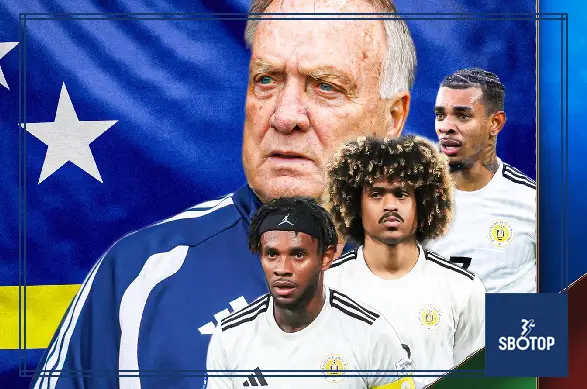
The Curaçao national football team has become one of the most fascinating stories of the 2026 FIFA World Cup. Representing the smallest nation ever to reach the tournament stage, Curaçao’s journey is more than a sporting achievement—it is a symbol of ambition, structure, and belief overcoming geographical limitations.
Guided by experienced manager Dick Advocaat, the team has transformed from a modest Caribbean side into a disciplined and competitive unit capable of challenging far larger footballing nations. Their participation alone has already captured global attention, but their performances suggest they are not in the tournament merely to make up the numbers.
This is the story of how Curaçao rose, what makes them unique, and what to expect from football’s most remarkable underdog at World Cup 2026.
A Small Nation on the Biggest Stage
Curaçao is one of the smallest nations ever to qualify for a FIFA World Cup. With a limited population and modest football infrastructure, the idea of competing against global giants once seemed unrealistic.
Yet football has a history of producing surprises, and Curaçao’s qualification represents one of the most impressive modern examples of long-term planning paying off.
Unlike traditional football powerhouses, Curaçao does not rely on vast talent pools. Instead, their success comes from organization, scouting, and strategic leadership.
Their journey to the World Cup has already inspired smaller nations across the world, proving that structure can sometimes matter more than size.
The Role of Dick Advocaat
Much of Curaçao’s rise is linked to the appointment of Dick Advocaat, a manager with decades of experience in international football.
Known for his tactical discipline and ability to build structured teams, Advocaat brought a sense of professionalism and clarity to the squad.
His approach focused on:
- Defensive organization
- Tactical discipline
- Efficient counterattacking football
- Maximizing experienced players
- Building team unity
Advocaat’s presence gave Curaçao something they had previously lacked: belief combined with structure.
Under his leadership, the team became harder to break down, more confident in possession, and more efficient in crucial moments.
Qualification A Historic Achievement
Curaçao’s qualification campaign was built on consistency rather than flashy dominance.
They did not overwhelm opponents with possession or attacking numbers. Instead, they relied on:
- Compact defensive structure
- Smart transitions
- Set-piece efficiency
- Mental resilience
Matches were often tight, with small margins deciding outcomes. But Curaçao repeatedly found ways to stay competitive.
Their qualification became a defining moment in Caribbean football history.
For a nation of their size, reaching the World Cup was not just success—it was transformation.
Tactical Identity How Curaçao Plays
Curaçao’s tactical identity is based on discipline and structure rather than individual brilliance.
They typically operate in a compact shape, often prioritizing defensive stability before attacking ambition.
Key tactical features include:
-
Compact Defensive Block
Curaçao rarely leaves large gaps between defensive lines. This makes them difficult to break down, even for stronger opponents.
-
Quick Transitions
When possession is won, the team looks to move the ball forward quickly, often targeting space behind defensive lines.
-
Set-Piece Strength
Given their physical approach, set pieces are a key weapon.
-
Team Cohesion
Rather than relying on stars, Curaçao plays as a unified collective.
This style may not always be dominant, but it is highly competitive in tournament football.
Squad Identity and Player Profile
Curaçao’s squad is unique because many players were developed or based in European leagues while still representing a small Caribbean nation.
This blend of backgrounds gives them:
- European tactical experience
- Caribbean athleticism and creativity
- Strong mental resilience
Many players operate in lower or mid-tier European leagues, where they gain valuable competitive experience.
This balance helps them remain organized while still capable of surprising stronger teams.
World Cup 2026 Group Challenge
At the 2026 FIFA World Cup, Curaçao faces one of the toughest challenges in international football: competing against nations with far greater resources.
Placed in a group with stronger opponents, their strategy will likely focus on:
- Staying compact defensively
- Minimizing mistakes
- Capitalizing on counterattacks
- Targeting set-piece opportunities
In tournaments like the World Cup, underdogs often succeed not by dominating games, but by controlling key moments.
Curaçao understands this better than most.
Strengths That Make Them Dangerous
Despite being the smallest nation in the tournament, Curaçao has several strengths that make them a difficult opponent.
-
Defensive Discipline
They rarely lose shape, even under pressure.
-
Tactical Experience
Advocaat’s influence ensures the team understands game management.
-
Physical Commitment
Curaçao players compete intensely in duels.
-
Team Unity
There is a strong sense of identity and shared purpose.
These qualities may not guarantee dominance, but they allow the team to stay competitive in almost any match.
Weaknesses They Must Overcome
Of course, challenges remain.
Curaçao’s limitations include:
-
Limited Squad Depth
Injuries or suspensions could significantly impact performance.
-
Lower Possession Control
They often spend long periods without the ball.
-
Creativity in Attack
Breaking down elite defensive teams remains a challenge.
-
Experience at Elite Level
While improving, they still lack consistent exposure to top-tier international pressure.
To succeed, Curaçao must maximize efficiency in every moment.
Key Players to Watch
While Curaçao operates as a collective, several players stand out:
- Experienced midfielders who control tempo
- Defenders with strong aerial ability
- Forwards who thrive on counterattacks
Their success will depend less on individual brilliance and more on coordination.
However, tournament football often produces unexpected heroes—and Curaçao may rely on exactly that.
The Psychological Factor
One of Curaçao’s most important strengths is psychological resilience.
As underdogs, they enter matches with less pressure than their opponents.
This allows them to:
- Play more freely in key moments
- Stay mentally stable under pressure
- Exploit opponent mistakes
In World Cup history, mental strength has often been just as important as technical ability.
Curaçao’s mindset could become one of their greatest weapons.
Global Attention and Inspiration
Curaçao’s presence in the World Cup has already inspired smaller nations around the world.
Their qualification shows that:
- Size does not determine success
- Strategic planning matters
- Experienced leadership is crucial
- Consistency can overcome limitations
Football fans often root for underdogs, and Curaçao fits perfectly into that narrative.
Their journey adds emotional depth to the tournament and brings diversity to the global stage.
What Success Looks Like for Curaçao
For most nations, success at the World Cup means winning the trophy.
For Curaçao, success looks different.
Their realistic goals include:
- Scoring their first World Cup goals
- Securing points in group matches
- Competing closely with stronger teams
- Making history with a knockout-stage push
Even a single victory would be considered historic.
The Bigger Picture
Curaçao’s rise is not just about football—it reflects broader changes in the global game.
Modern football allows smaller nations to compete through:
- Better scouting networks
- International player development
- Tactical education
- Global coaching exchange
The gap between small and large nations is still present, but it is narrower than ever before.
Curaçao is living proof of that evolution.
Also Read: