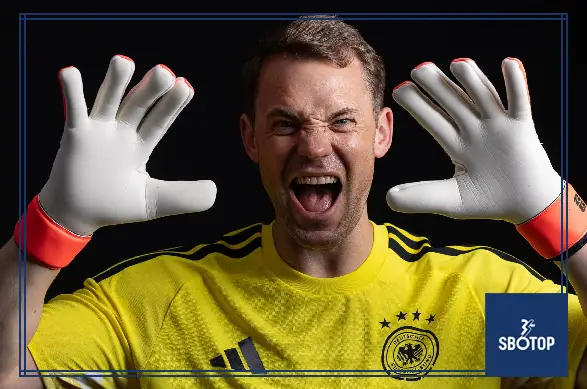
The return of Manuel Neuer to the Germany national football team for the 2026 FIFA World Cup has become one of the most debated storylines in modern international football. At 40 years old, the legendary goalkeeper is stepping back onto the world’s biggest stage, not just to add another chapter to his extraordinary career, but potentially to define how that career will ultimately be remembered.
For some, this is a courageous decision from a generational talent refusing to fade quietly. For others, it is a risky gamble that could expose a fading legend to the unforgiving spotlight of elite competition. The question is simple but powerful: will Neuer’s return enhance his reputation, or place his legacy under unnecessary strain?
A Career That Redefined Goalkeeping
To understand the magnitude of Manuel Neuer return, it is essential to reflect on what he has already achieved.
Neuer is widely regarded as one of the most influential goalkeepers in football history. His style changed how the position is played. Rather than staying rooted to his goal line, he became a “sweeper-keeper,” actively participating in build-up play and defensive coverage far outside the penalty area.
This evolution allowed Germany to play with a higher defensive line and greater tactical flexibility.
Over the years, Neuer has built a reputation based on:
- Exceptional shot-stopping ability
- Command of the penalty area
- Elite distribution under pressure
- Tactical intelligence
- Leadership in high-stakes matches
His influence extended beyond Germany. Clubs and national teams around the world adapted their goalkeeping expectations based on his style.
The Golden Moment 2014 World Cup Glory
The defining highlight of Neuer’s international career came during the 2014 FIFA World Cup, when Germany lifted the trophy in Brazil.
Neuer’s performances were instrumental in that triumph. His ability to act as an additional defender allowed Germany to maintain control against some of the world’s strongest attacking teams.
In that tournament, he was not just a goalkeeper—he was a tactical weapon.
That victory cemented his place among the greats and established him as a leader of one of Germany’s most successful football generations.
The Passage of Time and Physical Demands
At 40, Neuer is now operating in a phase of his career where experience is balanced against natural physical decline.
Goalkeeping is often considered one of the positions where players can extend their careers longer than outfield players. However, modern football has increased the demands placed on goalkeepers significantly.
Today’s elite goalkeeper must:
- React quickly to high-speed attacks
- Participate in build-up play
- Cover large defensive spaces
- Maintain concentration for long periods
- Handle intense pressing systems
Even for a player like Neuer, these demands become more challenging with age.
His return raises legitimate questions about whether experience can fully compensate for reduced physical sharpness.
Why Germany Still Trusts Neuer
The decision to bring Neuer back is not based on nostalgia alone. The German national team values stability and leadership, especially in tournament environments.
Younger goalkeepers may offer long-term potential, but Neuer brings something different: proven experience under pressure.
His advantages include:
- Deep understanding of international tournaments
- Leadership in defensive organization
- Ability to control high-pressure moments
- Psychological influence on teammates
- Tactical familiarity with Germany’s system
For a team aiming to compete at the highest level, these qualities are difficult to replace.
Tactical Role in Modern Germany
Under the current German system, the goalkeeper is more than a last line of defense. He is an active participant in shaping the team’s structure.
Neuer’s role includes:
- Starting attacks from deep positions
- Acting as a sweeper behind the defensive line
- Organizing defenders during transitions
- Controlling tempo during build-up phases
This tactical approach aligns naturally with Neuer’s skill set. Few goalkeepers in world football are as comfortable playing outside their penalty area.
However, the question remains whether he can maintain the physical intensity required to execute this role consistently throughout a tournament.
The Risk Factor What Could Go Wrong
Every legendary comeback carries risk, and Neuer’s return is no exception.
The potential dangers include:
-
Reaction Speed Decline
At the highest level, even a fraction of a second can determine outcomes. Younger attackers may exploit any reduction in reflex speed.
-
High Defensive Line Exposure
Germany’s tactical system may leave space behind the defense, increasing pressure on Neuer to act as a sweeper.
-
Tournament Fatigue
The World Cup schedule demands consistency across multiple high-intensity matches.
-
Public Expectation Pressure
As a legend, every mistake will be magnified significantly more than for a younger player.
A single error in a knockout match could dramatically shift public perception.
The Legacy Question
The central debate is not whether Neuer is still a great goalkeeper. His legacy is already secure.
The real question is how this final chapter will be remembered.
There are two possible narratives:
-
Scenario 1 The Heroic Ending
Neuer leads Germany deep into the tournament, producing decisive saves and leadership moments. His experience helps stabilize the team, and he retires with his legacy enhanced.
-
Scenario 2 The Risky Decline
Physical limitations become exposed, leading to costly mistakes in crucial matches. Instead of a celebration of greatness, his final chapter becomes a cautionary tale about staying too long at the top.
Football history is filled with both outcomes.
Competition Within the Squad
Germany also has emerging goalkeepers pushing for the starting role. This internal competition adds another layer of pressure.
Younger keepers bring:
- Greater athletic freshness
- Long-term development potential
- Faster recovery speed
- Less physical wear
However, they lack the tournament experience and leadership that Neuer provides.
This creates a difficult decision for the coaching staff: trust the future or rely on proven experience.
The Emotional Dimension
Neuer’s return is not purely tactical—it is emotional.
Players of his generation often struggle with the transition away from international football. The World Cup represents the ultimate stage, and the desire to end a career there is powerful.
For Neuer, this tournament could represent:
- One final leadership role
- A chance to compete at the highest level again
- A personal farewell to international football
- A symbolic passing of the torch
These emotional factors often influence decisions as much as physical ones.
What Success Would Look Like
Success for Neuer and Germany does not necessarily require winning the tournament.
It could include:
- Strong defensive performances
- Leadership in knockout matches
- Key saves in critical moments
- Stability under pressure
- A dignified and respected farewell
If Neuer performs consistently well, his legacy may actually grow stronger regardless of the final result.
The Bigger Picture for Germany
Germany is in a transitional phase, blending experienced players with a new generation of talent.
Neuer’s presence offers:
- Stability during transition
- Guidance for younger defenders
- Tactical continuity
- Mental strength in high-pressure matches
His influence extends beyond saves and statistics—it shapes the mentality of the entire team.
Also Read: