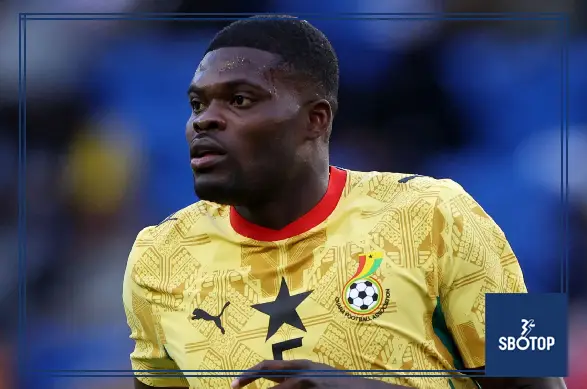
Ghana’s preparations for the World Cup 2026 have been thrown into unexpected turmoil after reports confirmed that midfielder Thomas Partey has been denied a Canadian visa ahead of the team’s opening fixture. The development has created immediate concern within the Ghana camp, raising questions about squad planning, midfield balance, and the broader administrative challenges that can influence performance on football’s biggest stage.
For a team that relies heavily on experience and structure in midfield, the absence—or even uncertainty—surrounding a player of Partey’s caliber is a significant blow. The situation has quickly become one of the most discussed off-field stories surrounding Ghana’s World Cup campaign.
A Sudden Setback Before Kick-Off
Ghana’s World Cup journey was expected to begin with optimism and focus, as the squad had been carefully assembled over months of preparation. However, the visa issue involving Thomas Partey has disrupted that momentum.
According to reports, Partey’s application for entry into Canada, where Ghana’s opening fixture is scheduled, was not approved despite an appeal process. While details remain limited, the decision effectively places his participation in serious doubt for the first match of the tournament.
This kind of administrative setback is rare at such a late stage, especially for a player of international standing. It has left Ghana’s coaching staff scrambling to assess alternatives and adjust tactical plans.
Why Thomas Partey Matters to Ghana
Thomas Partey is not just another squad member—he is one of Ghana’s most influential midfielders.
Over the years, he has built a reputation as a complete central midfielder capable of controlling tempo, breaking up opposition attacks, and launching forward transitions. His experience in top-level European football has made him a key figure in the national team setup.
For Ghana, Partey’s role typically includes:
- Defensive shielding in midfield
- Ball recovery and interception
- Transitioning play from defense to attack
- Leadership in high-pressure situations
- Maintaining structure against stronger opponents
Losing him, especially in a crucial opening fixture, significantly alters the team’s balance.
The Timing of the Decision
The timing of the visa denial is particularly damaging. With the World Cup schedule already underway or about to begin, teams typically enter a phase of tactical fine-tuning and mental preparation.
At this stage, coaches avoid major disruptions. Every training session is focused on refining set pieces, building chemistry, and finalizing match strategies.
A late administrative issue involving a key player creates uncertainty that extends beyond the pitch. It affects planning, confidence, and squad morale.
Even if Ghana is able to appeal further or resolve the issue, the uncertainty itself becomes a distraction.
Ghana’s Midfield Structure Under Threat
Ghana’s tactical system relies heavily on a strong midfield core. Partey often acts as the anchor, allowing more advanced players to take creative risks.
Without him, Ghana may be forced to restructure their midfield entirely.
Possible adjustments include:
- Deploying a more defensive double pivot
- Shifting a center-back into midfield coverage
- Relying on younger, less experienced midfielders
- Adjusting formation to compensate for lack of control
Each of these options comes with trade-offs. Replacing Partey is not simply about swapping one player for another—it requires a shift in how the entire team operates.
Coaching Staff Response and Tactical Concerns
Ghana’s coaching staff now faces one of its toughest challenges in the lead-up to the tournament. Preparing a team for a World Cup opener is already a complex task, but losing a key player to off-field issues adds another layer of difficulty.
The immediate focus is likely to be on:
- Maintaining team stability
- Preparing alternative midfield combinations
- Ensuring psychological readiness among players
- Avoiding overreaction to the situation
Coaches often emphasize “control the controllables,” but situations like visa denials fall outside that category, making them especially frustrating.
The staff must now ensure that the rest of the squad remains focused on the match ahead.
Squad Depth Comes Into Focus
One of the biggest talking points emerging from this situation is Ghana’s squad depth.
At major tournaments, depth is often as important as star power. Teams that succeed are usually those capable of replacing key players without significant drop-off in performance.
If Partey is unavailable, Ghana will need to rely on:
- Backup midfielders stepping into starting roles
- Tactical adjustments to reduce midfield exposure
- Increased defensive contribution from wide players
This situation tests whether Ghana’s squad has been built with sufficient balance to handle unexpected disruptions.
Psychological Impact on the Team
Beyond tactics, the psychological effect of such news cannot be ignored.
Players preparing for a World Cup match operate under immense pressure already. The sudden uncertainty surrounding a key teammate can influence morale in several ways:
- Concern over team strength
- Disruption of planned strategies
- Increased pressure on replacements
- Emotional frustration within the squad
However, experienced teams often use adversity as motivation. Ghana will need strong leadership within the dressing room to ensure the situation does not negatively impact performance.
Fans React to the News
Unsurprisingly, Ghanaian fans have reacted strongly to the development.
For supporters, Thomas Partey represents one of the team’s most recognizable and dependable figures. News of his visa denial has triggered frustration, confusion, and concern about how the team will cope.
Some fans have expressed anger at the administrative process, while others are calling for calm and urging the team to focus on the match regardless of personnel issues.
Social media discussions have also highlighted the importance of contingency planning in international football, especially when playing tournaments across multiple countries.
The Broader Issue of Travel and Tournament Logistics
This incident also highlights a broader issue in international football: the complexity of travel logistics during global tournaments.
Modern World Cups often span multiple host nations, each with its own immigration policies and administrative requirements. Even elite athletes are not immune to visa regulations and bureaucratic delays.
Football federations are generally responsible for ensuring that all documentation is processed in advance, but unexpected complications can still arise.
Situations like this raise questions such as:
- How early should federations finalize visa applications?
- Should there be streamlined processes for elite athletes?
- How can federations reduce risk of last-minute denials?
These are important considerations for future tournaments.
Ghana’s Possible On-Pitch Adjustments
If Thomas Partey is unavailable for the opening fixture, Ghana may consider several tactical approaches.
One possibility is adopting a more conservative midfield setup, prioritizing defensive stability over creativity. This could involve:
- A deeper-lying double pivot
- Reduced pressing intensity
- Faster counterattacking strategy
Another option is to push creative responsibility higher up the pitch, relying more on attacking midfielders or wingers to generate chances.
However, none of these fully replicate the control and balance that Partey typically provides.
Leadership Void in Midfield
Beyond technical ability, Partey also plays a leadership role.
He is often responsible for organizing the midfield shape, communicating during transitions, and guiding younger teammates through high-pressure moments.
Without him, Ghana may need to identify alternative leadership figures within the squad. This could fall to senior defenders or other experienced midfielders, but the adjustment is not always seamless.
Leadership in midfield is often subtle but crucial, especially in tournament football where margins are small.
What This Means for Ghana’s World Cup Campaign
While this issue directly affects the opening fixture, its impact could extend beyond a single match.
A poor start in a World Cup group stage can significantly influence qualification chances. Losing a key player early—whether temporarily or permanently—can shift the trajectory of an entire campaign.
For Ghana, the priority now is damage control:
- Secure a positive result in the opener
- Maintain squad morale
- Avoid tactical overcompensation
- Stay focused on long-term objectives
How the team responds to this challenge may define their tournament.
Also Read: