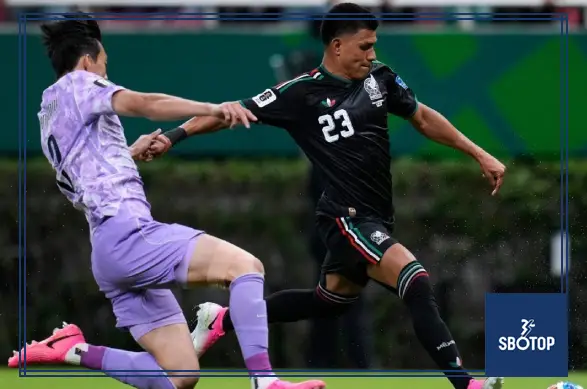
Mexico continued their strong start at the 2026 FIFA World Cup with another important victory, defeating South Korea 1-0 in a tightly contested Group A match. The game, held at Estadio Guadalajara on Friday (19/6/2026), was decided by a second-half goal from Luis Romo, sealing another three points for El Tri.
The result not only strengthened Mexico’s position at the top of the group but also produced a series of fascinating records and statistical milestones that highlight their growing momentum in the tournament.
Luis Romo’s Goal Secures Another Big Win for El Tri
The decisive moment of the match came in the second half when Luis Romo capitalised on a mistake from South Korean goalkeeper Kim Seung-gyu. The error proved costly, allowing Mexico to take the lead in a match that had remained tightly balanced.
South Korea struggled to recover after conceding, despite enjoying long spells of possession and attempting to push forward in search of an equaliser.
With this victory, Mexico now sit comfortably at the top of Group A with six points from two matches, putting them in a strong position to advance to the knockout stage.
Mexico’s Defensive Consistency Reaches New Heights
One of the most impressive aspects of Mexico’s performance at this World Cup has been their defensive discipline, especially in the early stages of matches.
Several key defensive records were highlighted after the match:
- Mexico have now gone 13 consecutive World Cup matches without conceding in the first half
- The last time they conceded before halftime was in 2010 against Argentina
- Goalkeeper Raúl Rangel has recorded clean sheets in his first two World Cup appearances
- Rangel becomes only the second Mexican goalkeeper to achieve this feat after Guillermo Ochoa in 2014
This level of consistency has become one of the foundations of Mexico’s success in the tournament so far.
South Korea’s Possession Dominance Still Not Enough
Despite the defeat, South Korea actually showed strong control in terms of ball possession. The Taegeuk Warriors recorded 58% possession against Mexico, continuing a trend of controlling the tempo in their matches.
In their previous game against Czech Republic, they also recorded 61% possession, making this a notable statistical pattern.
Key insights from South Korea’s performances:
- Over 55% possession in both group matches
- Strong midfield control but lack of final-third efficiency
- Difficulty converting possession into clear scoring chances
- One of the most possession-dominant Asian teams in recent World Cup history
Interestingly, this marks only the second time since 1966 that an Asian team has recorded such high possession figures in their opening two World Cup matches, the previous instance being in 2002.
Mexico’s Historic Qualification Achievement
Beyond the win itself, Mexico also achieved a historic milestone in World Cup qualification dynamics.
For the first time in history, Mexico became the earliest team to secure qualification to the knockout stage based on chronological results in the tournament.
This achievement highlights their consistency and ability to deliver results early in the group stage, avoiding the pressure of must-win final matches.
Additional context around their qualification record:
- Mexico have reached the knockout stage in 8 of their last 9 World Cup appearances
- The only failure came in the 2022 edition
- Their current form suggests a strong rebound from that disappointment
Mexico’s Winning Streak Reaches New Territory
Another remarkable storyline from this match is Mexico’s growing winning streak in World Cup competition.
With the victory over South Korea, El Tri have now recorded three consecutive World Cup wins for the first time in their history.
This winning run includes:
- Victory over Saudi Arabia in the 2022 World Cup group stage
- Wins against South Africa and South Korea in the 2026 tournament
This progression signals a shift in Mexico’s mentality and competitive consistency on the world stage.
Tactical Discipline Behind Mexico’s Success
Mexico’s success has not only come from individual moments but also from strong tactical organisation. Their ability to remain compact defensively while taking advantage of key opportunities has been crucial.
Some tactical strengths observed include:
- Structured defensive shape in midfield transitions
- Effective pressing in wide areas
- Quick exploitation of opponent mistakes
- Strong game management after taking the lead
- Balanced approach between attack and defense
This tactical maturity has helped them maintain consistency across both matches so far.
South Korea Still Have Hope Despite Setback
While the defeat is a setback, South Korea remain in a strong position to qualify for the knockout stage. With three points from two games, they still control their own destiny heading into the final group match.
However, improvement will be needed, especially in converting possession dominance into attacking efficiency.
Conclusion: Mexico Emerging as a Serious Contender
Mexico’s 1-0 victory over South Korea was more than just another group-stage win—it was a statement of intent. With defensive solidity, historic qualification records, and growing confidence, El Tri are quickly emerging as one of the most stable teams in the 2026 World Cup.
As the tournament progresses, their ability to maintain this level of performance will determine whether they can turn early momentum into a deep run on football’s biggest stage.
ALSO READ :