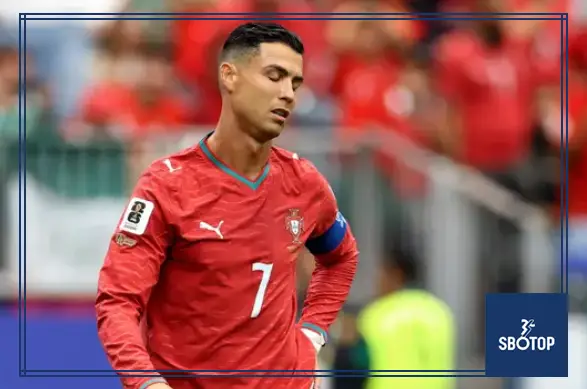
Portugal winger Francisco Conceição has moved to shut down growing criticism suggesting that the national team is overly dependent on captain Cristiano Ronaldo during the FIFA World Cup 2026. The debate intensified after Portugal were held to a disappointing 1-1 draw against the Democratic Republic of Congo in their opening Group K match.
Conceição insists that decisions on the pitch are made based on football logic and real-time situations, not an obligation to feed Ronaldo at every opportunity.
Portugal Respond to Early World Cup Pressure
The draw against DR Congo immediately raised questions about Portugal’s attacking balance and tactical approach. Some critics argued that the team appeared too focused on involving Cristiano Ronaldo in the final third.
However, Francisco Conceição strongly rejected that narrative, emphasizing that Portugal’s playing style is built on collective decision-making rather than individual dependency.
He explained that players are trained to read situations instinctively and choose the best option available in split seconds.
“We Don’t Have to Always Pass to Him”
Conceição was direct when addressing the speculation surrounding Portugal’s attacking structure.
“We don’t have any obligation or need to always pass the ball to him,” said Conceição.
He further clarified that his decisions on the pitch are purely based on positioning and tactical advantage, not hierarchy.
“I pass to whoever I believe is in the best position and unmarked at that moment. All decisions happen instinctively in a split second.”
This statement highlights a key message: Portugal’s attacking system is fluid, not built around a single focal point.
Key Takeaways from Conceição’s Statement:
- Portugal do not operate with forced passing rules
- Decisions are based on real-time match situations
- Ronaldo is treated as a teammate, not a system dependency
- Tactical flexibility remains the team’s core strength
Cristiano Ronaldo Still a Massive Influence
Despite rejecting the idea of dependence, Conceição was quick to highlight the importance of Cristiano Ronaldo within the squad.
At 41 years old, Ronaldo continues to set the standard for professionalism and ambition in the Portugal dressing room.
Conceição praised his captain’s relentless mentality:
“Cristiano is an example because of his career and the hunger to win that he still shows every day.”
He also emphasized Ronaldo’s extraordinary work ethic in training sessions.
“He trains as if it were his last session. If someone who has achieved so much still has that mentality, then we must have even greater motivation.”
For younger players like Conceição, Ronaldo remains a benchmark for discipline and mental strength rather than a tactical dependency.
Leadership Beyond the Pitch
Conceição also highlighted Ronaldo’s leadership role within the squad. According to him, the captain’s influence extends far beyond goals and assists.
Ronaldo contributes through:
- Emotional leadership in the dressing room
- Setting training intensity standards
- Guiding younger players under pressure
- Maintaining competitive mindset in big tournaments
This dual perspective creates an interesting balance: Portugal are not dependent on Ronaldo tactically, but they still rely on his leadership presence.
Focus Shifts to Crucial Clash Against Uzbekistan
Portugal have now turned their attention to their second Group K match against Uzbekistan in Houston. After collecting only one point from their opener, the pressure to secure a win has increased significantly.
The squad resumed training on Sunday under head coach Roberto Martínez, focusing on tactical adjustments and finishing efficiency.
Conceição acknowledged the disappointment of the opening result but remains confident:
“When results don’t go well, we are the first to feel it. No one is more disappointed than the players.”
A win against Uzbekistan is now considered essential to keep Portugal’s World Cup campaign on track.
Pressure Is Nothing New for Conceição
Playing for Juventus and representing a footballing family legacy, Francisco Conceição is no stranger to pressure.
As the son of former Portugal international and coach Sérgio Conceição, expectations have followed him throughout his career.
He admits that criticism is part of the game at elite level:
“We all play for big clubs, and pressure will always be there. When results are bad, criticism will come.”
However, he believes the best response is always on the pitch.
“Our job is to respond in the next match, show our quality, win games, and continue our journey.”
A Special World Cup Moment for the Conceição Family
Francisco’s debut at the World Cup carries emotional weight. He played his first match in the tournament exactly 24 years after his father represented Portugal at the 2002 World Cup in Korea and Japan.
This generational link adds a unique layer to his international journey, blending legacy with modern ambition.
Portugal’s Challenge: Balance, Not Dependence
The discussion around Ronaldo reflects a broader tactical question for Portugal: how to balance experience with attacking flexibility.
While Ronaldo remains a crucial figure, the squad is clearly evolving into a more collective unit where responsibility is shared across multiple attackers.
If Portugal want to go deep in the World Cup 2026, they will need:
- Better finishing efficiency
- Faster attacking transitions
- More unpredictable forward movement
- Collective rather than individual reliance
Conclusion: A Team Built on More Than One Star
Francisco Conceição’s comments send a clear message: Portugal are not built around a single player, even one as iconic as Cristiano Ronaldo.
Instead, the team is evolving into a balanced system where decisions are made based on tactical awareness rather than hierarchy.
Ronaldo remains a legendary presence and inspirational leader, but Portugal’s success in the World Cup 2026 will ultimately depend on collective performance.
As they prepare for Uzbekistan, the challenge is simple: turn potential into results—and prove that Portugal are more than just one name.
ALSO READ :