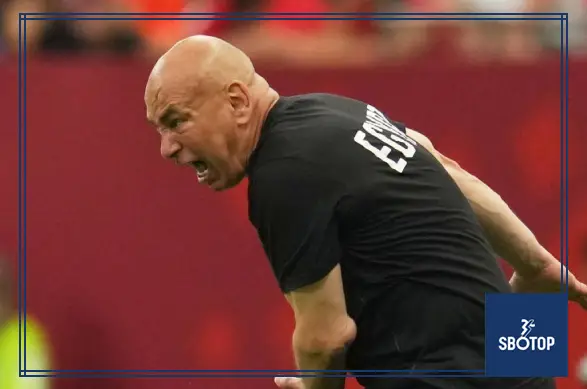
Egypt’s historic 3-1 comeback against New Zealand in the FIFA World Cup 2026 will be remembered as more than just a victory—it was a statement of belief, resilience, and leadership. Behind the scenes, head coach Hossam Hassan delivered a powerful halftime message that completely changed the course of the match and ultimately secured Egypt’s first-ever World Cup win.
After falling behind in the first half at BC Place in Vancouver, Egypt looked tense and uncertain. But what followed after the break was a completely different team—one filled with intensity, confidence, and purpose.
Egypt’s Historic Comeback Ends 90 Years of Frustration
For Egypt, this victory carried emotional weight far beyond the three points. Before this match, The Pharaohs had gone seven World Cup games without a win across their appearances in 1934, 1990, and 2018.
That long-standing record made pressure unavoidable. However, instead of collapsing under expectations, Hossam Hassan’s squad responded in spectacular fashion with a 3-1 comeback that sent them to the top of Group G with four points from two matches.
Key highlights of Egypt’s historic moment include:
- First-ever World Cup victory for Egypt
- Comeback from 0-1 down at halftime
- Three goals scored in the second half
- Top position in Group G after two matches
- A breakthrough after decades of frustration on the world stage
This was not just a win—it was a psychological breakthrough for Egyptian football.
Hossam Hassan’s Halftime Message Changed Everything
Egypt’s performance in the first half was below expectations, with New Zealand taking advantage of defensive gaps and lack of rhythm. But everything changed inside the dressing room.
Hossam Hassan revealed that his halftime talk focused on mentality, pride, and responsibility. He demanded a complete shift in attitude before the players returned to the pitch.
“We will not go back onto the pitch for the second half unless we are fully determined to win and take confidence from the pride we feel from the fans’ support,” Hassan said.
His message was direct, emotional, and uncompromising. It wasn’t about tactics alone—it was about identity.
The impact of that speech was immediate. Egypt returned to the field with higher pressing intensity, faster transitions, and a more aggressive attacking mindset.
Tactical Shift That Sparked Egypt’s Revival
Beyond motivation, Egypt also made key tactical adjustments after the break. The team began to press higher and move the ball more quickly through midfield, forcing New Zealand into defensive errors.
The change in structure created more attacking freedom, allowing Egypt’s key players to influence the game in dangerous areas.
Second-Half Improvements Included:
- Increased pressing intensity in midfield
- Faster ball circulation between lines
- More overlapping runs from full-backs
- Higher defensive line to compress space
- Better use of wide attacking channels
These changes helped Egypt dominate possession and gradually break down New Zealand’s resistance.
Hossam Hassan on Building a New Football Identity
For Hassan, this victory is not just about one match—it is part of a long-term vision for Egyptian football. He emphasized that the current generation must write its own story rather than relying on the legacy of past teams.
He believes success must come from structured development, both at national and domestic levels.
“I want this generation to shape its own future and determine its own path,” Hassan explained.
He also stressed the importance of improving the broader football ecosystem in Egypt and Africa to sustain long-term progress.
“We also want to continue developing at the national league level and across African football,” he added.
This reflects a shift in mindset—moving from short-term results to long-term football growth.
Mohamed Salah’s Leadership Shines Again
No discussion of Egypt’s comeback is complete without highlighting Mohamed Salah. The captain played a decisive role in the second half, scoring one goal and providing an assist as Egypt turned the game around.
After the break, Salah operated with more freedom, constantly threatening New Zealand’s defense and linking up effectively with teammates in the final third.
Hassan was full of praise for his star forward, emphasizing both his work rate and tactical importance.
“Salah works extremely hard on the pitch, and this is something you must understand,” said Hassan.
He also revealed how carefully the team has been built around Salah’s strengths.
“I may be the first coach to give him a role that matches his level of threat, ability, and quality. We are working on many things, and I am sure we will see even more from him,” he added.
Salah’s influence remains central to Egypt’s attacking identity and overall success.
What This Victory Means for Egypt at World Cup 2026
This comeback could be a turning point for Egypt’s World Cup campaign. Beyond the three points, the psychological boost is enormous. A team that once struggled for belief on the world stage now looks capable of competing with confidence.
With four points from two matches and a place at the top of Group G, Egypt is in a strong position heading into the next round of fixtures.
More importantly, the team now has proof that it can respond under pressure—a trait that often defines successful World Cup campaigns.
If Egypt continues to build on this momentum, Hossam Hassan’s halftime speech may be remembered as the moment everything changed.
ALSO READ :