The World Cup has always had a strange relationship with certainty. Every four years, analysts, former players, algorithms, and fans try to predict how the biggest tournament in football will unfold—only to watch the script get rewritten in real time. As the next edition of the FIFA World Cup approaches, the same tension is building again: familiar legends aging into their final chapters, new stars rising faster than expected, and teams that look either unstoppable or strangely fragile depending on the week.
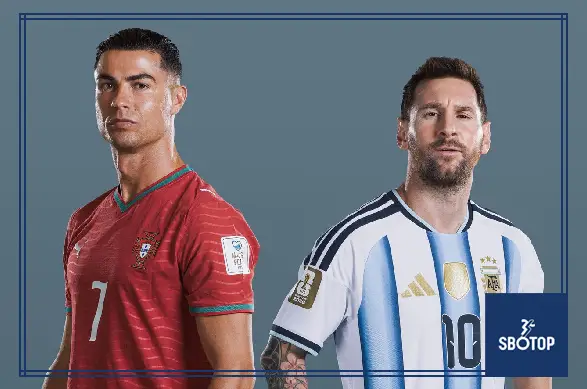
At the center of this global conversation are two names that have defined football for nearly two decades: Lionel Messi and Cristiano Ronaldo. Their presence alone bends narratives, influences expectations, and shapes emotional investment across continents. Yet as football history repeatedly shows, reputation does not guarantee control over chaos.
This upcoming tournament feels less like a carefully drawn chessboard and more like a storm system forming across continents. And within that storm, one question echoes louder than the rest: will the legends still dictate outcomes, or will the World Cup once again tear up every prediction?
The Myth of Control in World Cup Football
Every World Cup cycle begins with a familiar illusion—that form, rankings, and statistical models can map the tournament’s future. Yet time and again, the competition proves resistant to control. In qualifying stages and friendlies, patterns appear stable. Europe’s elite dominate possession metrics, South American teams show technical brilliance, and emerging nations display tactical discipline. But once the tournament begins, those patterns often dissolve.
The World Cup compresses pressure into something few other sporting events can replicate. A single defensive mistake can eliminate years of preparation. A moment of brilliance from an unexpected player can erase 89 minutes of tactical dominance. Coaches talk about control, but the tournament repeatedly rewards adaptability over structure.
This is where chaos enters—not as randomness, but as the natural outcome of elite teams colliding under extreme pressure.
Lionel Messi The Weight of Legacy and the Freedom of Closure
For Lionel Messi, every World Cup appearance in the later stages of his career carries a dual narrative: legacy and liberation.
On one hand, Messi’s legacy is already complete in historical terms. Titles, records, and individual awards have already placed him among the greatest ever. Yet international football has always added emotional complexity to his story. The World Cup, more than any other competition, shaped the early perception of his greatness and the debates surrounding it.
Now, however, something has shifted. With Argentina already having experienced triumph in recent cycles, Messi no longer carries the same burden of proving legitimacy on the international stage. Instead, his presence feels more like orchestration than desperation.
That change matters.
A player freed from legacy pressure often performs differently. The hesitation that once accompanied expectation is replaced by instinct. Messi’s game has always been built on reading space faster than others read intention. In a tournament where chaos reigns, that ability becomes even more valuable.
But there is another factor: age. While experience sharpens decision-making, it also changes physical dynamics. Messi no longer dominates games through constant movement. Instead, he controls rhythm, spacing, and tempo in shorter bursts. That evolution could either be perfectly suited to knockout football—or exposed by relentless physical pressure.
The question is not whether Messi can still influence matches. He clearly can. The question is whether he can influence enough matches in succession against increasingly unpredictable opposition.
Cristiano Ronaldo The Pursuit of Structure in an Unstructured Tournament
If Messi represents fluidity and improvisation, Cristiano Ronaldo represents discipline and repetition. His career has been built on precision, physical excellence, and an almost mechanical ability to convert chances.
Yet the World Cup has never been a perfectly structured environment. It rewards adaptability, unpredictable tactical shifts, and sudden momentum swings. That creates a paradox for Ronaldo’s role in modern tournament football.
As Ronaldo’s career has progressed, his influence has shifted closer to the penalty area. He remains one of the most efficient finishers in football history, but his involvement in build-up play has naturally decreased. In club systems designed around controlled attacking phases, this specialization can be highly effective. In international tournaments defined by volatility, however, it introduces dependency on teammates to deliver consistent service.
This is where uncertainty grows.
If Portugal can maintain structured dominance—controlling possession, territory, and chance creation—Ronaldo’s finishing ability remains lethal. But if matches become chaotic, transitional, and unpredictable, his impact may depend heavily on game state rather than overall flow.
The World Cup does not always allow teams to maintain rhythm. And when rhythm breaks, even the most efficient scoring machines can find themselves isolated.
Why Predictions Fail at the World Cup
Every cycle, analysts attempt to forecast outcomes using familiar variables: squad depth, tactical systems, player form, and historical performance. Yet the tournament consistently disrupts these frameworks.
There are three core reasons predictions fail:
1. Compression of Margins
At the World Cup, the gap between elite and “secondary elite” nations narrows dramatically. Teams that might lose comfortably in qualifiers can push favorites to penalties in knockout stages. Small margins—set pieces, deflections, refereeing decisions—carry disproportionate weight.
-
Emotional Overload
Players are not machines operating under neutral conditions. National expectation, media pressure, and personal legacy all combine into psychological intensity that club football rarely replicates. Some players elevate under this pressure; others become constrained by it.
-
Tactical Adaptation Mid-Tournament
Unlike league systems, where structure evolves gradually, World Cup teams often change approach game by game. A team that dominates possession in one match may switch to defensive transitions in the next depending on opponent profile. This constant adaptation makes long-term prediction unstable.
The Rise of Unpredictable Contenders
While global attention often centers on traditional powerhouses, recent tournaments have shown that emerging nations can disrupt established hierarchies. Tactical discipline, physical intensity, and analytical preparation have allowed mid-tier teams to challenge giants more effectively than ever before.
This trend is likely to continue.
Teams outside the traditional elite are no longer entering tournaments simply to participate. They arrive with structured systems designed specifically to neutralize top-tier opponents. Low defensive blocks, rapid counter-attacks, and specialized set-piece routines have become powerful equalizers.
This evolution intensifies uncertainty for star-driven narratives. When systems are designed to limit space rather than engage in open play, individual brilliance becomes harder to sustain across full matches.
The Psychological Layer Legends Under Pressure
One of the most overlooked aspects of World Cup chaos is psychology.
For players like Messi and Ronaldo, the psychological environment is unlike anything in club football. Every touch is magnified. Every missed chance is globally analyzed. Every victory is framed as destiny; every defeat as decline.
Yet both players have already experienced the full spectrum of international expectation. This changes their relationship with pressure in different ways.
Messi now operates with historical resolution behind him, which may allow more freedom in decision-making. Ronaldo, meanwhile, continues to pursue efficiency and validation in a system that increasingly emphasizes collective unpredictability over individual certainty.
Neither approach guarantees success. But both offer resilience against pressure in different forms.
Tactical Evolution and the Future of Star Influence
Modern football has shifted toward collective systems that minimize reliance on single individuals. Pressing structures, rotational attacking patterns, and hybrid formations all aim to distribute responsibility across the team.
However, World Cup history repeatedly shows that individual brilliance still matters—especially in knockout stages.
The key question is not whether stars still influence outcomes, but how they influence them.
Messi’s influence is often subtle: a pass that breaks two lines, a dribble that collapses defensive structure, a moment of spatial manipulation that creates opportunity for others. Ronaldo’s influence is more direct: finishing chances, converting pressure into goals, and providing focal presence in the box.
In chaotic tournaments, both forms of influence can be decisive—but only if the surrounding system supports them at the right moments.
When Chaos Becomes the Real Winner
Perhaps the most consistent lesson of World Cup history is that chaos itself is a competing force. Not a flaw in the system, but a defining feature of it.
It is chaos that produces unexpected champions. It is chaos that eliminates favorites early. It is chaos that turns role players into national heroes overnight.
And it is chaos that ensures no prediction survives unchallenged.
This is why every World Cup begins with confidence and ends with revisionism. The tournament is not designed to confirm expectations—it is designed to break them.