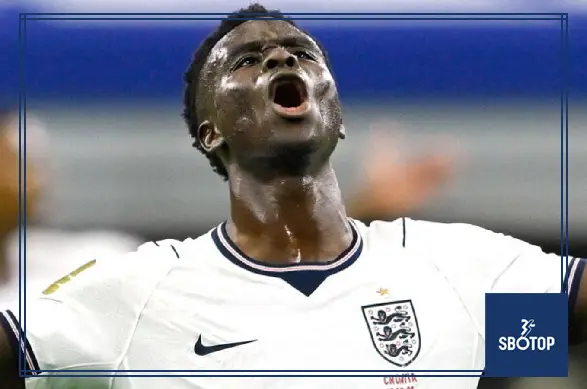
The build-up to the FIFA World Cup always brings a mix of excitement, speculation, and tactical mystery. For England, the conversation ahead of the 2026 edition has quickly centered on squad management, rotation strategy, and the careful handling of key players during the group stage. At the heart of that discussion is one of England’s brightest attacking talents, Bukayo Saka, and the evolving approach of manager Thomas Tuchel, who is reportedly considering a delayed starting role for the Arsenal star in the opening phase of the tournament.
The idea is not about doubt in Saka’s quality. Rather, it is about timing, control, and long-term planning across a compressed and physically demanding tournament format. England’s group-stage schedule offers opportunities to rotate, experiment, and preserve fitness for knockout rounds, where the margins become significantly tighter.
Among those fixtures, the match against Panama stands out as a key tactical pivot point in Tuchel’s planning.
A Tournament Built on Margins and Management
Modern World Cups are no longer just about fielding the strongest XI every match. The expanded format, increased fixture congestion, and high physical demands mean that squad depth plays a more decisive role than ever before. England arrive in 2026 with arguably one of the deepest squads in international football. That depth creates both opportunity and complexity. Managers are no longer forced into consistent starting lineups; instead, they can tailor selections based on opponent profile, recovery cycles, and knockout-stage planning.
For Tuchel, whose coaching philosophy has always leaned heavily toward structure, discipline, and tactical adaptation, rotation is not a compromise—it is a strategy.
The key question is how to balance stability with freshness. And that balance directly impacts players like Saka, who are both technically important and physically high-output.
Bukayo Saka From Essential Starter to Strategic Weapon
Bukayo Saka has developed into one of England’s most reliable attacking outlets. His versatility allows him to operate as a winger, inverted forward, or even a wide playmaker depending on system requirements. His ability to combine dribbling, final-third decision-making, and defensive work rate makes him invaluable in high-intensity matches.
However, the physical demands placed on modern wide attackers are extreme. Constant pressing, rapid transitions, and repeated sprints across 90 minutes accumulate fatigue quickly over a tournament.
This is where Tuchel’s reported rotation plan becomes significant.
Rather than relying on Saka from the opening match, the idea is to manage his workload during the early group-stage fixtures. That approach could allow him to enter the tournament with sharper physical readiness for decisive matches later on.
It is not about reducing his importance—it is about optimizing it.
Why Panama Becomes a Tactical Reference Point
In England’s group-stage schedule, the match against Panama is viewed as a strategically flexible fixture. It presents an opportunity for squad rotation without significantly increasing competitive risk, assuming earlier results go as planned.
The expectation is that England will use this match to test alternative attacking structures, give minutes to rotational players, and potentially introduce Saka into the starting lineup in a controlled environment.
By delaying his start until the Panama fixture, Tuchel could achieve several objectives:
- Preserve Saka’s fitness for knockout rounds
- Evaluate squad depth in earlier matches
- Reduce injury risk during congested scheduling
- Maintain tactical unpredictability for opponents
This approach also creates a layered build-up for Saka himself. Instead of being thrown into high-intensity matches immediately, he would be eased into the tournament rhythm before becoming a central figure in later, higher-stakes games.
Tuchel’s Tactical Philosophy Control Through Flexibility
Thomas Tuchel is known for his adaptable systems. Throughout his managerial career, he has demonstrated a willingness to shift formations, roles, and pressing structures depending on opposition analysis.
At a World Cup, this adaptability becomes even more important. Opponents vary widely in style, from low-block defensive teams to high-pressing transition sides. A rigid approach is rarely effective.
Tuchel’s rotation plan reflects a broader principle: control does not come from consistency alone, but from the ability to change without destabilizing the team.
In this context, delaying Saka’s start is not an unusual decision. It is a calculated adjustment designed to maximize output at the most critical stage of the tournament.
The Depth Problem That Becomes a Strength
England’s current generation is often described as one of the deepest in world football. That depth includes multiple options in wide attacking positions, midfield creativity, and defensive stability.
But depth creates selection pressure. Every decision to rotate a key player must be justified not only tactically, but psychologically.
The advantage, however, is that England can afford to rest elite players without significantly weakening the team. In Saka’s case, alternatives exist who can fulfill similar roles in earlier matches, allowing Tuchel to experiment without compromising competitiveness.
This flexibility becomes particularly important in tournaments where recovery time between matches is limited.
The Psychological Management of Star Players
Tournament football is not only physical—it is deeply psychological. Managing expectations, confidence, and rhythm is essential for maintaining squad harmony.
For a player like Saka, being initially rested could be interpreted in different ways. On one hand, it signals trust in his long-term importance. On the other, it requires careful communication to ensure motivation remains high.
Elite managers often emphasize clarity in these situations. Players must understand that rotation is not exclusion—it is strategic deployment.
Saka’s mentality has been consistently praised for maturity, adaptability, and composure under pressure. These traits make him particularly suited to a phased tournament introduction.
Rather than being disrupted by rotation, he is more likely to respond with heightened focus when introduced.
Group Stage Strategy Building Momentum Without Exhaustion
England’s group stage approach is expected to prioritize progression efficiency rather than early dominance. The goal is to qualify comfortably while preserving energy for knockout rounds.
This creates a natural opportunity for squad rotation across multiple fixtures. Early matches may focus on structure and defensive control, while later matches introduce more attacking intensity as required.
In this framework, the Panama fixture becomes a transitional point—where England begin to layer in their most dynamic attacking pieces.
Saka’s introduction at this stage allows him to:
- Gain match rhythm before knockout rounds
- Build confidence through controlled minutes
- Integrate fully into Tuchel’s tactical system
- Avoid early tournament fatigue accumulation
Tactical Variations With and Without Saka
England’s attacking shape changes significantly depending on Saka’s presence.
Without him, the team may rely more on structured build-up play, overlapping full-backs, and central attacking combinations. The emphasis tends to shift toward control and possession stability.
With him, the dynamic changes. Saka’s ability to isolate defenders in wide areas introduces unpredictability. He can stretch defensive lines, create one-vs-one situations, and accelerate transitions.
This duality is precisely why Tuchel values him so highly—but also why managing his minutes becomes strategically important.
A player of Saka’s profile is most effective when physically sharp. Even a slight drop in explosiveness can reduce his ability to beat defenders consistently.
The Risk Factor What Could Go Wrong
No rotation plan is without risk. Delaying the start of a key player always carries the possibility of misjudging momentum or team rhythm.
If England struggle in early matches, the pressure to introduce Saka earlier would increase significantly. Similarly, unexpected injuries or tactical failures could force a recalibration of the entire plan.
There is also the unpredictability of tournament football itself. Matches that appear manageable on paper can become complicated quickly due to early goals, red cards, or tactical surprises from opponents.
This is why rotation strategies are always flexible rather than fixed.
Tuchel’s plan is likely to be dynamic—adjusting based on results rather than rigid scheduling.
The Bigger Picture Building Toward Knockout Football
Ultimately, the World Cup is not won in the group stage. It is built toward it.
England’s long-term objective is clear: arrive in the knockout rounds with their best players physically and mentally prepared. That includes managing minutes for key attackers, maintaining defensive stability, and refining tactical cohesion.
Saka’s delayed start is part of that broader vision. Rather than maximizing his early tournament involvement, the focus is on maximizing his decisive impact later.
If executed successfully, this approach could allow England to enter the knockout stage with one of their most dangerous attacking setups fully activated.
Also Read:
- SBOTOP World Cup Chaos Looms: Will Lionel Messi Shine Will Cristiano Ronaldo Struggle or Will Predictions Be Torn Apart Again
- SBOTOP: Chris Sutton Urges Celtic to Back Major Summer Rebuild with £50 Million Spending Push
- SBOTOP History Made : Egypt Finally Break New Zealand Curse in World Cup 2026 Thriller