Brazil’s 2026 World Cup dream did not collapse in one second, but one moment will be replayed for years. In the 14th minute against Norway, Brazil were handed the chance to take control of their Round of 16 tie. Vinicius Junior had the ball in his hands. The penalty spot was waiting. A nation expected one of its biggest stars to step forward.
Then came the surprise.
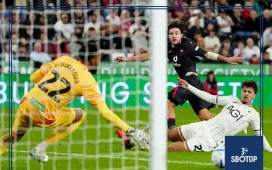
Vinicius handed the ball to Bruno Guimaraes. The Newcastle midfielder took responsibility, used a stutter-step run-up, and saw his penalty saved by Norway goalkeeper Orjan Nyland. Brazil never truly recovered. Norway went on to win 2-1, with Erling Haaland scoring twice late in the second half before Neymar pulled one back from the spot deep into stoppage time.
For Brazil, the miss became more than a failed penalty. It became a symbol of confusion, pressure, and regret. For Vinicius, it became a question of responsibility. Why did the Real Madrid superstar not take the kick himself?
The answer, according to Vinicius, was simple: it was not his decision.
Vinicius Explains the Decision
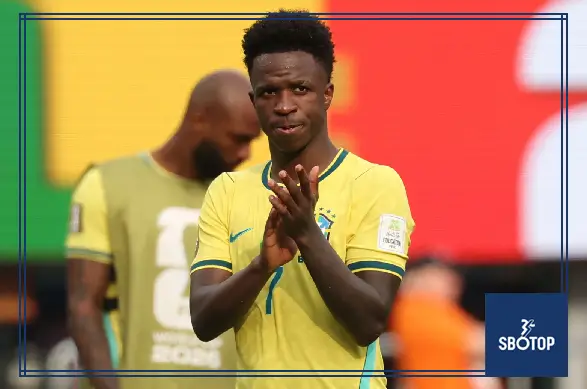
After Brazil’s painful elimination, Vinicius addressed the controversy directly. He said the penalty taker had already been chosen by the coaching staff and insisted he was not avoiding responsibility. Goal reported that Vinicius explained the choice by saying it was “the manager’s decision” and that he never hides from responsibility. That explanation changes the tone of the debate. From the outside, it looked like Vinicius had passed up the spotlight. In reality, he was following a pre-match instruction. Brazil’s hierarchy had already decided that Bruno Guimaraes would take that penalty, and Vinicius respected the plan.
Football fans often judge these moments emotionally. They see the superstar, the ball, the penalty spot, and assume the biggest name should take the shot. But dressing-room decisions are rarely that simple. Teams prepare penalty lists before matches. Coaches assign roles. Players are told who steps up first, who follows, and who takes over in special circumstances.
Vinicius may have had the confidence to take the kick, but Brazil’s internal order pointed elsewhere. That is what made the fallout so painful. The decision had logic behind it, yet the result made that logic look fragile.
Bruno Guimaraes and the Weight of One Kick
Bruno Guimaraes did not miss a normal penalty. He missed a penalty in a World Cup knockout match for Brazil, while the score was still 0-0, with the entire rhythm of the game waiting to be shaped. Those details made the miss feel enormous.
Fox Sports reported that the penalty came after Matheus Cunha was taken down in the box, with the award given following video review. Vinicius initially had the ball and looked ready to take it, before Bruno stepped forward and saw his effort saved by Nyland.
The technique also intensified criticism. Bruno used a stutter-step approach, a method designed to force the goalkeeper to commit early. When it works, it looks clever and composed. When it fails, it can look hesitant and weak. The Guardian described Bruno’s effort as a stuttering penalty that Nyland saved by diving to his left.
That is the cruelty of penalties. One kick can rewrite a player’s tournament. One hesitation can become a national debate. Bruno did not lose the match alone, but his miss became the easiest moment to isolate.
The Stutter-Step Debate Returns
The missed penalty revived one of football’s most divisive debates: should players use hesitation and deception from the spot, or should they strike with conviction?
The stutter-step penalty has deep Brazilian roots. It is linked to the old “paradinha,” a stop-start method that relies on reading the goalkeeper’s movement before striking the ball. Modern rules allow feinting during the run-up, but not after the run-up is completed. The Guardian noted that the technique remains legal if the deception occurs before the player plants the standing foot to kick.
Bruno’s miss showed the danger of that method. If the goalkeeper waits, guesses correctly, or refuses to be fooled, the taker can be left with a weak shot and poor balance. That is exactly how the miss looked. Instead of power or placement, Brazil got uncertainty.
The irony was brutal. Neymar later scored from the spot with another halting run-up, but by then Brazil were already in crisis. One Brazilian penalty technique failed early, another succeeded too late. The contrast only deepened the pain.
Brazil’s Match Slipped Away
The penalty miss did not immediately eliminate Brazil, but it changed the emotional temperature of the match. A successful kick would have given Brazil an early lead, forced Norway to chase, and allowed Carlo Ancelotti’s side to play with more control. Instead, Norway survived the storm.
Brazil still had chances. Vinicius remained dangerous on the left, using his speed and direct running to threaten Norway’s defensive structure. But Nyland stood firm, and Brazil lacked the cutting edge expected from a team packed with attacking quality.
Then Haaland struck. Norway’s superstar scored in the 79th minute and again in the 90th, turning a tense contest into one of the biggest shocks of the tournament. Neymar’s stoppage-time penalty reduced the deficit, but it was not enough. Al Jazeera’s match summary listed the final score as Brazil 1, Norway 2, with Neymar scoring in the 100th minute and Haaland scoring both Norwegian goals.
By the final whistle, Brazil were not just defeated. They were stunned.
Vinicius as the Face of the Debate
The controversy landed on Vinicius because he is Brazil’s biggest current star. He arrived at the match as the player many supporters expected to carry the attack. Fox Sports noted that he entered the game as Brazil’s leading scorer with four goals in four matches at the tournament.
That context made the penalty decision harder for fans to accept. If Vinicius was in form, if he was holding the ball, and if he had the confidence of a Real Madrid superstar, why did Brazil not let him take it?
The answer may be tactical discipline, but football emotion rarely accepts that easily. Supporters want their best players to embrace decisive moments. They want the leading scorer to step up. They want the face of the team to claim responsibility.
Vinicius, however, framed his decision differently. He said he followed the order that had already been established. He also defended himself against the idea that he was selfish or looking for personal attention. Goal reported that he emphasized team unity and said he respected the decision made before the match.
That response matters. Vinicius was not distancing himself from the team. He was protecting the hierarchy.
Standing by Bruno
Perhaps the most important part of Vinicius’ response was his support for Bruno Guimaraes. He did not throw his teammate under the bus. He did not suggest that the decision was wrong only because the kick was missed. Instead, he expressed hope that Bruno’s Brazil career would not be defined by this mistake.
That was the right message. A missed penalty in a World Cup knockout match is painful, but it should not erase a player’s value. Bruno has been an important midfielder for club and country, and one failed kick should not become the entire story of his international career.
Yet the reality is harsh. Brazilian football memory is long. Penalty misses, goalkeeper errors, tactical mistakes, and knockout defeats are often remembered for decades. Players can recover professionally, but emotionally these moments can follow them.
Vinicius understood that. His words were not only a defense of himself. They were also a shield for a teammate.
Ancelotti Under the Microscope
The penalty decision also increased pressure on Carlo Ancelotti. Reuters reported that Brazil’s football director Rodrigo Caetano confirmed Ancelotti would remain in charge through the 2030 World Cup cycle, even after the 2-1 defeat to Norway extended Brazil’s wait for a sixth title.
That backing was important, but it did not erase criticism. Reuters also noted that Ancelotti’s decisions came under scrutiny, including the choice to let Bruno Guimaraes take the early penalty and the use of experienced players such as Casemiro and Danilo late in the match.
This is where the penalty became part of a bigger conversation. It was not only about Vinicius and Bruno. It was about Brazil’s planning, leadership, and decision-making. If the coaching staff decided Bruno was the taker, then the responsibility does not belong to him alone. It also belongs to the system that placed him there.
Ancelotti is one of the most decorated coaches in football history, but international football is different. There is less time, more emotion, and no room for long-term correction inside a knockout match. One pre-match decision can become a national inquiry.
Brazil’s Deeper Problems
The defeat to Norway was shocking, but it also exposed problems beyond one penalty. Reuters reported that Brazil had only 35 percent possession against Norway, their lowest figure in a World Cup match since records began in 1966.
That statistic is brutal for a nation that defines itself through control, flair, and attacking authority. Brazil are not supposed to look passive. They are not supposed to chase shadows. They are not supposed to appear short of ideas in the Round of 16.
The penalty miss created the headline, but the performance created the concern. Brazil did not impose themselves for long enough. They did not turn individual quality into collective control. They did not respond decisively when Norway grew into the match.
This is why focusing only on Bruno’s penalty would be unfair. Brazil had more than 75 minutes after the miss to reshape the game. They had Vinicius, Rodrygo, Neymar, Cunha, and other attacking weapons. They still could not produce enough.
Norway’s Discipline and Haaland’s Ruthlessness
Norway deserve credit. They did not simply benefit from Brazil’s failure. They survived pressure, trusted Nyland, stayed compact, and waited for Haaland to deliver. That is a dangerous formula in knockout football.
Brazil may have had the history, the shirt, and the bigger global reputation, but Norway had clarity. They knew their strengths. They understood that if they remained alive long enough, Haaland could decide the match. He did.
The late timing of his goals made the result even more painful for Brazil. After the missed penalty, the game seemed to hang in uncertainty. Brazil had time to recover. Norway had time to believe. When Haaland finally struck, the psychological balance flipped completely.
By the second goal, Brazil were chasing more than an equalizer. They were chasing their identity.
Neymar’s Late Goal and the Empty Consolation
Neymar’s late penalty added another layer of emotion. Fox Sports reported that Neymar came on in the 68th minute and later converted Brazil’s second penalty, joining Pele as one of the only Brazilian players to score in four World Cups.
That should have been a historic moment. Instead, it became a footnote to elimination. Neymar scored, but Brazil were already nearly out. The goal arrived too late to change the story.
The contrast with Bruno’s miss was impossible to ignore. Brazil had two penalties. One was saved early, one was scored late. If the first had gone in, the entire match could have unfolded differently. That is why supporters will keep returning to the same question.
But football is not played through alternate timelines. Brazil missed. Norway punished them. Neymar’s goal softened the score, not the wound.
The Burden of the Brazilian Shirt
No football nation carries pressure quite like Brazil. Every World Cup is framed as a chance to restore glory. Every failure becomes evidence of crisis. Every generation is compared with the legends who came before.
This defeat extended Brazil’s wait for a sixth World Cup title, and Reuters noted that the drought will now last at least 28 years. For a country that won five titles and shaped football culture across the world, that number hurts.
The Vinicius-Bruno penalty episode will now sit inside that larger frustration. It was not just a missed opportunity against Norway. It was another symbol of Brazil’s struggle to turn talent into tournament dominance.
Brazil still produce elite players. They still have global stars. But recent World Cups have repeatedly ended in disappointment. At some point, the question stops being about one penalty and becomes about structure, leadership, mentality, and preparation.
Also Read: