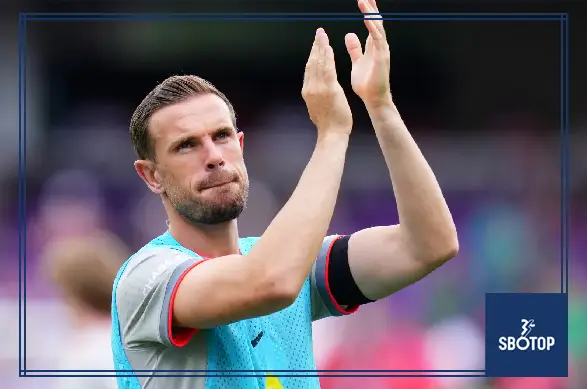
Jordan Henderson has built much of his career on resilience, leadership, and a refusal to step away when the moment demands commitment. That reputation has taken on new meaning at the World Cup after the England midfielder suffered a serious arm injury during post-match celebrations, with his father revealing just how severe the damage was. The injury, described by Brian Henderson as affecting Jordan’s left forearm, has added a dramatic and unfortunate twist to England’s campaign, but it has also underlined why Henderson remains such a respected figure inside the squad.
The injury reportedly occurred after England’s thrilling 3-2 victory over Mexico, when Henderson fell while celebrating with teammates after the match. Reports said he was stretchered away and later required medical treatment, turning what should have been a moment of pure celebration into a worrying scene for the England camp.
For many players, an injury of that nature would mark an immediate emotional separation from the tournament. The pain, the shock, and the practical demands of treatment could easily pull someone away from the group environment. Henderson, however, appears determined to remain close to his teammates. His father said he would not be leaving the squad and would stay with England until their World Cup journey is finished.
That decision says almost everything about the role Henderson continues to play for England. Even if his minutes on the pitch are limited, even if his body is now carrying the consequences of a painful accident, his presence remains valuable. England’s World Cup hopes are not built only on goals, tactics, and starting lineups. They are also built on character, experience, and the emotional strength of the dressing room.
A Painful Blow at the Worst Possible Time
Injuries are always cruel, but tournament injuries carry a different kind of sting. A World Cup is not a normal season. There is no long runway, no chance to reset after several weeks, and no easy replacement for the emotional rhythm of being part of a national team campaign. Every day matters. Every training session matters. Every meeting, team talk, and shared moment can influence the atmosphere.
For Henderson, the timing could hardly have been more unfortunate. England had just survived a tense knockout test against Mexico and were preparing for the next challenge against Norway in the quarter-finals. Instead of focusing solely on recovery, preparation, and tactical detail, the squad suddenly had to process concern for one of its most experienced players. England are scheduled to face Norway in the quarter-finals after beating Mexico, keeping their tournament hopes alive.
The image of Henderson needing treatment after celebrations would have been unsettling for teammates. Footballers are trained to handle contact injuries, tackles, muscle problems, and match-related knocks. But a freak incident after the final whistle feels different. It is unexpected, almost unfair, and emotionally jarring because it arrives during a moment that should belong to joy.
That is why the story has resonated so strongly. It is not only about a broken or damaged arm. It is about a senior player suffering a setback while celebrating England’s progress, then refusing to emotionally detach from the group.
Henderson’s Value Goes Beyond Minutes
Some may look at Henderson’s tournament role purely through statistics and minutes played. That would miss the bigger picture. At this stage of his career, Henderson’s value to England cannot be measured only by how often he starts or how long he stays on the pitch. His influence comes from experience, standards, communication, and leadership.
Every successful tournament squad needs players who understand the demands of major international football. Young talents may provide energy, flair, and fearlessness, but experienced players help keep the environment steady. They know how quickly momentum can change. They know how to respond to setbacks. They know how to calm nervous teammates and push standards when focus begins to drop.
Henderson has lived through high-pressure football for years. He has captained at elite club level, played in major finals, endured criticism, and come through difficult moments. That kind of background matters in a World Cup dressing room. A player who has seen almost everything can help others manage situations that feel overwhelming for the first time.
Even injured, Henderson can still talk. He can still guide. He can still encourage. He can still remind the squad what is required when the pressure rises.
The Symbolism of Staying
Henderson’s decision to stay with England despite the injury is powerful because it reflects unity. Tournament squads are fragile ecosystems. If one player leaves, especially a senior figure, the emotional balance can shift. Staying sends a message: the mission continues, and everyone remains part of it.
For the players preparing to face Norway, seeing Henderson remain around the squad could offer an emotional boost. It shows commitment. It shows sacrifice. It shows that even when a player cannot contribute normally, he can still serve the group. That is the essence of team sport.
The idea of staying also matters to supporters. Fans often judge players not only by talent, but by commitment. Henderson has sometimes been a divisive figure in public debates, as many experienced midfielders are. Some appreciate his leadership and intensity, while others focus on what he lacks compared with more technically gifted players. But moments like this are difficult to dismiss. Staying with the squad after a painful injury demonstrates loyalty in its clearest form.
It says that being part of England is not only about playing time. It is about responsibility.
A Career Built on Mental Strength
Henderson’s career has rarely been defined by ease. He has often had to prove himself. At various points, questions have been asked about his technical quality, his place in teams, and his role at the highest level. Yet he has consistently found ways to remain relevant through discipline, fitness, leadership, and tactical intelligence.
That kind of resilience does not appear overnight. It is built over years of pressure. It comes from being challenged and responding. It comes from understanding that leadership is not always glamorous. Sometimes it means doing the simple things loudly, demanding concentration, tracking runners, organizing teammates, and setting a professional example.
The current injury story fits into that broader pattern. Henderson may not be able to influence matches in the usual way, but he can still influence the tone around the group. He can still help England maintain the seriousness required at this stage of the World Cup.
Great squads often speak about togetherness, but togetherness is proven in moments of discomfort. Henderson’s injury has given England one of those moments. The way the squad responds could reveal much about their character.
England’s Dressing Room Needs Experienced Voices
World Cup knockout football is emotionally demanding. Players are not only competing against opponents. They are competing against nerves, expectation, fatigue, and the awareness that one mistake can change everything. In that environment, experienced voices are essential.
England have plenty of talent. They have pace, creativity, defensive strength, and attacking threat. But talent must be guided. A tournament can turn quickly if a squad becomes too emotional after a win or too tense before a difficult game. Senior players help regulate that emotional temperature.
Henderson is one of those players. He may not be the future of England’s midfield, but he remains part of the team’s leadership structure. His voice can matter in training. His words can matter before a quarter-final. His presence can matter when younger players are trying to process the scale of the occasion.
That is why teammates have reportedly stressed the importance of his leadership role despite the injury, with Dan Burn among those pointing to Henderson’s value to the group even if he cannot play.
The Human Side of Tournament Football
Fans often experience major tournaments through results. Win, lose, advance, go home. But inside a squad, the tournament is a human experience. Players live together, travel together, eat together, train together, and share moments of joy and disappointment. Injuries affect more than selection plans. They affect relationships.
When a player suffers a serious injury, teammates feel it. They see the pain. They see the frustration. They understand the sacrifice. In Henderson’s case, the circumstances make the injury even more emotional because it happened during celebration rather than competition. One moment the squad was celebrating survival and progress. The next, concern took over.
That contrast is part of football’s cruelty. The sport gives players some of the highest emotional highs imaginable, but it can switch instantly. Henderson’s injury is a reminder that tournaments are unpredictable in every sense, not just tactically or competitively.
For England, the challenge is to absorb the setback without losing momentum. That requires maturity, and Henderson himself may contribute to that maturity simply by the way he handles his own situation.
Also Read: