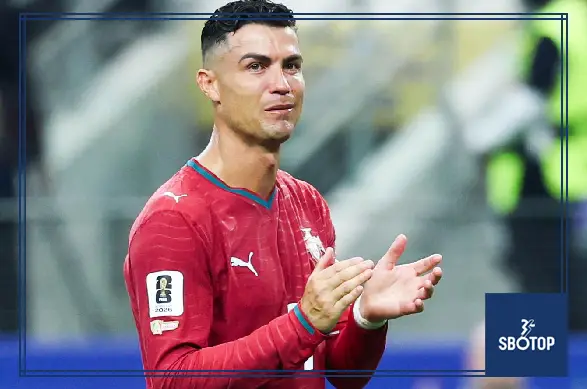
Cristiano Ronaldo’s Portugal story has never been ordinary. It has been built on records, obsession, reinvention, defiance, and a relentless refusal to accept football’s natural limits. Yet even the longest and brightest careers eventually reach a point where emotion must meet reality. Portugal’s 1-0 World Cup defeat to Spain felt like that moment: not a shocking collapse, not a dramatic scandal, but the natural end of an era that had stretched across more than two decades.
Spain’s late winner, scored by Mikel Merino in stoppage time, sent Portugal out of the World Cup and pushed La Roja into the quarter-finals. FIFA’s match report recorded Merino’s decisive goal in the 90+1st minute at Dallas Stadium, turning a tense Iberian knockout match into one of the most symbolic results of the tournament.
For Spain, it was a night of patience and reward. For Portugal, it was heartbreak. For Ronaldo, it felt like the closing scene of a World Cup pursuit that never delivered the trophy he wanted most.
The End That Felt Inevitable
There was no need for exaggeration. Ronaldo’s Portugal era did not end because he failed to care, failed to compete, or failed to understand the weight of the shirt. It ended because time does what time always does. At 41, even a player as extraordinary as Ronaldo could no longer force the World Cup to bend to his will.
The defeat to Spain was not a humiliation. Portugal were competitive, organized, and close enough to extra time that the result felt cruel. But the match also reflected a deeper truth. Ronaldo was still the emotional centre of Portugal’s story, yet he could no longer guarantee the decisive moment.
That is why the ending felt natural. Not kind, but natural. The great champion remained present, the desire remained visible, but the explosive certainty that once defined him was no longer there.
Ronaldo had already acknowledged that the 2026 tournament would be his final World Cup, and after the loss, reports described him as leaving the stage with peace over what he had given to Portugal.
A Career Too Big for One Missing Trophy
The World Cup will always be the empty space in Ronaldo’s international career. That is unavoidable. For a player who won almost everything possible at club level and reshaped international scoring records, not winning the World Cup leaves a question that will follow his legacy.
But it should not distort the entire picture.
Ronaldo did not fail Portugal. He elevated Portugal. Before his rise, the national team was respected, talented, and occasionally dangerous, but it was not a regular trophy-winning power. With him, Portugal became a country that expected to compete deep into major tournaments.
He helped carry Portugal to Euro 2016 glory, the first major international trophy in the country’s history, even though injury forced him off during the final against France. Portugal won that match 1-0 through Eder’s extra-time goal, but Ronaldo’s influence on the team’s journey and mentality was impossible to separate from the achievement.
That alone changed Portuguese football forever.
The Records Speak Loudly
Ronaldo’s numbers with Portugal are almost unreal. UEFA listed him on 233 international appearances and 146 goals, making him Europe’s runaway leader in both categories and one of the most statistically dominant international footballers ever.
Numbers do not tell the whole story, but they do tell something important. Ronaldo’s Portugal career was not built on one magical tournament or a short golden spell. It was a long, brutal, historic accumulation of goals, appearances, pressure, and expectation.
He was there across generations. He played with Luís Figo, Deco, Pepe, João Moutinho, Bruno Fernandes, Bernardo Silva, João Félix, Rafael Leão, and many more. Teammates changed. Coaches changed. Tactical systems changed. Ronaldo remained.
That longevity is part of his greatness. International football is physically and emotionally demanding. Many elite players fade from national relevance long before their club careers end. Ronaldo turned national duty into a permanent stage.
Six World Cups One Unfinished Dream
Ronaldo’s World Cup story was unique even without the trophy. In 2026, he became the first player to score in six different World Cup editions, a record that underlined his remarkable staying power across eras.
That achievement deserves to stand on its own. Scoring in one World Cup is a dream for most players. Scoring in six is a statement of almost impossible durability. It means Ronaldo remained relevant from his early years as a dazzling winger to his final chapter as a veteran striker.
Still, the World Cup was never fully kind to him. There were moments, goals, celebrations, and flashes of brilliance, but never a complete tournament that ended with Portugal lifting the trophy. That is the painful contrast. Ronaldo conquered so many records in the competition, but never conquered the competition itself.
That is why the Spain defeat carried such emotional weight. It was not only Portugal’s exit. It was the final confirmation that the one prize missing from Ronaldo’s international career would remain missing.
Spain Became the Final Wall
There was something fitting, and perhaps cruel, about Spain being the team to close the door. Portugal and Spain share one of football’s most intense regional rivalries. The Iberian clash is always layered with pride, history, familiarity, and tension.
This time, the match was tight, cautious, and increasingly tense as extra time approached. Then Merino struck. Spain’s late goal changed everything in a single moment. Portugal had no time to rebuild the match, no space for another long comeback, and no opportunity for Ronaldo to summon one final miracle.
The Guardian described the game as a scrappy contest decided by Merino’s late finish, while also framing it as a poignant end to Ronaldo’s World Cup career.
That is the brutality of knockout football. Careers can feel enormous, but exits can be sudden. One goal can end a dream that lasted 20 years.
Ronaldo’s Silence Said Enough
Ronaldo has never been an ordinary loser. Throughout his career, he has turned defeat into fuel. He has responded to criticism with goals, records, and trophies. But after Spain, the mood felt different.
There was no obvious path to revenge on the World Cup stage. No next edition. No future campaign to reshape the ending. The defeat carried the quiet finality of something that had reached its proper end, even if the player himself remained competitive enough to hate every second of it.
Reports after Portugal’s exit noted Ronaldo’s brief message of gratitude to supporters, a simple response that reflected the emotional size of the moment.
For a player associated with confidence, volume, and relentless self-belief, that simplicity felt powerful. There was nothing left to prove through words. His Portugal career had already spoken.
The Best Player Never to Win the World Cup
Calling Ronaldo the best player never to win the World Cup will always invite debate. Some will mention Johan Cruyff. Others will point to Alfredo Di Stéfano, Ferenc Puskás, Paolo Maldini, George Best, or other legends whose careers never ended with football’s biggest trophy.
But Ronaldo’s claim is undeniable. His combination of longevity, scoring records, club dominance, international achievements, and global influence puts him in the smallest circle of football history. The World Cup is the missing piece, not the defining weakness.
The important distinction is this: not winning the World Cup does not make Ronaldo incomplete as a footballer. It makes his story more human.
Football fans often want greatness to have perfect structure. They want the greatest players to win the greatest trophies at the perfect moment. But sport rarely works that neatly. Sometimes the biggest careers carry one unresolved ache.
For Ronaldo, that ache is the World Cup.
Portugal’s Future Must Now Fully Begin
Portugal have been preparing for life after Ronaldo for years, but preparing is different from truly moving on. As long as he remained in the squad, every tournament still became partly about him. Every tactical debate involved his role. Every failure became linked to whether Portugal had used him too much or too little.
That phase now appears to be ending.
Portugal’s next era has enough talent to compete. Bruno Fernandes, Bernardo Silva, Rafael Leão, João Félix, Vitinha, Gonçalo Ramos, and others have already shown that Portugal can create, press, and score without relying on one legendary figure. But emotionally, the shift will still be enormous.
Ronaldo was not just a striker. He was the reference point. He was the standard. He was the player every opponent discussed, every teammate measured themselves against, and every Portuguese fan watched first.
Replacing goals is difficult. Replacing gravity is harder.
His Legacy Is Not Just Goals
Ronaldo’s Portugal legacy is often discussed through statistics, but his influence went beyond numbers. He changed what Portugal believed it could be. He made ambition feel normal. He turned the national team from a respected contender into a country that expected trophies.
Portugal’s Euro 2016 win was the obvious breakthrough, but the Nations League titles also mattered. Portugal won the inaugural UEFA Nations League in 2019, with Ronaldo finishing as the top scorer in the finals after his semi-final hat-trick against Switzerland.
Then Portugal won the 2025 Nations League final against Spain on penalties after a 2-2 draw, becoming the first team to win multiple Nations League titles.
Those achievements strengthened the idea that Ronaldo’s international career was not defined only by individual brilliance. It also produced team success. The World Cup never arrived, but Portugal’s trophy cabinet changed during his era.
The Weight of Being Ronaldo
Part of the tragedy of Ronaldo’s World Cup ending is that his own standards made the farewell feel harsher. If most players had achieved what he achieved for Portugal, the conversation would be pure celebration. With Ronaldo, people still ask what was missing.
That is the burden of greatness. Once a player climbs high enough, normal measurements no longer apply. Ronaldo scored records, won trophies, and played longer than almost anyone expected, yet the World Cup absence remains the headline because he made everything else seem possible.
In that sense, Ronaldo became a victim of his own scale. He made football fans believe he could always find one more goal, one more comeback, one more impossible ending. Against Spain, he could not.
The dream slipped away not because he lacked greatness, but because even greatness has limits.
Also Read: