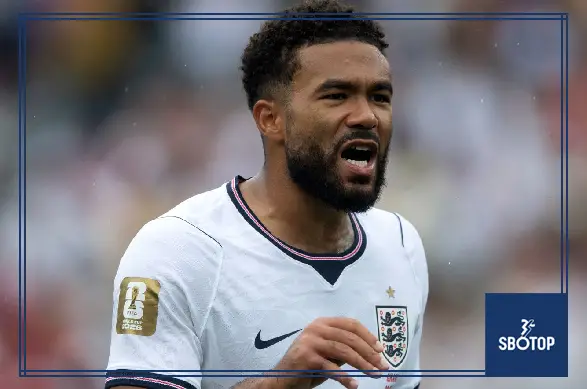
England’s World Cup quarter-final preparations have been dominated by one urgent question: can Reece James recover in time to help solve a growing right-back crisis before the showdown with Norway? At this stage of the tournament, selection issues are never just about one position. They affect balance, confidence, attacking shape, defensive structure, and the way a team approaches a dangerous opponent. For England, James’ fitness battle has become one of the most important storylines before Saturday’s quarter-final in Miami.
The Chelsea defender is racing to overcome a hamstring problem that has kept him out of recent matches, with England’s medical staff working to give him a chance of playing some part against Norway. The situation remains uncertain, with reports describing his availability as “touch and go” because of the injury and the limited time left before the quarter-final.
England would normally prefer not to rush a player back from a hamstring issue. But this is not a normal week. The team are in the last eight of the World Cup, Jarell Quansah is suspended after his red card against Mexico, and the right-back role has suddenly become a major concern.
A Fitness Race England Cannot Ignore
James’ situation is delicate because of the type of injury involved. Hamstring problems are rarely simple. A player may feel close to returning, but one sprint, one sudden turn, or one explosive recovery run can expose the risk. For a right-back, especially in a World Cup quarter-final, there is nowhere to hide. The position demands repeated accelerations, defensive duels, overlapping runs, and constant transitions.
That is why England must be careful. James is too talented to ignore, but too important to gamble recklessly. If he starts and breaks down early, England could lose a substitution, disrupt their defensive shape, and hand Norway a psychological boost. If he is left out despite being close to fitness, England may have to use a less natural option in one of the most demanding areas of the pitch.
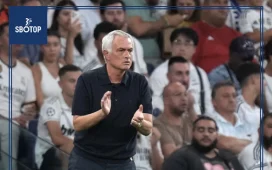
This is the dilemma facing Thomas Tuchel and his staff. England need James, but they also need the right version of James. A half-fit right-back against Norway’s pace, movement, and technical quality could create as many problems as it solves.
Why James Matters So Much
At his best, Reece James gives England a rare combination of defensive strength, technical quality, and attacking delivery. He is powerful enough to handle one-on-one duels, composed enough to build under pressure, and dangerous enough to create chances from wide areas. In a tournament where margins are tiny, that all-round profile is extremely valuable.
England’s right-back problem is not simply about filling a shirt. It is about how the whole team functions. A natural right-back can support Bukayo Saka, balance the defensive line, and help England play out from the back. Without that natural option, England may have to adjust their spacing, midfield support, and pressing triggers.
James also has the personality for big games. He is not a player easily overwhelmed by pressure. In a quarter-final, that matters. England will face a Norway side full of belief after beating Brazil, and any uncertainty in the back line could become a target.
That is why his recovery has become such a major talking point. England are not waiting on a squad player. They are waiting on someone who could change the way they approach the entire match.
Quansah Suspension Creates the Crisis
The urgency around James has increased because Jarell Quansah is unavailable. Quansah’s red card against Mexico removed one of England’s defensive options at exactly the wrong time. England survived that chaotic 3-2 win, but the consequences are now being felt.
Suspensions are often more damaging in tournament football than in league football because there is no time to adjust gradually. England cannot spend two or three matches testing solutions. They must solve the problem immediately, in a quarter-final, against a confident opponent led by Erling Haaland and Martin Ødegaard.
Quansah’s absence also affects the centre-back picture. If Ezri Konsa is moved to right-back, England may need John Stones or another defender to adjust centrally. If Djed Spence is used, England must judge whether he is ready for the physical and tactical demands of the occasion. If James returns, the whole structure looks more natural.
That is why one player’s hamstring has become a national concern.
Djed Spence and Ezri Konsa Offer Alternatives
England do have options, but none are perfect. Djed Spence is a more natural right-sided player, while Ezri Konsa can provide defensive security if Tuchel wants a cautious approach. Sky Sports has framed the right-back debate around James, Spence, and Konsa, with Quansah suspended and James still under a fitness cloud.
Spence could offer energy and width, but a World Cup quarter-final is a huge stage for any player stepping into a problem position. Norway will test defensive concentration, especially if they can isolate England’s right side in transition. Spence may have the physical tools, but the question is whether Tuchel trusts him for such a high-pressure assignment.
Konsa may be the safer defensive option. He is disciplined, positionally aware, and comfortable in a back line. But playing a centre-back at right-back can limit England’s attacking width. It may also affect Saka, who benefits from support and overlapping runs. If Konsa stays deeper, Saka may be forced to create more on his own.
James, if fit, remains the most complete answer. That is why England are giving him every chance.
Norway Will Look for Weakness
Norway will not need to be told where England are vulnerable. Their staff will study the right-back situation closely and prepare ways to test whoever starts there. A fitness doubt, a suspended defender, and possible reshuffling across the back line are exactly the kind of details opponents try to exploit.
Norway arrive with huge momentum after eliminating Brazil. Their quarter-final appearance is already historic, and their confidence is backed by genuine attacking threat. Erling Haaland has been one of the tournament’s standout players, with reports noting that Norway reached their first-ever World Cup quarter-final behind his explosive scoring form.
That makes England’s right side even more important. Norway do not only threaten through Haaland in the penalty area. They can also use Ødegaard’s passing to find runners, switch play, and expose defensive gaps. If England’s right-back is not fully sharp, Norway will notice.
The danger is not always the first attack. It is the repeated pressure. A full-back under physical or mental strain can make one late mistake, and at this level, one mistake can decide a tournament.
The Haaland Factor
Any discussion about England’s defensive choices must include Haaland. His movement is direct, brutal, and efficient. He does not need many chances. He only needs one clean delivery, one moment of hesitation, or one defender slightly out of position.
A right-back crisis might not seem directly connected to stopping a central striker, but football is rarely that simple. If England’s right side is unstable, the centre-backs may be dragged wider to cover. If the midfield shifts across too often, spaces can open centrally. If Norway can create crossing situations, Haaland becomes even more dangerous.
James’ value lies partly in preventing those chains of danger. A strong right-back can block wide attacks before they become central threats. He can stop crosses, win duels, and allow centre-backs to stay compact. Without that security, England may be forced into more emergency defending.
Against Haaland, emergency defending is a dangerous habit.
England’s Wider Injury Concerns
James is not the only England player causing concern. Declan Rice and Marc Guéhi also missed training, although their issues have been described as less alarming than James’ situation. The Times reported that Rice, James, and Guéhi were absent from training in Kansas City ahead of the Norway match, adding to England’s preparation concerns.
That matters because tournament preparation is about rhythm. Teams need stability before matches of this size. When several players are on individual programmes or carrying knocks, training becomes harder to structure. Coaches must prepare multiple versions of the starting XI, and players must be ready for late changes.
Rice is especially important because of his midfield control and defensive coverage. Guéhi is important because England may already need to adjust the back line. If either were unavailable or limited, the right-back issue would become part of an even bigger defensive puzzle.
England are still strong, but the timing of these concerns is far from ideal.
Also Read: