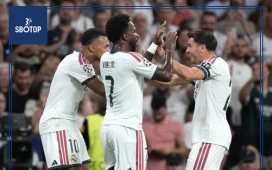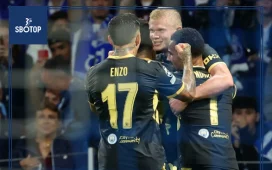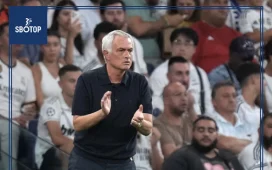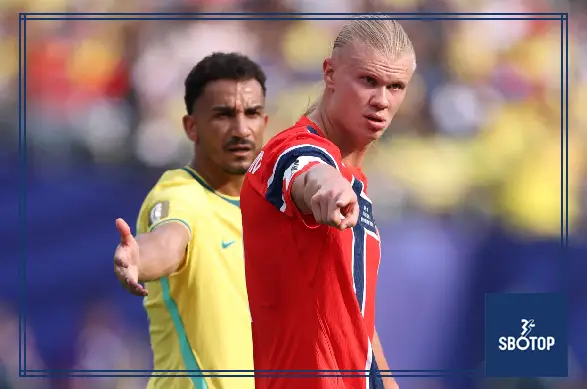
Erling Haaland has broken scoring records, lifted major trophies at club level, and established himself as one of the most feared forwards in world football. Yet even a player accustomed to extraordinary achievements struggled to understand what Norway had accomplished after defeating Brazil at the 2026 World Cup.
Norway’s dramatic 2-1 victory over the five-time world champions sent the Scandinavian nation into the World Cup quarter-finals for the first time. Haaland scored both Norwegian goals late in the match, transforming a tense round-of-16 contest into one of the most memorable nights in the country’s sporting history.
Speaking after the result, the Manchester City striker admitted that beating Brazil had never formed part of even his most ambitious childhood dreams. Haaland had always imagined representing Norway at a World Cup, but eliminating one of football’s most decorated nations was a scenario he had considered almost impossible.
His reaction was not simply the standard excitement of a player celebrating qualification. There was genuine disbelief in his words. Haaland said the experience felt surreal and suggested he occasionally needed to remind himself that Norway’s remarkable journey was actually happening.
For a footballer whose public image is often built around power, confidence, and relentless finishing, the honesty of that admission revealed how significant the moment had become. Norway had not merely won another match. The team had changed the country’s understanding of what might be possible on the world stage.
A Victory Few Believed Norway Could Achieve
Before the game, Brazil remained the obvious favourite. Even though the South American side had shown vulnerabilities during the tournament, its squad still contained elite players with experience at the highest level of European club football.
Norway possessed Haaland, Martin Odegaard, and several talented supporting players, but the gap in international pedigree appeared enormous. Brazil had won the World Cup five times, while Norway had not appeared at the tournament since 1998 before qualifying for the 2026 edition.
Haaland himself had been unusually cautious when discussing Norway’s chances. Rather than making bold predictions, he openly suggested that the probability of eliminating Brazil was very small.
That realism made the eventual victory even more powerful. Norway did not enter the match believing reputation alone would disappear. The players understood they needed discipline, physical commitment, tactical intelligence, and ruthless finishing.
For long periods, the match demonstrated why Brazil had been favoured. Carlo Ancelotti’s team created opportunities and received an early penalty after a VAR review. Bruno Guimaraes took responsibility, but Norway goalkeeper Orjan Nyland made a crucial save. Brazil also threatened through Vinicius Junior, Gabriel Martinelli, and Endrick, yet failed to turn its pressure into a decisive advantage.
Norway survived those difficult moments and remained within one goal of controlling the tie. The longer the game stayed level, the more confidence the Norwegian players appeared to gain.
Solbakken’s Changes Transform the Contest
Norway coach Stale Solbakken played an important role in changing the direction of the match. At half-time, he introduced Andreas Schjelderup and Oscar Bobb, giving Norway greater speed and creativity in wide areas.
The substitutions gradually pushed Brazil’s defensive line backwards. Norway became more effective on the counterattack and started finding spaces around the Brazilian penalty area. Schjelderup, in particular, became central to both decisive goals.
The tactical adjustment also brought Haaland into the game. During the first half, the striker had often appeared isolated. Brazil’s defenders limited the service reaching him, forcing Norway to search for other ways forward.
Once Norway began advancing through the wide areas, however, Haaland became much more dangerous. His movement forced the Brazilian centre-backs to defend closer to their own goal, while his strength created space for teammates arriving from midfield.
That is often the difference between containing Haaland and losing control of him. A defence may successfully deny him opportunities for 70 or 80 minutes, but one accurate delivery can be enough to decide an entire match.
Brazil discovered that reality in brutal fashion.
Haaland Rises for the Opening Goal
With approximately nine minutes of normal time remaining, Schjelderup delivered a cross into the penalty area. Haaland attacked the ball aggressively, rose above Gabriel Magalhaes, and directed a powerful header beyond Alisson.
It was a classic Haaland goal: direct, physical, and decisive. He did not need a long sequence of touches or an elaborate passing move. He identified the space, timed his run, and used his strength to defeat an accomplished Premier League defender in the air.
The goal immediately changed the emotional balance of the match.
Brazil, previously attempting to control the contest, suddenly had to chase an equaliser. Norway could defend deeper and wait for opportunities to counterattack. The Brazilian players pushed forward, but their urgency created additional gaps.
For Haaland, the opening goal represented far more than another addition to his international record. It placed Norway on the verge of eliminating the most famous national team in world football.
Still, the job was not finished. Brazil had enough attacking talent to respond, and Norway needed either perfect defensive concentration or a second goal.
Haaland soon provided the second option.
A Second Strike Seals the Shock
As the match moved into added time, Schjelderup again found Haaland in space. This time the striker received the ball near the edge of the penalty area and produced a low finish across goal.
Alisson could not prevent the shot from reaching the net. Norway had doubled its advantage, and the possibility of a historic victory suddenly became almost certain.
Haaland’s second goal showed a different side of his finishing. The first had relied on aerial power and timing. The second demanded composure, accuracy, and awareness of the goalkeeper’s position.
That variety explains why he is so difficult to defend. He can score through strength, speed, movement, first-time finishes, headers, and shots from the edge of the box. A defender cannot prepare for only one type of threat.
The brace took Haaland to seven goals at the tournament and placed him among the leading contenders in the Golden Boot race. It also continued an outstanding run of scoring form for Norway.
Neymar later converted a penalty for Brazil deep into added time, but the goal arrived too late to change the outcome. Norway held on, while Brazilian players were left to process another painful World Cup elimination.
Haaland Struggles to Describe the Moment
After the final whistle, Haaland’s reaction was noticeably different from the controlled confidence normally associated with him.
He admitted that he could hardly believe what had happened. Representing Norway at a World Cup had been one of his major career ambitions, but defeating Brazil and reaching the final eight went beyond the future he had imagined for himself.
Haaland described the experience as unreal and surreal. He also expressed amazement at scoring seven World Cup goals for Norway during the country’s first appearance at the tournament in 28 years.
The comments captured the emotional importance of international football.
At club level, Haaland competes for trophies every season. Manchester City enter most competitions as one of the favourites, and reaching the latter stages is treated as an expectation rather than a surprise.
Norway operate in a very different environment. Qualification itself represented a major achievement. Every knockout victory created new national history.
That contrast may explain why the Brazil result affected Haaland so deeply. He was not simply adding another medal opportunity to an already decorated career. He was helping his country enter territory it had never previously explored.
A Historic Night for Norwegian Football
Norway had never won a World Cup knockout match before the 2026 tournament. After qualifying for the first time since 1998, the team progressed beyond expectations and ultimately reached the quarter-finals.
The victory over Brazil therefore became a defining event for an entire football culture. It was not only about defeating a famous opponent. It represented the possibility that a relatively small European nation could build a team capable of challenging the sport’s traditional powers.
Solbakken described the occasion in historic terms, while Haaland referred to it as one of the wildest days Norway had ever experienced.
The response at home confirmed the scale of the achievement.
More than 90,000 people reportedly gathered in central Oslo to celebrate. Tens of thousands also watched the match at Ullevaal Stadium, where supporters threw drinks into the air and joined the team’s increasingly famous rowing celebration after the final whistle.
Crowds moved towards the royal palace, where Crown Prince Haakon appeared wearing a Norway football scarf. Fireworks illuminated the celebrations as supporters attempted to absorb a result that many had never expected to witness.
Haaland said he wished he could have joined the people celebrating in the streets. His message was simple: the country needed to enjoy the moment because achievements of this scale do not happen often.
From Long Absence to Global Attention
Norway’s football story before 2026 had often been defined by frustration. The national team produced high-quality players but repeatedly failed to qualify for major tournaments.
Haaland and Odegaard were viewed as the centrepieces of a talented generation, yet doubts remained over whether Norway could convert individual quality into international success.
Qualification finally ended the 28-year wait, but few expected the team to progress as far as the quarter-finals. Haaland later admitted that even he had not anticipated such a successful run.
The victory over Brazil changed the global profile of the team. Norway became one of the tournament’s most popular underdog stories, while Haaland developed into one of the central personalities of the World Cup.
The “Viking Row” celebration spread across stadiums, streets, and social media. Supporters performed it in Times Square and other public locations, while online content transformed Haaland into everything from a Viking commander to a pop-culture character.
For a player already recognised worldwide because of his performances in the Premier League and Champions League, the World Cup created a different form of attention.
This was Haaland representing a national story rather than a wealthy and successful club. Supporters outside Norway could identify with the improbability of the journey.
More Than a One-Man Team
The focus naturally fell on Haaland after his two goals, but Norway’s victory required contributions throughout the team.
Nyland’s penalty save prevented Brazil from taking an early lead. The defenders remained organised during difficult periods. Odegaard worked to connect midfield and attack, while Solbakken’s substitutions created the opportunities from which the goals arrived.
Schjelderup’s performance was particularly important. Introduced at half-time, he supplied the service for both goals and gave Brazil a problem it had not faced during the opening period.
The collective contribution is important when assessing Norway’s development. Haaland remains the decisive figure, but the team cannot rely on him receiving perfect chances without effective work around him.
Norway’s improvement has come from building a structure that amplifies his strengths. Wide players are expected to create deliveries. Midfielders must progress the ball quickly. Defenders need to keep matches close enough for Haaland’s finishing to matter.
Against Brazil, that structure worked.
Haaland himself emphasised that Norway had grown into a strong football team. He suggested their performances demonstrated that they deserved to be considered among the better national sides in Europe and potentially the wider world.
Brazil Pay the Price for Missed Chances
From Brazil’s perspective, the result became another example of the unforgiving nature of knockout football.
The five-time champions created opportunities, missed a penalty, and failed to take advantage of periods in which Norway looked vulnerable. Haaland, by contrast, converted Norway’s most important chances late in the match.
That difference in efficiency decided the contest.
Brazil’s defeat also extended the country’s wait for another World Cup title. Their last triumph came in 2002, and every subsequent tournament has ended in disappointment despite the presence of gifted generations.
Supporters and commentators immediately began debating tactical decisions, the selection of the penalty taker, and Ancelotti’s substitutions. Yet the simplest explanation remained that Brazil failed to score when opportunities were available.
Norway did not make the same mistake.
Haaland’s first goal came from a difficult aerial duel. His second came during a rapidly developing counterattack. Neither opportunity could be described as effortless, but he completed both with the authority expected from an elite striker.
Also Read: