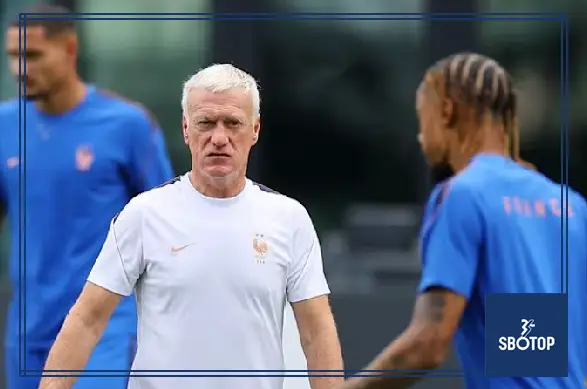
In the hours before Didier Deschamps took charge of France for the final time, Kylian Mbappé delivered a deeply personal tribute to the coach who had shaped both his international career and one of the most successful periods in French football history.
France’s captain described Deschamps as a national legend and acknowledged the painful reality surrounding his farewell. Rather than preparing for another World Cup final, Les Bleus were facing England in the third-place play-off after a 2-0 semifinal defeat by Spain ended their pursuit of a third consecutive appearance in the tournament’s decisive match.
Mbappé admitted that the players had wanted to give Deschamps a more fitting conclusion. The coach had spent 14 years rebuilding, guiding and protecting the French national team, yet his final assignment arrived in a match neither France nor England had hoped to play.
“Today is your last dance,” Mbappé wrote in his social-media message, before expressing regret that the squad had not delivered the ending Deschamps deserved. He nevertheless insisted that no single result could erase the coach’s extraordinary influence or his place in French sporting history.
The tribute reflected more than respect between a captain and a manager. It represented the passing of responsibility from the figure who had defined France’s modern era to the player expected to lead the next one.
A Farewell France Never Wanted
Deschamps’ final World Cup match was supposed to be more significant.
France arrived at the 2026 tournament with a squad capable of challenging for the trophy and a coach seeking one last major triumph. Having reached the finals in both 2018 and 2022, Les Bleus were attempting to become the first nation in decades to appear in three successive World Cup finals.
Spain ended that ambition in the semifinal.
The 2-0 defeat left France preparing for a bronze-medal match while Spain advanced to face Argentina for the title. For players accustomed to competing for the biggest prize, the emotional adjustment was difficult. The third-place fixture offered a medal, but it could not replace the championship opportunity that had disappeared only days earlier.
Deschamps openly recognised that reality. His players were physically tired and emotionally disappointed after a long tournament. Several had spent the previous weeks managing injuries, criticism and the pressure attached to representing one of the favourites.
Yet the match still carried meaning because it marked the end of a remarkable managerial reign.
Mbappé’s message gave France a different source of motivation. The players could no longer win the World Cup for Deschamps, but they could attempt to give him one final victory.
That effort ultimately ended in a chaotic 6-4 defeat by England. France conceded four times before half-time, then produced a spirited second-half response without completing the comeback. The match became the highest-scoring third-place play-off in World Cup history and closed the Deschamps era in dramatic rather than triumphant fashion.
Mbappé and Deschamps Shared a Defining Partnership
The relationship between Mbappé and Deschamps became central to France’s success over the previous decade.
Mbappé made his senior international debut under Deschamps in 2017 as one of Europe’s most exciting young forwards. The coach quickly recognised that the teenager possessed the speed, confidence and finishing ability to influence the world’s biggest matches.
A year later, Mbappé became a World Cup champion.
During the 2018 tournament in Russia, Deschamps constructed a team that combined defensive discipline with explosive counterattacking power. Mbappé was essential to that approach. His pace allowed France to attack space immediately after recovering possession, while his fearlessness created problems for experienced defenders.
The young forward scored four goals during the competition, including one in the 4-2 final victory over Croatia. At just 19, he had already reached the summit of international football.
Deschamps’ trust was crucial. Rather than asking Mbappé to play cautiously because of his age, the coach gave him a clearly defined role and allowed him to use his greatest qualities.
As Mbappé developed from a teenage phenomenon into a global superstar, their relationship evolved. He became one of France’s most influential players, then assumed the captaincy after Hugo Lloris retired from international football.
Deschamps continued to support him through changes in form, club uncertainty and public criticism. When questions were raised about Mbappé’s leadership, the coach generally defended his captain and emphasised his importance inside the squad.
By the 2026 World Cup, France’s project had been built around Mbappé. Reuters described the captain and coach as operating in close harmony during the tournament, with Mbappé’s influence extending beyond his goals and assists.
The farewell therefore carried personal weight. Deschamps had not simply selected Mbappé. He had guided his entire international journey.
Why Mbappé Called Him a Legend
The word “legend” can be overused in modern football, but Deschamps’ record makes it difficult to choose a more appropriate description.
As a player, he captained France to their first World Cup title in 1998. Two years later, he helped the national team win the European Championship, establishing France as the dominant international side of that period.
As a coach, he returned the country to the summit.
Deschamps was appointed France manager in 2012 after the national team had experienced years of inconsistency and internal tension. He gradually restored structure, authority and competitive stability.
France reached the Euro 2016 final on home soil, losing to Portugal after extra time. Two years later, Deschamps led the team to World Cup glory in Russia. The achievement made him only the third man, after Mario Zagallo and Franz Beckenbauer, to win the trophy as both a player and a coach.
His France side then won the UEFA Nations League in 2021 and reached another World Cup final in Qatar the following year. The French Football Federation’s summary of his tenure highlights the 2018 World Cup and 2021 Nations League victories, together with runner-up finishes at Euro 2016 and the 2022 World Cup.
Few international coaches have achieved that level of consistency across multiple generations.
Deschamps worked with the remaining members of France’s experienced core while gradually introducing younger players. He managed the departures of major figures such as Lloris, Raphaël Varane, Paul Pogba and Olivier Giroud without allowing the team’s standards to collapse.
His tactical methods were not always admired. Critics regularly accused France of playing too cautiously despite possessing exceptional attacking talent. Deschamps often preferred control, physical strength and transitional football over continuous possession or elaborate attacking patterns.
However, his results were difficult to challenge.
International tournaments are short and unforgiving. A poor 20-minute period can end years of preparation. Deschamps created teams that understood how to survive those moments.
That ability made France one of the most dependable tournament nations in the world.
A Coach Who Valued the Collective
Deschamps’ greatest strength was his understanding of team balance.
France frequently possessed more individual talent than their opponents, but he never treated a squad as a collection of famous names. Every player needed a role, and every role had to support the wider structure.
Creative forwards were expected to contribute without the ball. Midfielders had to protect defensive spaces. Full-backs were selected partly for their tactical discipline, while central defenders were asked to remain comfortable when France allowed opponents to dominate possession.
Deschamps was willing to leave high-profile players out when he believed their presence might disrupt the group. Those decisions created controversy, but they reinforced his authority.
His approach was captured by a principle he discussed before Euro 2016: a coach does not simply choose the most talented individuals but attempts to construct the strongest squad.
That philosophy shaped France’s 2018 victory.
Players accepted responsibilities that were not always glamorous. Antoine Griezmann connected midfield and attack, Blaise Matuidi provided defensive balance from a wide position, and Giroud occupied defenders even when he was not scoring.
Mbappé supplied the speed and unpredictability, but the system enabled him to do so.
The same collective values remained visible in later tournaments. France could change personnel without completely losing their identity because players understood what Deschamps demanded.
Mbappé’s tribute recognised that influence. The coach gave France more than trophies. He created an environment in which talented individuals learned to compete as a unit.
The Pressure of Managing France
Leading France for 14 years required more than tactical knowledge.
The country continually produces elite players, which means every selection decision creates debate. When one forward is chosen, another leading player is left at home. When France defend deeply, critics ask why such a talented squad is not attacking more aggressively.
Deschamps managed those expectations through emotional control.
He rarely allowed public controversy to dictate his decisions. His press conferences were measured, and he generally avoided creating unnecessary conflict with players or opponents. Even during disappointing tournaments, he attempted to keep the squad protected from external noise.
His calmness sometimes appeared conservative, but it provided stability.
National-team coaches have limited training time. They cannot build systems with the same daily detail available at club level. Deschamps therefore prioritised clarity, trust and adaptability.
Players knew what the coach expected, even when their roles changed.
This consistency mattered to Mbappé. The forward entered the national side as a teenager, became a world champion, suffered the disappointment of losing the 2022 final and eventually inherited the captaincy—all under the same coach.
Deschamps provided the stable framework around those changes.
Mbappé’s Words Contained Regret
The emotional power of Mbappé’s tribute came partly from its honesty.
He did not pretend that France had delivered the farewell they wanted. The semifinal defeat by Spain meant Deschamps would not finish his career by lifting another trophy. Mbappé acknowledged that failure directly.
That sense of regret intensified after the match against England.
France’s opening-half performance was far below the standard associated with the Deschamps era. England scored four times as Les Bleus struggled defensively, leaving the departing coach facing humiliation in his final appearance.
France responded after the interval. Mbappé scored twice, and the team reduced the deficit during a frantic second half. England eventually held on, but France at least refused to allow the match to end without resistance.
Mbappé later admitted that the team had been stunned by England’s first-half intensity. The comeback demonstrated character, but it could not change the outcome.
For Deschamps, defeat was an imperfect conclusion. For Mbappé, it reinforced the regret expressed before kickoff.
The players had wanted to honour their coach with a victory. Instead, they gave him a final display containing both the weaknesses that ended France’s title challenge and the resilience that had defined much of his tenure.
Mbappé Still Produced a Historic Final Performance
Although the match ended in disappointment, Mbappé’s individual contribution added another chapter to his extraordinary World Cup career.
His two goals took his career total at the tournament to 22, moving him beyond Lionel Messi’s previous mark and placing him at the top of the men’s World Cup scoring list at that moment. He also completed the 2026 competition with 10 goals.
The achievement reflected the stage on which Mbappé has repeatedly performed his best football.
He scored in the 2018 final, produced a hat-trick in the 2022 final and remained prolific throughout the 2026 tournament. Very few players have combined such volume with such importance in decisive World Cup matches.
Deschamps played a central role in creating that record.
He selected Mbappé early, trusted him in major games and built attacking plans around his strengths. The captain’s success therefore became part of the coach’s legacy.
Mbappé may eventually establish records that survive for generations, but his international story will always begin with the manager who gave him a place in France’s senior team.
Also Read: