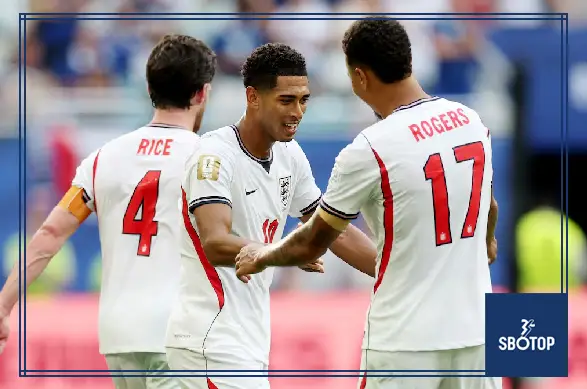
England ended their 2026 World Cup campaign with a bronze medal after surviving an extraordinary French comeback to win a chaotic third-place play-off 6-4 in Miami.
Bukayo Saka scored a hat-trick, Declan Rice and Ezri Konsa struck during a dominant opening period, and substitute Jude Bellingham completed the scoring deep into stoppage time. France transformed a humiliating 4-0 half-time deficit into a genuine contest after the break, with Kylian Mbappé scoring twice alongside goals from Bradley Barcola and Ousmane Dembélé.
The ten-goal spectacle became the highest-scoring third-place match in World Cup history. It also gave England their best finish at the tournament since winning the trophy on home soil in 1966 and their first victory in a World Cup third-place play-off after defeats in 1990 and 2018.
The bronze medal could not completely erase the pain of England’s semifinal defeat by Argentina, but it offered Thomas Tuchel’s players a positive conclusion to a demanding campaign. For France, the result brought a disappointing end to Didier Deschamps’ 14-year reign, although Mbappé’s historic individual achievement ensured the match would be remembered for more than the defeat.
A Match Nobody Wanted Became Impossible to Ignore
Third-place play-offs are often treated as uncomfortable obligations. Both teams enter after losing semifinals, meaning their dream of becoming world champions has disappeared only days before they must compete again. Coaches frequently rotate their squads, players struggle to rediscover their motivation, and supporters may focus more heavily on the upcoming final. England and France changed that narrative almost immediately.
What began as a contest between two disappointed teams developed into one of the most entertaining matches of the tournament. There was speed, open space, defensive uncertainty, individual brilliance and a constant sense that another goal could arrive at any moment.
The crowd of 64,478 at Miami Stadium was rewarded with the highest-scoring World Cup match since Hungary defeated El Salvador 10-1 in 1982. The ten goals also broke the previous record for a third-place fixture, which had stood since France’s 6-3 victory over West Germany in 1958.
Neither England nor France had achieved their original target, but both contributed to a match that eventually felt far more important than its position on the schedule suggested.
England Respond to Semifinal Heartbreak
England’s performance carried additional significance because of the criticism that followed their 2-1 semifinal loss to Argentina.
Tuchel’s team had led through Anthony Gordon before conceding twice late in the match. The manager was questioned over his substitutions and his side’s increasingly defensive approach after taking the lead. Some observers believed England had surrendered control instead of continuing to attack.
Against France, the response was immediate.
England played with urgency from kickoff, moving the ball forward quickly and sending midfielders into advanced positions. Rather than allowing France to settle, they pressed high, attacked loose passes and repeatedly targeted a reshaped defence selected by Deschamps.
Rice opened the scoring in the third minute with a powerful finish after driving into an attacking position. The midfielder then turned provider in the 18th minute, delivering the corner from which Konsa headed home England’s second goal.
The early goals changed the emotional direction of the match.
England had entered carrying disappointment, but within 20 minutes they were playing with confidence and freedom. France, meanwhile, appeared mentally and tactically unprepared for the intensity of their opponents.
Saka Punishes France’s Defensive Problems
The first half increasingly became Bukayo Saka’s stage.
Tuchel had left the Arsenal winger out of the starting lineup against Argentina, explaining later that he had been cautious because Saka had managed an Achilles problem during the preceding months. His omission became a major talking point after England’s elimination, particularly because the team struggled to maintain an attacking threat during the closing stages.
Saka answered those questions on the pitch.
He scored his first goal in the 37th minute after England’s direct passing opened the French defence. Nine minutes later, during first-half stoppage time, he struck again to send his team into the interval with an astonishing 4-0 advantage.
His movement caused France constant difficulty. Saka drifted inside to receive between defensive lines, accelerated into spaces behind the full-back and remained composed when chances arrived.
The performance was not simply about finishing. He helped England progress the ball, stretched France’s shape and provided an outlet whenever his team recovered possession.
Tuchel described Saka as a central player within his plans despite the semifinal decision. The hat-trick reinforced that status and ensured the winger ended the tournament with one of England’s defining individual displays.
At half-time, France were four goals behind and apparently heading towards an embarrassing farewell.
The match was only beginning.
Deschamps’ Changes Transform France
Deschamps reacted by introducing Dayot Upamecano and Lucas Digne at the interval in an attempt to stabilise the defence.
The substitutions helped France play higher up the pitch and recover possession more aggressively. England, perhaps affected by fatigue or the security of their lead, began dropping deeper. The space that had belonged to Tuchel’s side during the opening half was now controlled by France.
Mbappé scored only three minutes after the restart, flicking the ball beyond goalkeeper Dean Henderson to give Les Bleus their first sign of hope.
Bradley Barcola reduced the deficit again in the 54th minute after moving through a tiring England defence. Twelve minutes later, Mbappé finished a move created by Michael Olise to make the score 4-3.
France had scored three times in 18 second-half minutes.
A match that appeared finished at the break suddenly became tense. England struggled to slow the tempo, while France attacked with the intensity of a team finally aware that Deschamps’ last match could end in humiliation.
Mbappé later admitted that the players had been stunned during the first half. France’s captain felt the performance might have appeared disrespectful to the shirt, but argued that the team had been overwhelmed rather than indifferent. After the interval, he said, France rediscovered the mentality expected from elite players.
The comeback did not produce victory, but it prevented France from disappearing quietly.
Mbappé Rewrites World Cup History
Mbappé’s two goals carried enormous historical significance.
His brace took him to ten goals at the 2026 tournament and 22 across his World Cup career. That total moved him ahead of Lionel Messi’s previous mark of 21 and placed the French captain at the top of the competition’s all-time scoring list before Argentina’s final against Spain.
The record strengthened Mbappé’s status as one of the greatest World Cup performers.
He first lifted the trophy as a teenager in 2018, scoring four times during France’s victorious campaign. Four years later, he delivered a hat-trick in the final against Argentina and won the Golden Boot despite France losing on penalties.
His 2026 campaign provided another demonstration of his comfort on football’s largest stage. Even in a third-place match, with France trailing heavily and their title challenge already over, Mbappé continued attacking as though the trophy remained available.
His second-half performance gave France belief and forced England to defend desperately. He also moved to ten tournament goals, placing him ahead of Messi in the race for the 2026 Golden Boot before the final.
Mbappé acknowledged that the record offered limited comfort. He would have preferred to be preparing for the final instead of discussing an individual achievement after defeat.
That reaction captured the contradiction of his evening: personal history made during a painful team result.
England Find a Way Out of Trouble
At 4-3, England were in serious danger of throwing away a four-goal lead.
France continued creating chances, and the psychological balance of the match had shifted completely. Every French attack brought greater belief, while every England clearance reflected growing tension.
Tuchel’s team nevertheless resisted the instinct to defend exclusively. England still attempted to counterattack when space became available, and that decision eventually protected them.
With three minutes of normal time remaining, Saka converted a penalty to complete his hat-trick and restore a two-goal advantage.
The strike appeared to have ended the contest, but Dembélé scored for France to make it 5-4 and create another dramatic finish. Les Bleus pushed forward again, leaving large spaces behind their defence.
Bellingham exploited one of those openings deep into stoppage time.
The midfielder carried the ball forward and completed the scoring with England’s sixth goal. It was his seventh of the tournament, establishing a new record for the most goals scored by an England player at a single World Cup.
The final whistle brought relief as much as celebration.
England had produced an outstanding first half, suffered throughout much of the second and then rediscovered enough attacking quality to finish the contest.
Bronze Carries Complicated Emotions
England’s players collected their medals knowing they had achieved something significant without fulfilling their greatest ambition.
Tuchel had set the target of winning the World Cup. Reaching the semifinal and finishing third therefore contained both progress and disappointment.
The manager said he hoped the players would eventually look back with pride. England had secured their first World Cup medal in 60 years and recorded their best finish outside their own country. However, Tuchel also admitted that the pain of missing the final would remain.
That emotional conflict was visible during the ceremony.
The bronze medal represented recognition for a long campaign in which England defeated DR Congo, Mexico and Norway during the knockout rounds before narrowly losing to Argentina. It also represented another tournament that ended without the trophy the country has pursued since 1966.
Third place should not be treated as failure. England finished above 45 other participating nations and defeated France, one of international football’s strongest teams, in their final match.
Yet the semifinal collapse will continue to shape how the campaign is assessed.
The French victory provided an immediate response to criticism, but it did not answer every question about England’s game management. Conceding four second-half goals after leading 4-0 showed that defensive control remains a concern.
England demonstrated potential and vulnerability in the same match.
Rice Leads from the Front
Declan Rice’s contribution was central to England’s positive start.
Captaining the team in Harry Kane’s absence from the starting lineup, Rice established the tone by charging forward to score within three minutes. His corner then created Konsa’s goal, giving England control before France had adjusted to the contest.
His performance reflected the broader evolution of his role.
Rice is often associated with defensive security, ball recovery and positional discipline. Against France, he showed his ability to influence the attacking third. His willingness to move beyond the forwards created unexpected pressure and prevented the French midfield from protecting its defence.
Leadership was equally important.
England needed players capable of restoring energy after the emotional damage of the semifinal. Rice’s early aggression gave the team a clear message: the bronze-medal match would be taken seriously.
That attitude spread through the side.
Saka attacked defenders, Konsa competed aggressively at set pieces and England’s midfield passed forward whenever possible. Tuchel’s team did not play as though third place was meaningless.
They played as though victory was the only acceptable way to leave the tournament.
Also Read: