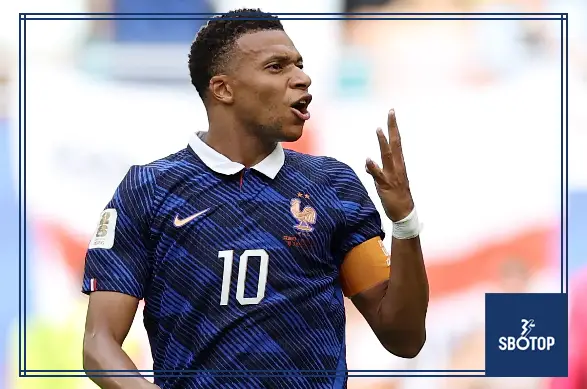
Kylian Mbappé may not have lifted the World Cup trophy in 2026, but the France captain still departed North America with another permanent place in football history.
The French forward secured the Golden Boot after scoring 10 goals in eight appearances, finishing ahead of Argentina captain Lionel Messi and becoming the first player to claim the award more than once. Mbappé had previously topped the scoring chart with eight goals at the 2022 tournament in Qatar, making his 2026 triumph a second consecutive Golden Boot.
His achievement was confirmed after Messi failed to score during Argentina’s 1-0 extra-time defeat to Spain in the final. The Argentine finished the tournament with eight goals, leaving Mbappé two clear at the top.
France’s campaign ended without the outcome Mbappé truly wanted. Les Bleus were eliminated by Spain in the semi-finals before losing an extraordinary third-place play-off 6-4 against England. Yet Mbappé’s performances ensured that the tournament still became one of the defining chapters of his career.
His brace against England took him to 10 goals for the competition and 22 across his World Cup career, establishing him as the tournament’s all-time leading scorer. At only 27, he moved beyond Lionel Messi’s total and strengthened the possibility that his final World Cup record could remain untouched for generations.
The 2026 World Cup belonged collectively to champions Spain, but its most destructive individual attacker was unmistakably Mbappé.
A Golden Boot Race Reignited in Miami
Kylian Mbappé entered the third-place match knowing that his position at the top of the scoring chart was under threat.
He had eight goals, the same total Messi carried into the final. With France facing England one day before Argentina met Spain, Mbappé had an opportunity to establish a lead and place pressure on his long-time rival.
The France captain responded by scoring twice in one of the most chaotic matches in World Cup history.
England raced into a four-goal lead during the first half, but France produced an aggressive response after the interval. Mbappé scored twice as Les Bleus reduced the deficit and briefly threatened an extraordinary comeback.
England eventually secured a 6-4 victory through Bukayo Saka’s hat-trick and Jude Bellingham’s stoppage-time goal. The result left France without a medal, but Mbappé had completed his own mission.
His brace lifted him to 10 tournament goals, two ahead of Messi. It also made him the leading scorer in World Cup history with 22 goals from 22 matches.
Messi therefore required at least two goals against Spain to draw level in the Golden Boot race.
Spain’s defensive organisation ensured that never appeared likely. La Roja controlled the final, limited Argentina to almost nothing in attack and prevented Messi from registering a decisive contribution.
When the final whistle sounded, Spain were champions and Mbappé was officially the tournament’s leading scorer.
The First Player to Win Multiple Golden Boots
The Golden Boot has been associated with some of the greatest forwards football has produced.
Gerd Müller, Ronaldo Nazário, Miroslav Klose, Eusébio, Gary Lineker, Harry Kane and Just Fontaine are among the players who have finished a World Cup as its leading scorer.
Mbappé has now achieved something none of them managed.
He became the first man to win the World Cup Golden Boot twice, adding the 2026 award to the one he secured four years earlier.
The achievement is even more impressive because he won the awards consecutively. His performances in Qatar were not followed by a decline, injury-damaged campaign or tactical reduction in influence. Mbappé returned to the World Cup and improved his total from eight goals to 10.
Defenders knew precisely what he wanted to do. They understood his preference for attacking space from the left, accelerating beyond the defensive line and finishing quickly before goalkeepers could establish their position.
Knowing the threat did not make it easier to stop.
Mbappé repeatedly created separation through speed, movement and timing. Opponents often placed two defenders near him, but that additional attention created opportunities elsewhere in France’s attack.
When Mbappé received space, he punished it. When teams defended narrowly, he attacked from wider positions. When matches became tense, he accepted responsibility.
The Golden Boot was not the result of one dominant match against a weak opponent. It reflected sustained production throughout the tournament.
Ten Goals Across Eight Matches
FIFA confirmed that Mbappé finished the competition with 10 goals in eight appearances.
Eight of those goals arrived through four braces, demonstrating his ability to transform matches once he found his rhythm.
He scored twice against Iraq, twice against Senegal, twice against Sweden and twice against England. He also converted a penalty against Paraguay and scored in France’s quarter-final victory over Morocco.
The variety of those goals illustrated the completeness of his attacking game.
Some came from explosive runs behind high defensive lines. Others resulted from sharp movement inside the penalty area. He converted under pressure from the spot and finished chances after moving from a wide starting position into the centre.
France frequently depended on him to turn controlled possession into a decisive action. Mbappé did not always dominate every phase of a game, but he required only a brief opening to change the score.
That efficiency became particularly important as France’s campaign grew more difficult.
Les Bleus were not consistently fluent. Injuries, tactical changes and uneven performances occasionally disrupted their rhythm. Mbappé’s finishing allowed them to advance even when their overall display was imperfect.
His goals were not decorative additions to comfortable victories. They were central to France reaching the final week of the tournament.
Matching Gerd Müller’s Famous Mark
Mbappé’s 10-goal campaign placed him alongside Gerd Müller, who scored the same number for West Germany at the 1970 World Cup.
Only two men have scored more at a single edition: Hungary’s Sándor Kocsis, who struck 11 times in 1954, and France legend Just Fontaine, whose extraordinary 13-goal campaign in 1958 remains the tournament record.
Reaching double figures at a modern World Cup is exceptionally difficult.
Teams now prepare with enormous tactical detail. Video analysis allows defenders to study every movement, while tournament football often encourages caution. Knockout matches can become controlled contests decided by one goal, reducing the opportunities available to forwards.
Mbappé overcame those conditions.
He became the first player since Müller in 1970 to score 10 goals at one World Cup.
The expanded 2026 competition provided additional knockout football through the introduction of the round of 32, but Mbappé still had to convert the opportunities created for him. Playing more matches does not guarantee more goals, particularly as opponents become stronger during the later stages.
His total represented consistency, durability and elite finishing across five demanding weeks.
From Teenage Champion to Global Record Holder
Mbappé’s World Cup journey began in 2018 when he arrived in Russia as one of football’s most exciting young players.
He left as a world champion.
At 19, Mbappé scored four goals during France’s victorious campaign, including one in the final against Croatia. His speed and confidence made him one of the tournament’s defining performers.
The 2022 World Cup then elevated him further.
Mbappé scored eight times in Qatar and produced a hat-trick in the final against Argentina. France lost the match on penalties, but his individual performance was historic. He became only the second player to score three goals in a men’s World Cup final and finished the tournament with the Golden Boot.
By the beginning of the 2026 competition, he already had 12 World Cup goals.
He needed five more to move beyond Miroslav Klose’s previous career record of 16. Mbappé did not simply reach that number; he moved decisively beyond it.
His 10 goals took his career total to 22, making him the leading scorer in World Cup history.
He achieved the mark before his 28th birthday.
That age is important because Mbappé could realistically participate in at least two more World Cups. Fitness, form and qualification can never be guaranteed, but he may have opportunities in 2030 and 2034.
The record could therefore grow far beyond its current level.
Surpassing Messi in Another Dramatic Race
The 2026 Golden Boot race recreated the individual tension that had surrounded Mbappé and Messi four years earlier.
In Qatar, the two superstars met in the final. Messi scored twice, Mbappé completed a hat-trick, and Argentina ultimately won on penalties. Mbappé’s eight goals earned him the Golden Boot, while Messi finished with seven and received the Golden Ball.
In 2026, they again entered the closing weekend competing for the scoring prize.
Messi had produced an outstanding start to the tournament, scoring eight times before Argentina’s later knockout matches became increasingly difficult. Mbappé continued finding the net as France moved toward the semi-finals.
The Frenchman’s brace against England gave him the advantage before Messi faced Spain.
Messi could not respond. Spain surrounded him in midfield, denied him space around the penalty area and completed the final without conceding.
Mbappé finished with 10 goals, while Messi remained on eight.
The Golden Boot therefore belonged to the French captain for a second time.
Mbappé also ended the competition one goal ahead of Messi in the all-time World Cup standings, reaching 22 while the Argentine remained on 21.
The comparison does not reduce either player’s legacy. Messi leaves the tournament as a World Cup winner, a multiple Golden Ball recipient and one of the competition’s most influential figures.
Mbappé, however, has become its greatest goalscorer.
France’s Disappointment Remains
Individual awards could not fully repair the disappointment of France’s final week.
Didier Deschamps’ side entered the tournament with realistic ambitions of reaching a third consecutive World Cup final. France had won in 2018 and finished second in 2022, establishing a level of consistency rarely seen in the modern international game.
Their 2026 campaign ended in the semi-finals against Spain.
Mbappé and his teammates struggled to break through a disciplined Spanish defence, while La Roja controlled possession and won 2-0. France were then required to recover emotionally for the third-place match against England.
The 6-4 defeat in Miami highlighted both France’s attacking quality and defensive instability. Mbappé scored twice, but England’s speed and movement repeatedly exposed Les Bleus.
France ended the tournament in fourth place.
For Mbappé, that outcome inevitably limited the satisfaction of winning the Golden Boot. His ambitions are measured in trophies rather than individual statistics.
He already knows the difference between receiving the scoring award as a champion and collecting it after defeat.
In 2022, he stood with the Golden Boot after losing the final. In 2026, he received the same recognition after France had fallen short in both the semi-final and bronze-medal match.
The award confirmed his brilliance, but it also represented another campaign in which his goals could not take France all the way.
Also Read:
- SBOTOP: Argentina’s World Cup Final Shame as Paredes Ignites Post-Match Brawl and Is Sent Off After Spain Triumph
- SBOTOP: World Cup Final Erupts in Chaos as Scaloni Intervenes After Spain End 16-Year Title Wait
- SBOTOP: Declan Rice Makes England Captaincy History but Rejects Empty Trophy Talk After Fresh World Cup Pain