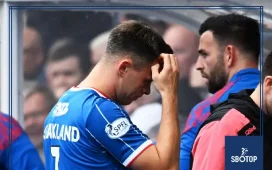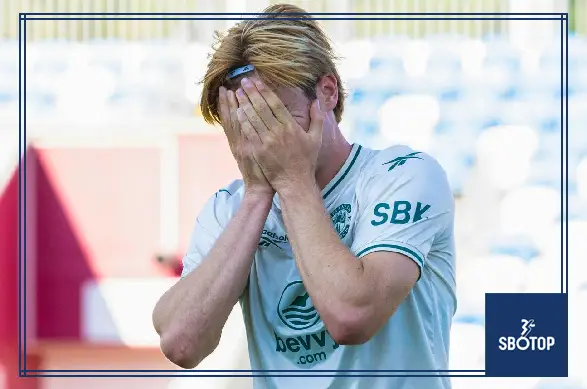
Hibernian’s European campaign was thrown into immediate danger after a disjointed and deeply disappointing 2-0 defeat against FC Malisheva in the first leg of their UEFA Conference League second qualifying-round tie.
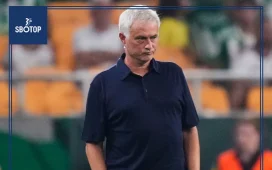
Goals from Kreshnik Uka and substitute Valjmir Nafiu secured a famous victory for the Kosovan side at the Fadil Vokrri Stadium in Pristina. For Hibs, the result represented far more than an inconvenient away defeat. It was a damaging performance that left head coach David Gray apologising to supporters and describing what he had witnessed as unacceptable.
Hibernian travelled to Kosovo as clear favourites to progress over two legs. They were representing the Scottish Premiership against a club founded only in 2016 and operating far outside the financial scale of most established Scottish top-flight teams. Malisheva, however, approached the contest with greater intensity, discipline and clarity.
The hosts scored through Uka in the 21st minute before Nafiu added a crucial second goal near the end. That late strike transformed the challenge awaiting Hibs at Easter Road from difficult to potentially disastrous. Gray’s side must now score at least twice in Edinburgh simply to level the aggregate score.
The performance provoked anger among the travelling support. Approximately 250 Hibernian fans made the journey to Kosovo and booed the players at full-time. A smaller group later confronted members of the squad outside the stadium, demanding explanations after a display they believed fell far below the standards expected from the club.
Gray did not attempt to defend his players.
He accepted responsibility, apologised to the supporters and acknowledged that Hibernian had failed in almost every area that mattered. The manager’s use of the word “unacceptable” reflected the seriousness of both the result and the manner in which it was produced.
Malisheva Showed No Fear
Malisheva’s victory should not be reduced to a story about Hibernian’s failures alone.
The Kosovan club earned the result through aggression, organisation and an obvious determination to make the most of one of the biggest European nights in their short history.
They entered this round after defeating Albanian side Vllaznia 6-2 on aggregate. Malisheva lost the opening leg of that tie 2-1 before producing an extraordinary 5-0 victory in the return fixture. Uka scored twice in that comeback, offering Hibs a clear warning about the danger he could pose.
Gray had also publicly acknowledged Malisheva’s intensity before the first leg. After reviewing their previous European matches, he described them as an energetic and aggressive side prepared to compete for every part of the pitch.
Hibernian therefore cannot claim they were completely surprised by the hosts’ approach.
Malisheva pressed energetically, competed for second balls and refused to allow the Scottish side to settle into a comfortable passing rhythm. Their players understood that Hibs carried the greater reputation but did not behave like a team intimidated by it.
The hosts’ reward arrived midway through the first half.
Uka reacted inside the penalty area and finished from close range to place Hibernian behind. The goal reflected several of the visitors’ problems: poor defensive organisation, a failure to deal decisively with danger and a lack of alertness when Malisheva attacked the box.
Once ahead, the home side had something concrete to protect. They defended with commitment but continued looking for opportunities to increase their advantage rather than merely retreating.
That ambition was rewarded when Nafiu struck in the closing stages.
At 1-0, Hibernian could still have returned to Easter Road believing that one strong home performance would probably be sufficient. The second goal dramatically increased the pressure and gave Malisheva a genuine opportunity to complete one of the most significant results in their history.
Hibernian Failed to Match the Occasion
European qualifiers often expose teams that are not mentally prepared for unfamiliar opponents and difficult environments.
Hibernian appeared to fall into that category.
The playing surface was uneven and reportedly became more difficult after the sprinklers were used shortly before kick-off. Several Hibs players struggled to maintain their footing, and the poor surface disrupted the speed of their passing.
Yet the pitch cannot explain the full performance.
Both teams operated under the same conditions. Malisheva adjusted more effectively, played with greater conviction and demonstrated a clearer understanding of what the match required.
Hibs appeared hesitant.
Their build-up lacked speed, while their attacking movements were too predictable. Rather than moving the opposition through sharp passing and intelligent rotations, they frequently allowed Malisheva to recover their defensive shape.
The Scottish side also struggled when the hosts increased the physical intensity.
European qualifying matches can become uncomfortable contests in which technique must be supported by aggression and concentration. Hibernian possessed players with greater experience at a higher domestic level, but reputation offered no protection once Malisheva began winning individual battles.
Gray’s team were second best in too many important moments.
That failure was particularly concerning because the match represented their first competitive fixture of the new season. A lack of full sharpness was understandable, but a lack of intensity was not.
Early Chances Offered False Encouragement
Hibernian did have opportunities.
Owen Elding came close during the opening stages, providing an early suggestion that the visitors might impose their attacking quality. New signing Nathan Lowe was handed his debut and also found himself in promising situations, while Miguel Chaiwa failed to make the most of another chance.
Those moments demonstrated that Malisheva were not impossible to break down.
The problem was Hibs’ inability to build sustained pressure.
A stronger team would have treated the early warning signs as encouragement, increased the tempo and forced the hosts into longer periods of defending. Hibernian instead allowed the contest to become fragmented.
Once Uka scored, the visitors required a calm but forceful response.
They needed to circulate the ball more quickly, stretch Malisheva across the pitch and test the goalkeeper repeatedly. Instead, their attacks remained inconsistent.
Possession without penetration became an issue.
Hibs could move the ball across deeper positions, but too few actions disrupted the home defence. Their forward players were often isolated, and deliveries into the box lacked the preparation needed to make them genuinely dangerous.
The absence of an equaliser before half-time gave Malisheva further belief.
As the game continued, the hosts no longer looked like outsiders attempting to survive. They began to resemble the more confident team.
Questions Over Gray’s Tactical Approach
The defeat inevitably placed David Gray’s tactical decisions under scrutiny.
Hibernian were accused by sections of their support of remaining too committed to a system that did not suit the match. Some questioned why the team operated with three central defenders against opponents expected to spend significant periods without the ball.
That criticism reflects a broader frustration.
A three-at-the-back structure is not automatically defensive. Properly used, it can allow wing-backs to push high, create overloads and give midfielders more freedom. The problem occurs when the wide players fail to provide consistent attacking quality or when the possession becomes slow and predictable.
Against Malisheva, Hibs did not generate enough advantage from the system.
The extra central defender did not guarantee defensive security, as shown by the two goals conceded. At the other end, the team lacked the variety needed to disturb a compact opponent.
Supporters also questioned the timing and impact of Gray’s substitutions.
When a European tie begins slipping away, the manager must decide how aggressively to chase the game. Pushing too many players forward can create counter-attacking opportunities, but accepting a narrow defeat can also surrender momentum.
Gray’s changes did not produce the response required, and Malisheva ultimately found the second goal.
That does not mean the formation alone caused the defeat. Players still have responsibility for passing quality, movement, concentration and commitment.
Nevertheless, a manager is judged by whether his structure gives the team the best possible chance to perform. Gray’s own anger indicated that the plan was either not followed or was not effective enough.
Gray’s Uncompromising Reaction
After the final whistle, Gray could have focused on the pitch, the timing of the fixture or the difficulty of playing away in Europe.
Instead, he directed the criticism toward Hibernian.
He described the performance as unacceptable and acknowledged that the players had failed to reach the standard required. The head coach also apologised to the supporters who travelled to Pristina.
That response was necessary.
Attempting to soften the defeat would have angered supporters further. The difference in resources and expectations made it impossible to present the result as an ordinary European setback.
Gray’s honesty, however, must now be followed by an effective response.
Calling a performance unacceptable has value only when the manager identifies why it happened and prevents a repeat. The players must understand whether the central failure was tactical confusion, complacency, physical preparation or a combination of all three.
Gray must also ensure that his criticism does not become empty language.
Hibernian cannot simply promise greater effort at Easter Road. They need a clear plan capable of overturning a two-goal deficit.
The manager’s reaction placed responsibility on the squad, but it also intensified attention on his own position. If Hibs are eliminated, questions about preparation and tactical adaptability will become unavoidable.
Anger Among the Travelling Support
The supporters’ reaction demonstrated how seriously the defeat was viewed.
Hundreds of fans invested time and money to travel from Scotland to Kosovo. European away trips are often among the most memorable experiences available to club supporters, particularly for teams that do not qualify every season.
Those fans expected commitment, even if the result went against them.
Instead, many believed the team had failed to represent the shirt properly.
The players were loudly booed after the match. Around two dozen supporters then waited outside the stadium gates and confronted members of the squad as they emerged. Goalkeeper Raphael Sallinger was reportedly among those addressed, while midfielder Josh Mulligan attempted to calm the situation.
The frustration was understandable, although confrontations must remain within safe and lawful boundaries.
Supporters are entitled to criticise performances, but abuse or intimidation cannot be justified by a football result.
For Hibernian, the episode showed that trust between the team and fans can deteriorate quickly. A poor domestic run may be tolerated when the effort is visible. A European defeat against less celebrated opposition often produces a much stronger reaction because it feels like a wasted opportunity.
The second leg will therefore be about more than qualification.
It will also test whether the players can repair their relationship with the support.
Echoes of Previous European Embarrassment
The result immediately invited comparisons with Hibernian’s defeat against Inter Club d’Escaldes of Andorra in 2023.
That loss became one of the most embarrassing European nights in the club’s recent history. Hibs recovered in the return leg, but the original result remained a symbol of how badly Scottish teams can struggle when they underestimate supposedly weaker opponents.
The Malisheva defeat created a similar feeling.
Both occasions involved opponents from leagues with less money, international attention and historical prestige.
Such comparisons can be unfair to the winning teams, who deserve credit for exploiting Hibernian’s weaknesses. They also reveal a recurring problem for Scottish clubs.
Domestic status does not guarantee European superiority.
Teams from Kosovo, Andorra, Iceland, the Faroe Islands and other developing football nations have become more organised. Many contain technically capable players who understand that qualifying victories can transform their club’s finances and reputation.
Scottish teams that approach those fixtures without maximum concentration are vulnerable.
Hibernian should have understood that lesson before arriving in Pristina. The fact that the pattern appeared again made Gray’s anger even more understandable.
A Damaging Night for Scottish Football
Hibernian’s defeat also contributed to a familiar debate about the standard of Scottish club football in Europe.
Scottish supporters frequently measure domestic strength through the performances of Celtic and Rangers. Yet the wider health of the league is also determined by how clubs such as Hibernian, Hearts, Aberdeen and Motherwell perform in qualifying rounds.
Early eliminations damage Scotland’s coefficient and reduce the country’s opportunities in future UEFA competitions.
They also reinforce external perceptions that the Premiership lacks depth beyond its biggest clubs.
Malisheva were reported to be ranked far below Hibernian in European terms. They were also formed only a decade before this fixture and usually play in a relatively small stadium.
Those details intensified the embarrassment but should not encourage arrogance.
European football has become increasingly competitive at qualifying level. Clubs from smaller leagues often retain experienced players, defend intelligently and treat every continental fixture as a major event.
Scottish sides must match that hunger.
Motherwell’s 2-0 victory over HB Tórshavn on the same evening provided a positive contrast, but Hibernian’s result attracted greater attention because of the expectations surrounding the tie.
Also Read: