Motherwell enter the 2026/27 season with renewed ambition, but also with the difficult task of protecting the progress achieved during one of their strongest recent campaigns. The Steelmen finished fourth in the Scottish Premiership last season, secured European qualification and earned praise for an energetic, attractive style of football. That success transformed expectations at Fir Park. Motherwell are no longer simply attempting to avoid trouble near the bottom of the table; they are trying to establish themselves as a consistent top-six club capable of competing for European places.
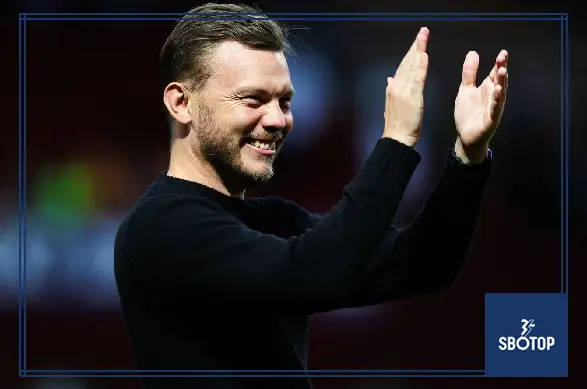
The man responsible for continuing that journey is Alfred Johansson.
At 35, Johansson is the youngest manager in the Scottish Premiership. The Swedish coach arrived from Rosenborg to replace Jens Berthel Askou, who departed for French side Toulouse after guiding Motherwell to fourth place. Johansson became the club’s 31st permanent manager and immediately accepted the challenge of building on the foundation created by his predecessor.
His appointment represents continuity in philosophy rather than a dramatic change of direction.
Motherwell used a data-led recruitment process to identify another progressive Scandinavian coach whose ideas align with the club’s preferred playing style. The expectation is clear: preserve the positive identity developed last season while finding new ways to improve it.
That is an exciting opportunity for Johansson, but it is also an unforgiving assignment.
He inherits a club with momentum, European football and growing belief. He also takes charge of a squad that has lost important players and must now prove that last season’s achievements can be repeated.
Taking Over After a Successful Season
Replacing an unsuccessful manager can sometimes provide immediate advantages. Supporters may be willing to accept gradual progress, players may welcome new ideas and almost any improvement can create positive momentum. Johansson faces a very different situation.
Askou’s season at Motherwell was widely regarded as a success. The Danish coach introduced an entertaining approach, improved results and secured fourth place in the Premiership. His work attracted the attention of Toulouse, leaving Motherwell searching for a replacement after only one campaign.
Johansson is therefore not being asked to rescue a struggling club.
He is being asked to protect a successful project while adding his own personality.
That can be more difficult than it appears.
Players may naturally compare new methods with those of the previous coach. Supporters will measure early results against the standards established last season. Any tactical changes that do not produce immediate success could be questioned.
Johansson must balance respect for the existing structure with the authority required to lead independently.
He cannot simply imitate Askou.
Every manager has different ideas about pressing, possession, defensive organization and player development. Johansson must gradually introduce those preferences without removing the qualities that made Motherwell effective.
His early comments suggested that he understood this responsibility. He described the previous campaign as highly successful and emphasized his desire to carry that momentum forward rather than beginning a complete reconstruction.
A Young Manager with Significant Experience
Johansson’s age will attract attention throughout the season. At 35, he is younger than many established coaches and not significantly older than some experienced professional players. However, his coaching career began long before his appointment at Fir Park.
Johansson has spent around 15 years working in coaching and development environments. Before moving to Motherwell, he held positions with clubs including Djurgårdens IF and FC Copenhagen. He later became Rosenborg’s head coach at only 33.
That background matters.
Young managers are sometimes presented as inexperienced simply because they have not spent decades in senior dugouts. Johansson’s career demonstrates that meaningful experience can be accumulated through academy coaching, assistant roles and tactical development work.
His time at Rosenborg also exposed him to the demands of managing a historically successful club.
Rosenborg carry enormous expectations in Norwegian football. A manager there must handle pressure, media scrutiny and supporters who expect the team to challenge near the top.
Johansson’s record included an encouraging fourth-place finish during his first season, although the following campaign was more difficult and he eventually left the club after a poor start to 2026.
That combination of progress and disappointment may prove valuable at Motherwell.
He has experienced the excitement of building momentum and the pressure that follows when results decline.
The lessons from both periods can shape his decisions in Scotland.
The Importance of Tactical Continuity
Motherwell’s recruitment process appears to have focused heavily on tactical compatibility.
The club did not want to replace Askou with a manager whose philosophy required an entirely different squad.
Instead, Johansson was selected because his approach shares several qualities with the football Motherwell played last season.
He favors proactive football, structured possession and energetic pressing.
His teams generally attempt to influence matches rather than waiting passively for opponents to make mistakes.
That style should suit a Motherwell squad already familiar with playing courageously.
The transition may therefore be smoother than it would have been under a coach demanding a deep defensive block or a more direct approach.
However, tactical similarity does not guarantee identical football.
Johansson will have his own principles.
He may adjust the positioning of the midfield, change how the team builds from the back or alter the moments when Motherwell press aggressively.
Those differences will become clearer once the Premiership season begins.
The most important requirement is maintaining balance.
Last season’s attacking football brought success because it was supported by organization and collective effort. If Motherwell become adventurous without sufficient defensive control, opponents will exploit the spaces they leave behind.
Johansson must preserve the team’s bravery while ensuring that possession and pressing remain connected to a reliable structure.
A Strong First Competitive Impression
Johansson’s first competitive home match provided an encouraging indication of what Motherwell might become under his leadership.
The Steelmen defeated Havnar Bóltfelag 2-0 in UEFA Conference League qualifying, earning an important advantage through goals from Martin Moormann and Lukas Fadinger.
Both strikes came from distance and five players made their competitive debuts during the match. Youngsters Mikey Booth and Ewan Wilson were also included in the starting lineup.
The victory carried significance beyond the result.
European qualifiers can be uncomfortable, particularly for a team undergoing substantial change. New players are still learning each other’s movements, the manager is still developing relationships and the pressure of an early competitive fixture leaves little preparation time.
Motherwell nevertheless produced a controlled performance and gave supporters a positive first look at Johansson’s team at Fir Park.
There were imperfections.
The Steelmen could have scored more, while goalkeeper Alex Paulsen was required to make several important saves.
Yet the overall picture was encouraging.
Johansson’s side showed attacking intent, included young players and handled the responsibility of being expected to win.
Those qualities will be important throughout the domestic season.
Squad Turnover Creates the Greatest Challenge
Motherwell’s fourth-place finish increased the value and visibility of several players.
The consequence has been a summer of major departures.
Elijah Just completed a club-record transfer to Swansea City after impressing for New Zealand at the World Cup. Motherwell have also lost influential figures including goalkeeper Calum Ward and midfielders Callum Slattery and Elliot Watt.
Those exits have reportedly helped the club generate close to £10 million in transfer income during the summer. Financially, that represents remarkable business for a club operating with limited resources compared with the Premiership’s wealthiest teams.
Sportingly, the situation is complicated.
Money in the bank does not immediately replace leadership, tactical understanding or established partnerships.
Johansson must rebuild important areas of the team while attempting to maintain the standards set last season.
The midfield is especially important.
Losing players capable of controlling tempo, winning duels and connecting defense with attack can affect the entire structure.
New arrivals must adapt quickly.
They need to understand where Johansson wants them to receive possession, when to press and how to react when the ball is lost.
The goalkeeper change also matters.
A new goalkeeper must build communication with the defensive line and become comfortable with the manager’s expectations in possession.
These relationships usually take time.
Motherwell’s early European commitments mean Johansson cannot wait several months for the squad to develop.
The learning process must happen during competitive football.
Recruitment Remains Central to the Project
Motherwell’s recent progress has been supported by intelligent recruitment.
The club cannot compete with the largest Scottish teams by spending similar amounts, so it must identify undervalued players, develop them and eventually sell at a profit.
The departure of Just demonstrates the potential of that model.
He contributed to the team, increased his reputation and then generated a record fee.
The challenge is repeating the process without weakening the side.
Every successful sale creates two different reactions.
Financially, it provides resources and validates the recruitment strategy.
From a football perspective, it removes a player who had become important.
Johansson will therefore need strong support from the club’s scouting and recruitment departments.
Motherwell have already brought in players such as Dylan Williams and Jake Girdwood-Reich, while Alex Lowry joined on loan after returning to Scottish football from Wycombe Wanderers. Johansson described Lowry as a technically gifted player who already understands the demands of the league.
These additions suggest Motherwell are continuing to target youth, versatility and development potential.
The squad may not be complete, however.
Injuries and departures have reduced depth in several positions. Tawanda Maswanhise, who was an important attacking contributor, has also been recovering from a fractured jaw.
Johansson will want enough options to manage both European and domestic fixtures without exhausting a small group of players.
Developing Young Talent
One of the most encouraging elements of Motherwell’s early European victory was the involvement of younger footballers.
Johansson’s coaching background includes extensive work in player development, making him well suited to a club that must create value rather than simply purchase established stars.
At Fir Park, youth development is not an optional extra.
It is a central part of the sporting model.
Motherwell need young players to progress into the first team because academy graduates provide affordable squad depth and can eventually become valuable assets.
Johansson’s responsibility is to create opportunities without exposing players too early.
Young footballers require competitive minutes, but they also need tactical guidance and protection from unrealistic expectations.
A promising performance should not result in immediate demands for a teenager to become a guaranteed starter.
Similarly, one difficult match should not end his opportunity.
Johansson can use European qualifiers, cup matches and selected league fixtures to develop younger players gradually.
His willingness to start Booth and Wilson in an important European match suggests he will not be afraid to trust them when they are ready.
That message can energize the entire academy.
Players are more likely to believe in the pathway when they see genuine opportunities available.
European Football Brings Opportunity and Risk
Motherwell’s fourth-place finish earned entry into Conference League qualifying.
European football provides prestige, revenue and memorable occasions for supporters.
It also complicates preparation for the Premiership.
Qualifiers begin before the domestic season, forcing clubs to reach competitive intensity earlier than most opponents.
The schedule can become demanding, particularly if travel is involved.
Players may have only a few days to recover before returning to league action.
For Johansson, squad management will be essential.
He must decide when to rotate, which players can handle repeated starts and how to protect those returning from injury.
European progression could also influence recruitment.
A longer continental campaign makes additional depth more necessary and may help Motherwell attract players interested in appearing on the European stage.
Elimination, by contrast, would reduce fixture congestion but remove an important sporting ambition.
Johansson must ensure that the team treats Europe as an opportunity rather than a distraction.
Motherwell worked hard to qualify.
They should approach the competition with confidence, even if domestic consistency remains the main measure of long-term success.
Expectations Have Changed at Fir Park
A fourth-place finish naturally raises expectations.
Supporters will now believe that another top-six position is possible.
Some may hope Motherwell can challenge for Europe again or close the gap on clubs with larger budgets.
Johansson has welcomed that ambition, but he must also manage it carefully.
Last season’s success occurred within a highly competitive league.
Hearts, Hibernian, Aberdeen, Dundee United and other clubs will all have their own plans for improvement.
Small margins can dramatically influence the table.
A few injuries, late goals or unsuccessful recruitment decisions can move a club several positions.
Motherwell should therefore aim high without assuming that fourth place is the minimum acceptable outcome.
Sustaining progress does not always mean finishing in exactly the same position.
It can also involve improving the squad’s age profile, strengthening the club financially, giving young players meaningful opportunities and maintaining a clear playing identity.
The team will still be judged on results, but a long-term project requires broader measures.
Johansson’s task is to keep supporters excited while ensuring expectations remain connected to the club’s resources.
Also Read: