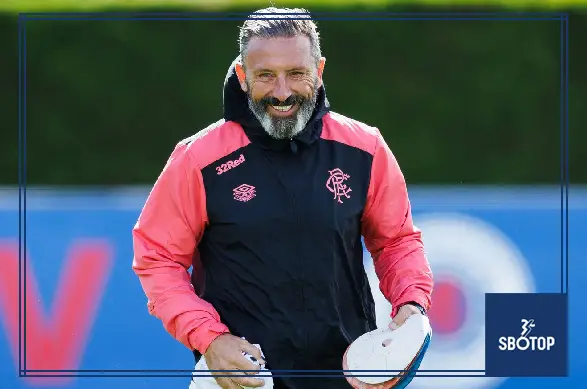
Rangers begin the 2026/27 Scottish Premiership campaign with a clear objective under new manager Derek McInnes: challenge for the championship from the opening weekend until the final day.
McInnes has not attempted to reduce expectations at Ibrox or describe the coming season as a period of transition. Instead, he has urged his players to demonstrate the ambition required to win the league, insisting that representing Rangers means accepting responsibility for delivering trophies.
The new manager’s first competitive domestic assignment comes away to Dundee United on Friday, July 31. Rangers will enter that match determined to avoid the kind of slow start that damaged their previous campaign, when early inconsistency left them chasing their rivals for much of the season. The Glasgow club eventually finished third, 10 points behind champions Celtic.
That outcome was far below the standards expected at Ibrox.
McInnes has therefore inherited more than a squad requiring tactical improvement. He has taken responsibility for restoring confidence, rebuilding a winning mentality and convincing the players that Rangers can once again become Scotland’s leading team.
The challenge is considerable, but McInnes believes it should be embraced rather than feared.
McInnes Refuses to Lower the Target
New managers sometimes attempt to create space for themselves by emphasizing the scale of the rebuilding job ahead. McInnes has chosen a different approach. He understands that a club of Rangers’ size cannot enter a Premiership season merely hoping to become more competitive. Progress matters, but trophies remain the ultimate measure of success.
His message to the squad has focused on ambition.
Players must believe they can finish above every other team in the division. They must also accept that belief alone is insufficient. A title challenge must be supported by consistency, discipline and the ability to win matches when performances are less convincing.
McInnes has expressed confidence that Rangers are capable of competing for the championship, while stressing the importance of beginning the campaign strongly.
That emphasis on the start is understandable.
League titles are not won during the opening weeks, but they can become significantly more difficult to achieve when points are surrendered early.
Rangers learned that lesson during the previous campaign.
A poor opening period under Russell Martin left the club outside the expected title positions and created pressure that shaped the remainder of the season. Martin departed after only a few months, with Rangers having won just one of their opening seven league matches.
McInnes wants to prevent another season from becoming a recovery mission.
A Fast Start Is Essential
Rangers begin away to Dundee United before facing Hibernian in their first home league fixture.
Both matches will demand concentration.
Dundee United will be motivated by the opportunity to disrupt the beginning of a new era, while Hibernian enter the campaign with European ambitions and confidence following another strong league season.
Rangers cannot expect opponents to be intimidated by their reputation.
Every club visiting Ibrox or hosting the Glasgow side knows that frustration can grow quickly if McInnes’ team fail to take control. Opponents will attempt to remain organized, slow the tempo and increase the pressure surrounding Rangers.
The best response is to establish momentum immediately.
An opening victory would provide McInnes with an important foundation. It would allow his players to approach the next fixture with greater confidence and reduce the temptation to overreact to every imperfect passage of play.
More importantly, a series of early wins would demonstrate that Rangers have learned from last season.
The club cannot afford to spend the autumn waiting for consistency to arrive. Celtic have repeatedly shown that long winning runs can create a significant advantage before the campaign reaches its decisive stages.
A serious challenger must remain close from the beginning.
The Right Manager for a Demanding Job
McInnes arrives at Rangers with extensive knowledge of Scottish football and a clear understanding of the environment surrounding the club.
He is not learning about the Premiership, its opponents or the intensity of the rivalry with Celtic.
The 54-year-old previously played for Rangers and has built a long managerial career in Scotland. His work at Aberdeen established him as one of the country’s most respected coaches, while his more recent spell with Hearts strengthened his reputation.
McInnes led Hearts through a memorable 2025/26 campaign in which they emerged as genuine title contenders for an extended period. His performance attracted Rangers, who appointed him on a three-year contract in June 2026. The club highlighted his ambition, experience and desire to return silverware to Ibrox.
That recent experience could be particularly valuable.
McInnes has already managed a team carrying championship pressure. He understands how the atmosphere changes when every dropped point becomes a major story and every selection decision receives intense scrutiny.
At Rangers, that pressure will be even greater.
A draw that might be considered acceptable elsewhere can feel like a defeat at Ibrox. A short sequence without a victory can immediately produce questions about tactics, recruitment and mentality.
McInnes must remain calm without becoming passive.
His familiarity with Scottish football should help him separate meaningful problems from the noise that naturally surrounds the club.
Rebuilding the Winning Mentality
The phrase “winning mentality” is frequently used in football, but it must involve more than motivational speeches.
For Rangers, it means developing habits that produce results repeatedly.
The squad must prepare with the same intensity for every opponent. Players cannot reserve their strongest concentration for Old Firm matches or European occasions.
Premiership titles are often decided by performances against teams outside the traditional top two.
Rangers must win consistently on difficult surfaces, during demanding winter schedules and after exhausting European fixtures.
They must also become more comfortable when expected to dominate.
Many domestic opponents will defend deep, reduce space around their penalty area and challenge Rangers to find creative solutions. These matches require patience as well as urgency.
Players who become frustrated may begin forcing passes, taking low-percentage shots or abandoning their positions.
A championship team remains composed.
It continues moving the opposition, protects itself against counterattacks and trusts that chances will arrive.
McInnes must build that reliability into his team.
Tactical Clarity Under the New Manager
One of McInnes’ first priorities will be establishing a recognizable tactical identity.
Rangers need a clear structure in possession, particularly against opponents who allow them to control the ball.
The central defenders must be comfortable beginning attacks. Midfielders need to create passing angles rather than hiding behind opposition players, while the full-backs and wide attackers must provide the movement required to stretch compact defenses.
Speed of circulation will be essential.
Slow possession allows opponents to remain organized. Rangers must move the ball quickly enough to create gaps while avoiding unnecessary risks that expose them to counterattacks.
McInnes is also likely to demand aggression without the ball.
A team with title ambitions cannot become easy to play through after losing possession. The nearest players must react immediately, either recovering the ball or delaying the opposition long enough for the defensive shape to return.
That collective response can sustain pressure.
It can also keep the crowd engaged by showing that Rangers intend to control matches both with and without the ball.
However, aggression must remain organized.
If individual players press at different moments, opponents can escape into large spaces. McInnes’ tactical work must ensure the team moves together.
Improving the Squad
Rangers have been active in the transfer market as McInnes attempts to reshape the group.
The manager stated during preseason that he wanted another two or three additions before the league opener, with wide and defensive areas among the positions under consideration.
Recruitment will influence how realistic the title challenge becomes.
Rangers already possess players capable of producing high-level performances, but a championship campaign requires more than a strong starting lineup.
Injuries, suspensions, fatigue and loss of form are inevitable.
McInnes needs alternatives who can enter the team without causing a major decline in quality.
Competition is equally important.
Established players should not feel that their position is guaranteed regardless of performance. Strong internal competition can raise training standards and give the manager tactical flexibility.
The squad must also contain different profiles.
Against some opponents, Rangers may require pace and direct running. Against others, technical players capable of operating in tight spaces will be more valuable.
A balanced squad allows McInnes to make changes based on the match rather than simply replacing one player with a similar option.
Shankland Could Become a Central Figure
Lawrence Shankland is expected to carry major responsibility in Rangers’ attack after reuniting with McInnes.
The striker worked under the manager at Hearts and has already demonstrated his ability to score consistently in the Scottish Premiership.
At Rangers, however, the expectations will be different.
Shankland will be judged not only on his overall contribution but also on whether his goals help deliver trophies. Every missed opportunity will receive attention, particularly in close matches against Celtic or other leading sides.
His familiarity with McInnes should help.
The striker already understands the manager’s demands and can become an important figure in communicating those standards to new teammates.
Shankland’s leadership may also extend beyond goals.
A central forward must set the tone for the press, occupy defenders and create space for attacking midfielders. His movement can determine whether Rangers’ possession becomes dangerous or remains predictable.
The pressure will be considerable, but title-winning teams usually need a dependable scorer.
Shankland has the opportunity to become that player.
Greater Responsibility Across Midfield
Rangers’ midfield will be critical to McInnes’ plans.
The team needs players capable of controlling possession, protecting the defense and contributing in the final third.
Mohamed Diomande is among those expected to compete for an important role. The midfielder has spoken positively about McInnes’ influence and expressed his determination to become a more consistent presence despite increased competition. New arrivals such as Cammy Devlin have added energy and intensity to the group.
Consistency is the key requirement.
Rangers cannot dominate the league if their midfield performs impressively one week and disappears the next.
The central players must understand the rhythm of each match.
Sometimes the team will need quick vertical passing. At other moments, retaining possession and controlling the tempo will be more valuable.
Midfielders must also contribute defensively.
When Rangers’ full-backs advance, someone must protect the space they leave behind. Failure to manage those transitions can turn an attacking situation into a dangerous counterattack.
McInnes will expect intelligence as well as effort.
Defending Like Champions
Rangers’ title hopes will depend heavily on defensive reliability.
Championship teams do not always play brilliantly, but they regularly prevent opponents from taking advantage of their weaker performances.
Clean sheets provide a foundation.
They reduce the pressure on attacking players and allow one decisive moment to win a difficult game.
McInnes must develop a settled defensive unit capable of communicating effectively.
Center-back partnerships require trust. Each defender must understand when his teammate will challenge for the ball and when he must provide cover.
The goalkeeper also plays a central role in organizing the line and beginning attacks.
Rangers will often defend large spaces because of their expected territorial dominance. Opponents may have relatively few attacks, but those attacks can become dangerous if the team loses possession with several players ahead of the ball.
Concentration is therefore essential.
A defender who has been uninvolved for 15 minutes must remain prepared for a sudden long pass or counterattack.
Those details separate strong defenses from title-winning ones.
The Celtic Challenge
Any discussion of Rangers’ championship ambition must include Celtic.
The defending champions finished 10 points ahead of Rangers last season and enter the new campaign seeking to protect their position.
Rangers cannot base their entire strategy on four Old Firm matches, but those fixtures will carry enormous importance.
Victories against Celtic provide more than three points. They can influence confidence, goal difference and the emotional direction of the title race.
However, defeating Celtic means little if Rangers then drop points against other opponents.
McInnes witnessed that reality during previous championship battles.
Consistency across the full schedule remains the primary requirement.
Rangers must also avoid becoming psychologically dependent on Celtic’s results.
A team constantly waiting for its rival to make a mistake loses focus on its own responsibilities.
McInnes will want his players to concentrate on building their own winning sequence.
If Rangers continue collecting points, the league table will create pressure on Celtic naturally.
Also Read: