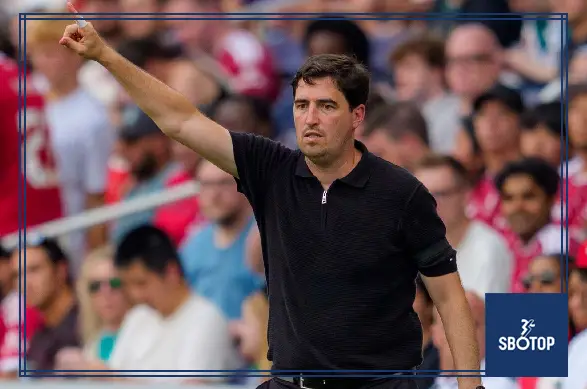
Liverpool’s first match under Andoni Iraola offered only an initial glimpse of the work taking place behind the scenes, but the early signs of a new footballing direction were already visible.
The Reds opened their preseason tour of the United States with a 4-2 victory over Sunderland at GEODIS Park in Nashville. Goals from Kieran Morrison, Dominik Szoboszlai, Federico Chiesa and Lewis Koumas ensured Iraola began his Liverpool tenure with a win, although an early injury to Joe Gomez added another concern to an already stretched defensive department.
Preseason results rarely provide definitive conclusions. Fitness levels vary, senior internationals may be unavailable and managers often use several different combinations during a single match. Nevertheless, Liverpool’s performance revealed elements of the identity Iraola is attempting to create.
The pressing was more aggressive. Attacks became vertical more quickly. Young players received meaningful opportunities, while several established members of the squad appeared energized by the new demands.
There were also clear weaknesses.
Liverpool remained vulnerable defensively, conceded twice and were forced to rely on inexperienced center-backs after Gomez left the field. The match showed that Iraola has inherited an exciting attacking group but also a squad requiring reinforcement, tactical discipline and improved physical readiness.
The Sunderland victory was therefore valuable not because Liverpool won 4-2, but because it provided the first practical evidence of how the club may change under its new head coach.
Iraola Begins a New Chapter at Anfield
Liverpool appointed Iraola in June 2026 following the departure of Arne Slot. The former Bournemouth manager agreed a two-year contract and arrived after three seasons on the south coast, where his teams became known for brave pressing, direct attacking and a willingness to challenge stronger opponents.
The appointment represented a deliberate stylistic decision.
Slot generally preferred greater control through possession. His Liverpool side often attempted to dominate matches by circulating the ball patiently, controlling territory and reducing unnecessary transitions.
Iraola’s football is typically more confrontational.
His teams aim to recover possession quickly, attack before opponents can reorganize and create repeated moments of pressure. The objective is not simply to have the ball for long periods. It is to use intensity to disturb the opposition’s structure.
That approach has obvious connections with Liverpool’s modern identity.
Jürgen Klopp built some of the club’s greatest recent teams around pressing, counter-pressing and emotional momentum. Iraola is not a copy of Klopp, and Liverpool cannot recreate the past merely by running more aggressively, but supporters are likely to recognize familiar principles in the new manager’s football.
Against Sunderland, those principles began to emerge.
A More Aggressive Pressing Structure
One of the most noticeable changes was Liverpool’s willingness to pressure Sunderland higher up the pitch.
The front players attempted to close passing lanes and force the opposition into rushed decisions. Midfielders moved forward to support the press, while the defensive line tried to remain high enough to prevent large gaps appearing between the units.
Sunderland defender Dan Ballard later highlighted the increased pressing intensity and verticality of Iraola’s Liverpool compared with the more possession-oriented approach used during the previous season.
That observation is significant because it came from an opponent experiencing the system directly.
Effective pressing is not measured only by tackles or interceptions. Its purpose is to make the opposition uncomfortable.
A goalkeeper may be forced to play long. A center-back may pass toward the touchline rather than into midfield. A midfielder may receive the ball while facing his own goal instead of turning forward.
These small restrictions can determine where possession is recovered and how dangerous the next attack becomes.
Liverpool showed several moments in which their pressure pushed Sunderland into hurried clearances. The Reds then attempted to regain the second ball and attack before the defensive shape could settle.
The execution was imperfect, which is understandable during the first preseason match. Pressing requires precise timing and collective movement. One player arriving late can allow the opponent to escape.
Iraola will spend the remainder of preseason improving those relationships.
Vertical Football Replaces Unnecessary Patience
Liverpool also appeared more willing to play forward quickly.
Instead of circulating possession repeatedly across the defensive line, the players looked for opportunities to break lines and attack open spaces.
Vertical football does not mean abandoning control or playing hopeful long balls. It means recognizing when an opponent is temporarily unbalanced and moving the ball forward before that advantage disappears.
Iraola wants his teams to attack while defenders are still adjusting.
That can involve an early pass into the striker, a midfielder carrying the ball through pressure or a winger immediately attacking his full-back.
Liverpool’s attacking goals against Sunderland came from different sources, but the overall performance suggested the new coach wants greater speed of thought.
The challenge will be maintaining accuracy.
Quick attacks are valuable only when players make intelligent decisions. A forced pass can surrender possession and expose the defense. Liverpool must learn when to accelerate and when to keep the ball.
The best Iraola teams are not permanently chaotic. Their intensity is supported by recognizable patterns.
Liverpool are only beginning to learn those patterns.
Szoboszlai Looks Suited to the New Demands
Dominik Szoboszlai could become one of the central figures of the Iraola era.
The Hungarian midfielder scored after coming on against Sunderland and appeared comfortable within a system demanding energy, forward running and aggressive pressure.
Szoboszlai possesses many of the qualities required in Iraola’s midfield.
He can cover ground quickly, carry the ball through central areas and strike from distance. He is also physically capable of supporting a high press and recovering when possession is lost.
His role could become more influential than it was during parts of the previous campaign.
Under Iraola, Liverpool’s midfielders will be expected to contribute at both ends of the pitch. They must help protect the defense but also arrive near the penalty area quickly enough to support attacks.
Szoboszlai’s athleticism makes him particularly valuable in transition.
When Liverpool win possession, he can immediately move beyond the first opposition line. When they lose it, he has the speed to press or recover his position.
Reports surrounding the Sunderland match described him as a potentially foundational player under the new head coach.
The task now is consistency.
Szoboszlai has already demonstrated that he can produce impressive individual performances. Iraola will want him to influence matches every week.
Chiesa Makes His Case
Federico Chiesa also delivered a useful reminder of his quality.
The Italian forward scored and contributed creatively during Liverpool’s victory, demonstrating the sharp movement and technical ability that made him one of Europe’s most exciting attackers earlier in his career.
Chiesa’s Liverpool future has frequently attracted speculation, particularly when injuries or competition have limited his opportunities.
A new manager can change that position.
Iraola values forwards who attack directly, press defenders and move quickly into scoring areas. A fit and confident Chiesa can provide all three qualities.
His versatility is another advantage.
He can play from either side, move centrally or operate as part of a fluid attacking line. That flexibility could become important during a season containing domestic and European commitments.
The Sunderland performance does not guarantee him a starting role, but it gives Iraola another option to consider.
Chiesa must now prove that he can remain available and reproduce the same energy consistently.
If he does, Liverpool may already possess an internal solution to part of their attacking recruitment challenge.
Young Players Embrace Their Opportunity
Preseason offers young players a rare chance to work closely with the first-team manager and test themselves against senior opposition.
Several Liverpool prospects used that opportunity positively against Sunderland.
Kieran Morrison scored, Lewis Koumas also found the net, and Rio Ngumoha demonstrated the confidence that has made him one of the most closely followed young players at the club.
Their involvement matters beyond a single friendly.
Iraola’s system requires intensity, bravery and physical commitment. Young players can sometimes adapt quickly because they arrive without established habits and are eager to follow new instructions.
They also provide energy during a demanding preseason schedule.
However, Liverpool must manage expectations carefully.
A promising performance in July does not mean a teenager is immediately ready to start every Premier League match. Development is rarely linear, and young players need protection from excessive pressure.
Iraola must decide which prospects should remain around the senior squad, which require loans and which are ready for occasional competitive opportunities.
His willingness to use them in Nashville sends a positive message to the academy.
The pathway remains open.
Elliott Seeks a Fresh Beginning
Harvey Elliott was another player with an opportunity to impress the new manager.
Following a difficult period away from Anfield, the midfielder returned needing to rebuild his place within Liverpool’s plans. Reports from the Sunderland match suggested he showed promising signs and appeared motivated to revive his career under Iraola.
Elliott’s technical quality has never been the main concern.
He is creative, receives the ball confidently in tight areas and can contribute around the penalty box.
The question is where he fits within the new tactical structure.
Iraola’s midfield roles demand significant work without possession. Players must press with intensity, cover spaces quickly and remain disciplined when attacks break down.
Elliott must demonstrate that he can meet those physical and tactical demands while preserving the creativity that makes him different.
He may also be used in a wider role, where his ability to move inside could create space for an advancing full-back.
Preseason will determine whether he becomes an important squad option or remains vulnerable to another move.
Kerkez Could Thrive Under a Familiar Coach
Milos Kerkez’s relationship with Iraola could become an important feature of Liverpool’s new direction.
The left-back previously played under the Spanish coach at Bournemouth and has described Iraola as an excellent fit for Liverpool. He believes the head coach’s aggressive, pressing style can bring out his strongest qualities.
Kerkez is naturally suited to high-energy football.
He accelerates quickly, attacks space and can support the winger with repeated forward runs. Under Iraola, he may receive greater freedom to advance, provided he first fulfills his defensive responsibilities.
That final point is essential.
An attacking full-back cannot simply run forward at every opportunity. He must understand when the team has sufficient coverage and when remaining deeper is necessary.
Kerkez has indicated that Iraola emphasizes defensive reliability before granting attacking freedom.
His familiarity with the system could help other players adapt.
He understands the coach’s language, expectations and pressing triggers. During training and matches, he can provide guidance to teammates who are experiencing Iraola’s approach for the first time.
Defensive Problems Cannot Be Ignored
The greatest concern from Liverpool’s victory was the defensive situation.
Joe Gomez left the field after only 10 minutes with an injury, forcing Iraola to rely on teenage center-backs Mor Talla Ndiaye and Ifeanyi Ndukwe. Liverpool were already missing other defensive options, including Jérémy Jacquet and Giovanni Leoni.
The result became less important than Gomez’s condition.
Liverpool cannot enter a demanding season with insufficient center-back depth.
Iraola’s tactical approach increases the importance of defenders who are comfortable covering large spaces. A high line can leave center-backs exposed to direct passes and fast forwards.
They must possess pace, concentration and confidence in one-on-one situations.
They must also be comfortable in possession because the defensive line is responsible for beginning many attacks.
Losing an experienced figure such as Gomez would reduce both depth and versatility. He can play centrally or at full-back and understands the demands of competing across several competitions.
Liverpool’s recruitment team must decide whether another defender is necessary regardless of the injury diagnosis.
The evidence from Nashville suggests that reinforcement would be sensible.
Konaté’s Departure Leaves a Major Gap
Liverpool’s central defensive options had already been weakened by Ibrahima Konaté’s move to Real Madrid.
Replacing his physical presence is not a straightforward task. Konaté provided speed, strength and experience against elite opponents.
Liverpool may possess talented young defenders, but Iraola needs reliable senior options capable of handling the weekly demands of the Premier League.
Defensive recruitment must also suit the manager’s football.
A center-back may be excellent when defending near his own penalty area but uncomfortable in a high line. Another may pass well but struggle when isolated against quick attackers.
Liverpool require players capable of doing both.
The Sunderland match showed the danger of carrying insufficient depth into the campaign.
One early injury immediately changed the structure of the back line.
Teenagers benefited from the opportunity, but a club competing for major trophies cannot depend on academy players being ready for every situation.
Two Goals Conceded Reveal Work Ahead
Liverpool’s attacking promise should not hide the fact that Sunderland scored twice.
Enzo Le Fée and Timur Tutierov found the net, with Sunderland briefly moving into the lead during the second half.
Preseason defending is often affected by fatigue and unfamiliar partnerships, but the goals still provide useful information.
An aggressive pressing system can become vulnerable when the first line is broken.
If the forwards press but the midfield remains too deep, opponents receive space between the lines. If the midfield moves forward but the defense does not follow, the same problem appears in a different area.
Liverpool must learn to compress the pitch as a unit.
The defenders also need protection during transitions.
Full-backs advancing simultaneously can leave central defenders responsible for large spaces. A holding midfielder must recognize those situations and provide cover.
Iraola will not want to remove attacking ambition, but he must create safeguards.
Successful high-intensity football depends on defensive preparation. The team needs to know where the danger will appear before possession is lost.
Also Read: