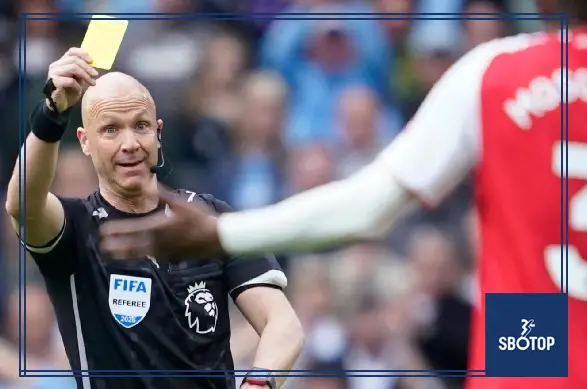
Anthony Taylor has experienced virtually every side of modern football officiating. The former Premier League referee worked on some of the biggest matches in English football, operated under intense scrutiny, and became one of the most recognisable officials of his generation.
For referees at the highest level, the job has never been simply about making decisions on a football pitch. Every call can be examined from multiple angles, replayed repeatedly, debated by supporters and analysed by television pundits. In the era of social media, a controversial decision can also follow an official long after the final whistle.
Taylor’s experiences offer a valuable insight into the pressures facing referees. His perspective also highlights a wider issue within football: how the sport can improve technology and decision-making without losing sight of the human beings responsible for enforcing the laws.
The introduction of Video Assistant Referee technology was supposed to make football more accurate. Instead, VAR has become one of the most debated subjects in the game.
For Taylor, the conversation is therefore not simply about whether technology should remain. It is about how it should be used, how referees can be protected, and how football can create an environment in which officials are allowed to make decisions without becoming targets of abuse.
The Pressure of Being a Premier League Referee
Refereeing at the highest level demands an extraordinary level of concentration.
A referee must monitor dozens of situations simultaneously. Fouls, handball incidents, challenges, positioning, advantage, time management and player behaviour can all require attention within seconds.
There is rarely an opportunity to stop and reconsider before making the initial decision.
Unlike players, referees do not have the luxury of replaying a moment before acting. Their decisions are made in real time.
That reality can sometimes be forgotten by supporters watching from home.
A television viewer may see an incident from several camera angles, slow it down and analyse it frame by frame. The referee, however, has only one perspective and a fraction of a second in which to make the call.
The pressure becomes even greater in important matches.
A decision in a routine league fixture may attract criticism, but a similar decision during a title race, relegation battle or major cup match can dominate the conversation for days.
Taylor’s career illustrates how much responsibility comes with that role.
The Human Element Cannot Be Removed
One of the central issues surrounding modern officiating is the balance between human judgment and technology. Football has introduced VAR to correct clear mistakes, but referees remain responsible for interpreting the laws.
Technology can provide additional information. It cannot completely remove judgment.
This is particularly relevant in situations involving subjective decisions.
Whether a challenge deserves a yellow card or red card, whether contact is sufficient for a penalty, or whether an action constitutes deliberate handball can involve interpretation.
Two people can examine the same incident and reach different conclusions.
That does not necessarily mean one of them is incompetent.
Football supporters sometimes expect technology to produce absolute certainty. In reality, VAR can provide better evidence without eliminating every disagreement.
Abuse Has Become a Serious Concern
The growth of social media has dramatically changed the environment in which referees operate.
Criticism has always existed in football. Referees have traditionally faced boos, chants and angry reactions from supporters.
The modern problem is that criticism can continue long after the match.
Officials can become targets online, where thousands of comments may appear within minutes.
The distance created by a screen can also encourage people to use language they might never use face-to-face.
Abuse can become personal rather than related to a particular decision.
That distinction is important.
Football needs debate. Supporters should be able to question decisions and discuss officiating.
But disagreement should not turn into threats, harassment or personal attacks.
The consequences extend beyond the individual referee.
Officials have families, friends and personal lives away from football.
When abuse becomes extreme, it can affect people who had nothing to do with the original incident.
Criticism Is Part of the Job
Referees understand that criticism comes with the profession.
A referee cannot expect every decision to be applauded.
In fact, disagreement is part of football’s culture.
Supporters naturally see incidents through the perspective of their own team. A decision that feels correct to one group may seem outrageous to another.
That is not necessarily a problem.
Healthy debate is part of the sport.
The issue arises when criticism stops being about the decision and becomes an attack on the individual.
There is a significant difference between saying that a referee made a poor decision and suggesting that the referee is dishonest, corrupt or deserving of abuse.
Maintaining that distinction is essential if football wants to attract and retain officials.
VAR Was Introduced to Improve Accuracy
When VAR arrived, one of its main promises was straightforward: reduce major errors.
The technology allows officials to review incidents that may have a significant impact on a match.
Goals, penalties, direct red cards and cases of mistaken identity can be examined.
The idea was not to replace the referee but to provide additional support.
In principle, this makes sense.
Football is a fast-moving game, and even highly experienced officials can miss important details.
A second layer of review can help correct an obvious mistake.
The difficulty has been determining where the intervention should stop.
The Problem of Constant Intervention
One criticism of VAR is that it can sometimes interrupt the natural rhythm of football.
Supporters want to celebrate goals immediately.
Players want clarity.
Referees want to make decisions confidently.
When a lengthy review takes place, uncertainty can spread throughout the stadium.
A goal may be scored, celebrated and then followed by a period of waiting.
That emotional interruption is one of the challenges football authorities have had to consider.
The technology itself may be effective, but the way it is implemented can influence how supporters experience the game.
Finding the Right Threshold
A major question for VAR is deciding when an incident is serious enough to warrant intervention.
If every potential mistake were reviewed, matches could become dominated by technology.
On the other hand, if the threshold is too high, obvious errors may remain uncorrected.
The concept of a “clear and obvious error” was designed to establish a boundary.
However, interpreting that threshold can still be complicated.
What appears obvious to one person may not appear obvious to another.
This is why training and consistency remain so important.
Referees Still Need Authority
Technology should support referees rather than undermine them.
If officials become overly dependent on VAR, there is a danger that their confidence could be affected.
The authority of the referee remains essential to the structure of the game.
Players need to know who is making decisions.
The crowd needs to understand the process.
And referees need to trust their own judgment.
A successful VAR system should therefore strengthen officiating rather than create uncertainty about who is actually in control.
The Importance of Communication
Communication is another area where modern officiating can continue to develop.
When a referee makes a decision, supporters often want to understand why.
The introduction of greater transparency could help reduce confusion.
If fans understand what the officials have reviewed and why a decision was reached, they may be more willing to accept the outcome even when they disagree.
Football has gradually moved toward greater communication between referees and players.
The next step could involve finding better ways to communicate major VAR decisions with spectators.
Refereeing Is More Than Decision-Making
A referee’s role involves much more than identifying fouls.
Officials must manage personalities.
Professional footballers are highly competitive. Emotions can become intense, particularly during important matches.
A referee must know when to intervene and when to allow the game to continue.
Too many interruptions can affect the flow.
Too little intervention can allow tensions to escalate.
Experience becomes extremely valuable in these situations.
Taylor’s long career at the highest level gave him an opportunity to develop that understanding.
Managing Players Under Pressure
Players do not always react calmly to decisions.
A referee must understand the emotional context of the match.
A player who has just conceded a foul may react differently from one who has been repeatedly challenged.
Similarly, a team chasing a late equaliser may behave differently from a side protecting a lead.
The referee has to manage those situations while remaining neutral.
This requires communication, authority and emotional intelligence.
Technology cannot replace those qualities.
The Physical Demands of Officiating
The physical side of refereeing is sometimes overlooked.
Premier League matches are played at extremely high intensity.
Referees must maintain their position close enough to incidents without interfering with play.
They repeatedly sprint, change direction and accelerate.
At the same time, they must maintain concentration.
Physical preparation is therefore essential.
A referee who is physically unable to keep up with the game may be poorly positioned to make decisions.
Fitness and decision-making are closely connected.
Preparation Begins Before Kick-Off
The work of a referee does not start when the teams walk onto the pitch.
Preparation begins long before that.
Officials study teams, consider tactical approaches and identify potential areas of difficulty.
They must understand player tendencies while remaining impartial.
Communication between the referee, assistant referees and VAR team is also important.
Everyone must understand their responsibilities.
The stronger the preparation, the more effectively the officiating team can respond during the match.
Learning From Mistakes
No referee will have a perfect career.
Mistakes are inevitable in a sport played at such speed.
What matters is how officials respond to those mistakes.
Reviewing incidents can help referees identify areas for improvement.
Video analysis can show whether positioning was correct or whether a different angle might have provided better information.
The process should be educational rather than punitive.
If referees fear making mistakes, they may become overly cautious.
Confidence is an important part of effective officiating.
The Next Generation Needs Support
The conversation about abuse is especially important when considering younger referees.
A pathway into professional officiating requires years of development.
Young officials must learn to handle criticism and pressure.
But they should not be expected to tolerate personal abuse as though it were simply part of the job.
Football needs to create an environment in which talented referees can develop without being driven away by hostility.
The future of officiating depends on attracting new officials.
If the culture becomes too toxic, the sport could face a serious shortage.
Respect Must Work Both Ways
Respect in football cannot be a one-sided concept.
Referees must respect players and coaches.
Players and coaches must also respect officials.
Supporters have a role as well.
Disagreement is inevitable, but respect should remain the foundation.
This does not mean officials should be immune from accountability.
Referees must be evaluated.
Mistakes should be discussed.
Performance standards should remain high.
But accountability and abuse are not the same thing.
VAR’s Future May Depend on Simplicity
The long-term future of VAR could depend on making the system easier to understand.
Supporters should know when VAR can intervene and when it cannot.
Officials should have clear guidelines.
Players should understand the process.
The more complicated the system becomes, the harder it is for fans to accept decisions.
Football’s laws are already complex.
Technology should ideally make the game clearer rather than more confusing.
Technology Will Continue to Evolve
VAR is unlikely to remain exactly as it is today.
Technology will continue to develop.
Offside decisions can already be assisted by increasingly sophisticated systems.
Other forms of technology may eventually help officials identify incidents more quickly.
Artificial intelligence and automated tracking could potentially provide additional information.
However, technological progress should always be accompanied by careful consideration of how it affects the human side of football.
The goal should be better decisions, not technology for its own sake.
Referees Must Remain Human
One of the most important lessons from the VAR debate is that referees are still human beings.
They can make mistakes.
They can experience pressure.
They can feel disappointment after getting a decision wrong.
They can also make excellent decisions under extraordinary circumstances.
Treating officials as machines creates unrealistic expectations.
The best technology in the world cannot guarantee that every decision will satisfy everyone.
Football is ultimately a game involving interpretation, emotion and uncertainty.
The Importance of Trust
For VAR to succeed, football needs to rebuild and maintain trust.
Supporters must believe that officials are making decisions honestly.
Players must believe that the process is fair.
Referees must trust the technology.
VAR officials must trust the on-field referee.
That trust is built through consistency and transparency.
If similar incidents produce dramatically different outcomes, confidence will fall.
Clear guidelines and strong training can help address that problem.
The Wider Responsibility of Football
The responsibility for improving officiating does not belong to referees alone.
Governing bodies, clubs, players, coaches, broadcasters and supporters all have roles.
Clubs can encourage players to show greater respect.
Broadcasters can discuss decisions without turning officials into villains.
Social media platforms can play a role in tackling abusive behaviour.
Governing bodies can provide stronger support for referees.
Together, these measures can create a healthier environment.
Taylor’s Experience Offers a Valuable Perspective
Anthony Taylor’s experiences provide a window into the reality of refereeing at the highest level.
He has worked in an era when the role of the referee has changed dramatically.
Technology has transformed decision-making.
Social media has transformed criticism.
The expectations placed on officials have increased.
Yet the fundamental task remains the same: make the best possible decision in real time while managing a highly competitive football match.
That responsibility requires skill, preparation and resilience.
Also Read: