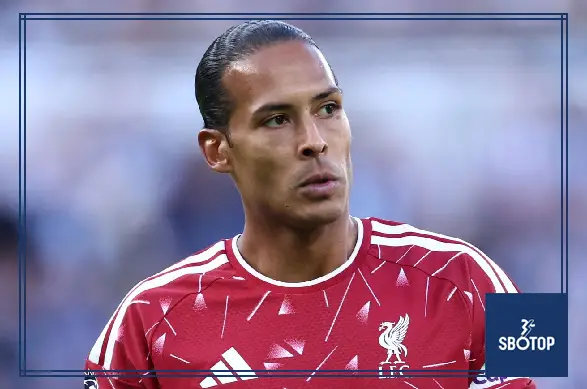
Virgil van Dijk remains one of the most important figures in Liverpool’s defensive structure, but a demanding tactical challenge awaits whenever Andoni Iraola’s high-intensity approach is placed against the Reds.
Iraola’s teams are renowned for aggressive pressing, rapid transitions and an eagerness to disrupt opponents high up the pitch. That style can create uncomfortable moments for defenders, particularly those expected to initiate attacks while also protecting space behind them.
For a 35-year-old centre-back, the question is not simply whether Van Dijk can cope with pressure.
It is about how Liverpool can use his strengths while managing the physical demands that come with defending against a team determined to play at speed.
Van Dijk has built his reputation on positioning, anticipation, composure and extraordinary ability to read the game. Even as he enters another stage of his career, those qualities remain central to his value.
However, football is constantly evolving.
The Premier League increasingly features aggressive pressing systems designed to force defenders into rushed decisions. When opponents commit numbers forward, centre-backs can be asked to defend large areas of grass while simultaneously making accurate passes under pressure.
That creates a fascinating tactical battle.
Liverpool need Van Dijk to remain calm.
Iraola’s team will want to make him uncomfortable.
Van Dijk’s Evolving Role
Van Dijk’s responsibilities at Liverpool have changed over the course of his career.
Earlier in his Liverpool career, his physical dominance allowed him to defend aggressively against forwards while also recovering quickly when opponents attempted to exploit space behind the defensive line.
His passing ability was equally important.
He could switch play from deep, break opposition lines with vertical passes and help Liverpool establish possession.
As the years have passed, his experience has become an even more significant asset.
He does not always need to sprint into challenges.
Instead, he can use positioning to prevent dangerous situations before they develop.
That is particularly important when facing an opponent who wants to play quickly.
The Challenge of Iraola’s Press
Andoni Iraola’s tactical philosophy presents a different kind of test.
His teams generally want to be proactive.
Rather than sitting deep and allowing opponents to build attacks comfortably, they look for opportunities to press.
The objective is to force mistakes.
If a centre-back receives the ball facing his own goal, the pressing forward may immediately close him down.
If the goalkeeper plays a short pass, another attacker can jump forward.
If Liverpool’s midfielders are marked, the defenders may have fewer easy passing options.
That is where Van Dijk’s composure becomes essential.
Why Age Matters
At 35, Van Dijk is no longer the same player he was several years ago.
That should not automatically be interpreted as decline.
Experienced defenders can compensate for reduced physical explosiveness with better anticipation and positioning.
However, age does change the calculation.
Repeated high-speed defensive actions can become more demanding.
Covering large spaces behind an aggressive defensive line requires physical capacity.
Recovering after losing possession can be particularly challenging.
Liverpool therefore need to make sure their tactical structure protects Van Dijk without compromising their ability to deal with pressure.
Experience Against Physical Demands
One of Van Dijk’s biggest strengths is his understanding of timing.
He knows when to step forward.
He knows when to hold the defensive line.
He understands how to position his body when confronting an attacker.
Those details can reduce the need for unnecessary sprinting.
A younger defender may rely more heavily on speed.
Van Dijk can often rely on anticipation.
That distinction could become increasingly important.
Liverpool’s Build-Up Under Pressure
The first challenge may come before Iraola’s team even reaches Liverpool’s defensive third.
High pressing begins with attempts to influence where the opponent can play.
Liverpool’s centre-backs may be encouraged to circulate the ball patiently.
But patience becomes more difficult when the opposition is closing down passing lanes.
Van Dijk’s ability to remain calm could be crucial.
Instead of forcing a risky pass, he may choose to switch the ball to the opposite side.
He may also play directly into midfield or towards the forwards if the pressing structure leaves space.
Long Passing as a Solution
One way to counter a high press is to play over it.
Van Dijk possesses the passing range required to do this.
If Iraola’s players push forward aggressively, space can appear behind them.
Liverpool can exploit that space with accurate long passes.
A well-weighted diagonal ball can immediately turn a defensive situation into an attacking opportunity.
That is one reason Van Dijk remains so valuable.
His role is not limited to stopping attacks.
He can help Liverpool bypass pressure altogether.
The Importance of the Goalkeeper
Liverpool’s goalkeeper also becomes part of the tactical equation.
When opponents press high, the goalkeeper often acts as an additional outfield player during build-up.
That can give centre-backs an extra passing option.
If Van Dijk is closed down, he can return the ball to the goalkeeper and reposition.
However, this requires confidence and coordination.
One inaccurate pass can give the pressing team an opportunity near the penalty area.
Liverpool must therefore maintain composure.
Van Dijk’s Communication
Leadership is another major part of Van Dijk’s role.
A centre-back sees the entire defensive structure in front of him.
He can communicate with midfielders, full-backs and his central defensive partner.
Against an aggressive pressing team, that communication becomes even more important.
Players must know when to drop.
They must know when to push forward.
They need to recognise when the press has been broken.
Van Dijk can help organise those movements.
Defending Against Transitions
Iraola’s teams are not dangerous only because of their press.
The real threat can come immediately after they win possession.
If Liverpool lose the ball while committing players forward, Iraola’s side can attack quickly.
That puts pressure on the centre-backs.
Van Dijk may find himself defending against forwards running into open space.
This is where his positioning becomes critical.
He cannot simply chase the ball.
He needs to identify the most dangerous passing option.
The Value of Defensive Intelligence
Elite defending is often about making the right decision before the ball arrives.
Van Dijk has developed that skill throughout his career.
He can read the direction of an attack and adjust his position accordingly.
That intelligence could help him deal with the physical demands of facing a high-energy opponent.
Rather than attempting to win every duel through speed, he can try to ensure the duel never becomes dangerous.
Liverpool’s Defensive Line
The height of Liverpool’s defensive line could become an important tactical question.
A high line helps the team compress the pitch.
It allows Liverpool to keep midfielders closer to the attack.
But it also leaves space behind the defenders.
Against fast forwards, that can be dangerous.
With Van Dijk in the team, Liverpool have a defender capable of managing that space.
However, the team must still avoid exposing him unnecessarily.
Protecting the Centre-Backs
Midfield protection can make a major difference.
If Liverpool’s midfielders recover quickly after losing possession, Van Dijk does not have to defend enormous spaces alone.
The back four can maintain their shape.
That reduces the number of situations in which the centre-backs are forced into emergency defending.
The relationship between midfield and defence will therefore be crucial.
The Role of Full-Backs
Liverpool’s full-backs can also influence the tactical battle.
When they move forward, they provide width and additional attacking options.
But their advanced positions can leave space in defensive transition.
The centre-backs must be ready to cover.
Van Dijk’s communication becomes important again.
He needs to coordinate with the full-backs and the midfield to prevent gaps from opening.
Pressing Can Work Both Ways
Liverpool should not view Iraola’s high press purely as a threat.
It can also create opportunities.
When a team presses aggressively, it commits players forward.
If Liverpool can escape the first wave of pressure, they may find large spaces behind it.
That could allow their attackers to create dangerous situations.
Van Dijk’s ability to play forward quickly could therefore become an attacking weapon.
Breaking the First Line
The first objective should be escaping the initial pressure.
Once Liverpool move the ball beyond the first pressing line, the entire opposition structure can become stretched.
Midfielders may suddenly have more space.
Wingers can receive the ball in better positions.
Forwards can attack defenders who are moving backwards.
Van Dijk’s decision-making from the back can help trigger that transition.
A Test of Composure
Matches against high-pressing opponents can become frantic.
The ball moves quickly.
Players have less time.
Mistakes become more likely.
Van Dijk’s calmness could provide Liverpool with an advantage.
Instead of panicking when two attackers close him down, he can wait for the correct passing option.
That composure can help the entire team settle.
The Captain’s Responsibility
As Liverpool captain, Van Dijk carries additional responsibility.
He is expected to lead through his performances and communication.
During difficult moments, younger teammates can look to him.
If Liverpool concede pressure early, his reaction will matter.
He needs to maintain concentration and encourage the players around him.
Leadership becomes particularly valuable when a match becomes chaotic.
Managing Van Dijk’s Workload
Liverpool also need to consider workload management.
At 35, expecting Van Dijk to play every minute of every competition may not be sustainable.
Rotation becomes important.
The club must preserve his fitness for the matches that require his experience most.
That does not necessarily mean removing him from important games.
It means managing his minutes intelligently across a long season.
The Importance of Defensive Partnerships
Centre-backs develop understanding through repetition.
They learn how each other moves.
They recognise when the other player will step forward.
They understand how to cover one another.
Van Dijk’s experience can help new or younger defensive partners.
But the partnership still needs time.
Against an aggressive opponent, any misunderstanding can become costly.
Van Dijk’s Influence Beyond Defending
Another reason Liverpool continue to value Van Dijk is his influence on the team’s personality.
His presence can give defenders confidence.
When a team knows that its captain is behind them, players may be more willing to press forward.
That confidence can influence Liverpool’s overall attacking approach.
The Risk of Overreliance
However, Liverpool cannot become too dependent on one defender.
The modern game requires collective defending.
Every player must understand their responsibility.
If Van Dijk is forced to cover repeatedly for teammates, the physical demands increase.
The team must therefore protect him through structure.
Arsenal, Manchester City and Other Tests
Liverpool will face many different tactical approaches throughout the season.
Some teams will sit deep.
Others will press aggressively.
Some will rely on direct football.
Others will attempt to dominate possession.
Van Dijk’s ability to adapt remains valuable.
His experience against different styles allows Liverpool to change their defensive approach without completely rebuilding their structure.
Also Read:
- SBOTOP: Aston Villa Face Growing Selection Crisis as Unai Emery Deals with Squad Problems Before Arsenal Clash
- SBOTOP: Aston Villa Step Up Attacking Plans with Moves for Jean-Philippe Mateta and Rafael Leao
- SBOTOP: Cole Palmer Returns to Spark Chelsea’s Attack as Fulham Victory Exposes Lingering Goalkeeping Concerns