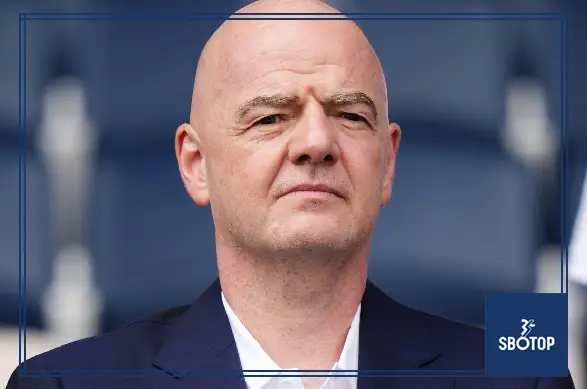
FIFA has launched a forceful response to UEFA amid an increasingly bitter dispute involving legal proceedings in American courts and allegations surrounding FIFA president Gianni Infantino.
The confrontation has pushed tensions between football’s two most powerful governing bodies into a highly unusual public arena. What began as a series of legal developments has evolved into a wider dispute over reputation, governance and the way football’s institutions operate.
FIFA’s accusation that UEFA is involved in a “smear campaign” represents a serious escalation. The claim suggests that the organisation believes information surrounding the legal cases is being used not simply as part of a legal process, but as a broader attempt to damage the reputation of Infantino and FIFA.
UEFA, meanwhile, has faced questions over its position and the circumstances surrounding the cases filed in the United States.
The dispute is significant because FIFA and UEFA normally operate in different but closely connected spheres. FIFA governs world football, while UEFA oversees the European game. Their relationship is essential to the functioning of international football, with clubs, national teams, competitions and players all affected by decisions taken by the two organisations.
A prolonged public confrontation between them could therefore have consequences far beyond the individuals directly involved.
A Dispute Moving Beyond Football’s Pitch
Football supporters are accustomed to seeing rivalry expressed through matches. The disagreement between FIFA and UEFA is taking place somewhere very different.
Instead of players competing for possession, lawyers and officials are dealing with allegations, legal arguments and questions over institutional conduct.
That makes the dispute particularly complicated.
Legal cases can involve detailed claims that may take considerable time to resolve. At the same time, public statements can create perceptions long before courts reach definitive conclusions.
FIFA’s decision to describe the situation as a potential smear campaign demonstrates how seriously the governing body views the wider narrative.
The organisation appears determined to challenge what it considers misleading or damaging portrayals.
For Infantino, the controversy is especially important because the FIFA presidency places him at the centre of international football governance.
Any legal dispute involving the organisation’s leadership can quickly become a story about FIFA itself.
Why Gianni Infantino Is Central to the Story
Infantino has been one of the most influential figures in world football since becoming FIFA president.
His tenure has been marked by major changes to the organisation, debates over competition formats and a stronger commercial focus.
Supporters of his leadership argue that FIFA has expanded its global reach and strengthened its financial position.
Critics, however, have frequently questioned decisions made during his presidency and the broader direction of world football governance.
That background means developments involving Infantino inevitably attract attention.
The latest dispute is therefore not occurring in isolation.
It is taking place against a backdrop of years of debate about transparency, accountability and the balance of power within football’s governing structures.
FIFA’s response suggests that the organisation wants to prevent the latest legal developments from becoming another prolonged attack on its president’s credibility.
FIFA’s “Smear Campaign” Allegation
The phrase “smear campaign” carries considerable weight.
It implies that damaging information is being promoted with the intention of harming an individual or institution rather than simply addressing legitimate concerns.
By using that language, FIFA has effectively framed the controversy as a battle over reputation.
The organisation’s position is that the legal cases and associated public discussion are part of an attempt to undermine Infantino and FIFA.
That is a serious allegation in itself.
It also raises questions about what evidence FIFA believes supports its interpretation of events.
The legal proceedings will ultimately have their own processes and standards. Public statements from either governing body cannot determine the outcome of a court case.
However, FIFA clearly believes that it must respond aggressively to what it regards as an unfair narrative.
The Importance of American Courts
The involvement of American courts adds another dimension to the dispute.
The United States has become increasingly important to global football, both commercially and culturally.
Major international tournaments have increasingly targeted the North American market, while clubs, sponsors and football organisations have strengthened their relationships with the region.
Legal proceedings taking place in the United States can therefore attract significant international attention.
American courts also operate within a legal framework that may differ from the systems more familiar to European football organisations.
That can make complex international disputes particularly sensitive.
For FIFA, the fact that legal action has been filed in American courts means the organisation must address both the legal process and the public consequences surrounding it.
UEFA’s Position Matters
Although FIFA has made the smear-campaign accusation, the dispute cannot be fully understood without considering UEFA’s position.
UEFA is not simply another football organisation.
It is the governing body responsible for European football and controls some of the world’s most valuable competitions.
Its relationship with FIFA is therefore essential but not always straightforward.
The two organisations share an interest in protecting football’s global structure, yet they can also have different priorities.
European football represents a huge commercial ecosystem, with powerful clubs, broadcasters and national associations.
FIFA’s responsibilities extend much further, covering football across every continent.
Those different perspectives can naturally produce disagreements.
The latest dispute has made those tensions more visible.
A Governance Battle as Much as a Legal One
At its core, the controversy highlights the difficult question of who should have influence over global football.
FIFA has ultimate responsibility for the international game, while UEFA has enormous authority within Europe.
Both organisations depend on each other in several areas, but both also protect their own institutional interests.
This creates an environment in which disagreements can become politically sensitive.
Questions about competition structures, financial arrangements, calendars and commercial rights can all involve enormous sums of money.
That makes football governance much more than an administrative exercise.
The decisions made by governing bodies can affect clubs, players, supporters, broadcasters and sponsors.
A dispute between FIFA and UEFA therefore deserves attention even from supporters who have little interest in legal proceedings.
The Role of Public Perception
One of the most important aspects of the current situation is public perception.
Football organisations operate in an environment where reputation is enormously valuable.
Supporters want confidence that competitions are being run fairly. Players and clubs need trust in governing institutions. Sponsors want to be associated with organisations that maintain professional standards.
A prolonged public disagreement can weaken that confidence.
That is why FIFA has chosen to challenge the narrative rather than remain silent.
From its perspective, allowing allegations to circulate without a response could allow them to become accepted as fact.
By accusing UEFA of a smear campaign, FIFA is attempting to draw a clear distinction between what it considers legitimate legal scrutiny and what it sees as reputational warfare.
Legal Arguments and Public Statements
There is an important distinction between an allegation and a proven fact.
Legal proceedings exist precisely because claims must be examined through established processes.
Neither FIFA’s accusations nor criticism directed at Infantino should automatically be treated as a final determination of wrongdoing.
The courts will assess the relevant legal questions according to their own procedures.
That distinction is particularly important in highly publicised cases.
Statements made by organisations can shape headlines, but they do not replace evidence.
The ongoing dispute should therefore be viewed as a developing situation rather than a concluded judgment.
Why the Conflict Could Matter to European Football
UEFA has a central role in European football.
Its competitions generate enormous global interest and provide substantial revenue for clubs and national associations.
If relations with FIFA deteriorate significantly, questions could emerge about how the two bodies cooperate on issues affecting the wider football calendar.
International competitions require coordination.
Players move between club and country environments. Domestic seasons must accommodate international breaks. Major tournaments require cooperation across continents.
A serious institutional dispute could make those relationships more complicated.
At present, the most visible conflict concerns legal and reputational issues.
But football’s governing bodies cannot operate entirely independently of one another.
Their decisions frequently overlap.
FIFA’s Broader Leadership Agenda
Infantino has sought to present FIFA as an organisation focused on expanding football’s global reach.
Under his leadership, FIFA has promoted larger competitions, increased commercial opportunities and emphasised development across different regions.
That vision has supporters who believe football should become more globally representative.
There are also critics who argue that expansion can create problems, particularly around player workload and the increasingly crowded football calendar.
Those debates form part of the wider environment in which Infantino operates.
The latest legal controversy therefore arrives at a moment when the FIFA president is already one of the most scrutinised figures in world football.
The Pressure on Infantino
Leadership at FIFA comes with extraordinary visibility.
Every major decision can attract criticism from clubs, national associations, players, supporters and politicians.
Infantino’s position makes it difficult to separate personal reputation from institutional reputation.
When criticism is directed at him, FIFA can feel the impact.
Likewise, when FIFA faces controversy, questions are often directed toward its president.
That explains why the organisation has responded so strongly.
A weak response could be interpreted as an admission that the allegations have substance.
A forceful response, on the other hand, risks escalating the disagreement.
FIFA appears to have decided that defending its position publicly is preferable to allowing the controversy to develop without challenge.
The Wider Question of Transparency
The dispute also highlights an issue that has become increasingly important in modern sport: transparency.
Football is now a multibillion-dollar global industry.
Governing bodies oversee huge competitions, negotiate commercial agreements and make decisions affecting thousands of professionals.
With that level of influence comes greater public scrutiny.
Supporters increasingly expect organisations to explain their decisions and provide clear information when serious allegations emerge.
FIFA and UEFA are therefore operating in an environment where institutional communication matters almost as much as legal strategy.
The more complicated the dispute becomes, the more important clarity will be.
Could Relations Between FIFA and UEFA Become More Difficult?
It is too early to know whether the latest disagreement will result in a lasting deterioration in relations.
Football politics can be unpredictable.
Organisations may strongly disagree in public while continuing to cooperate privately on matters where their interests overlap.
FIFA and UEFA have many reasons to maintain working relationships.
The international football calendar, major tournaments and player release arrangements all require coordination.
Neither organisation benefits from permanent instability.
However, the language surrounding the current dispute suggests that emotions are running high.
If additional legal cases or public accusations emerge, the relationship could become increasingly difficult.
Clubs and Players Are Watching
Although the dispute is primarily institutional, clubs and players have an interest in its outcome.
European clubs are heavily influenced by decisions made by UEFA, while their players participate in FIFA competitions.
Changes in governance can affect competition schedules, regulations and commercial structures.
Players in particular are increasingly concerned about workload and calendar congestion.
If disagreements between football’s governing bodies influence how the international calendar develops, players could eventually feel the consequences directly.
Clubs also have to consider financial and regulatory implications.
That means football’s biggest institutions cannot afford prolonged uncertainty.
The Media Battle
The dispute is also becoming a battle for public opinion.
Modern football governance is conducted in an environment dominated by 24-hour news cycles and social media.
A statement can reach millions of people within minutes.
That creates enormous pressure on organisations to respond quickly.
FIFA’s use of the term “smear campaign” is likely to attract significant attention because it is stronger than the cautious language normally associated with institutional disagreements.
The choice of words suggests that FIFA wants supporters and stakeholders to understand that it views the controversy as an organised attempt to damage its reputation.
Whether that interpretation is accepted will depend heavily on future evidence and developments.
Also Read:
- SBOTOP: Hearts Triumph 3-1 at Hibs as Wouter Vrancken Celebrates Winning Start in Fierce Edinburgh Derby
- SBOTOP: Gabriel Martinelli Completes Arsenal Exit as Al Hilal Seal Club-Record £60m Deal for Brazilian Forward
- SBOTOP: Andy McCann Set for Unusual England Caretaker Role as Liverpool School Leader Prepares for One-Week Stint