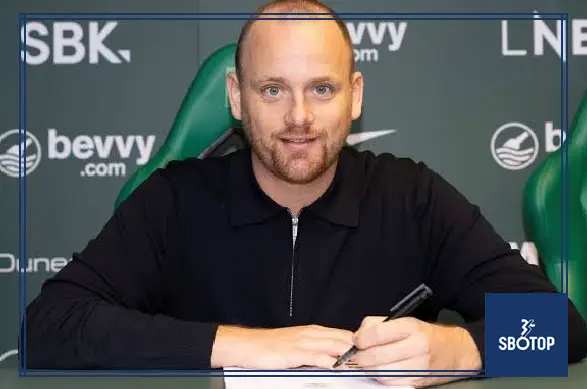
Hibernian have appointed 35-year-old Dutch coach Marink Reedijk as their new manager, bringing a promising young figure to Easter Road after his impressive work in Belgium. The appointment represents a significant step for the Scottish club as they look to build a progressive identity around a coach whose career has developed rapidly through modern football environments.
A New Era Begins at Easter Road
Hibernian’s decision to appoint Marink Reedijk signals the beginning of an intriguing new chapter for the Edinburgh club. At just 35 years old, the Dutchman arrives with a reputation for coaching development, tactical organisation and an ability to work within demanding football structures. His move to Scotland provides another opportunity to demonstrate his managerial credentials in a different league and football culture.
For Hibernian, the appointment is about more than simply filling a vacant position. The club are bringing in a coach who represents a younger generation of football managers, one shaped by modern tactical ideas and an emphasis on developing players. Reedijk’s arrival also reflects the increasingly international nature of football management, with clubs searching beyond traditional managerial backgrounds for coaches capable of introducing fresh approaches.
Easter Road will therefore become the next important stage of Reedijk’s career. The expectations surrounding Hibernian are substantial, and the new manager will be required to translate his previous experience into results on the pitch.
Who Is Marink Reedijk
Marink Reedijk has built his coaching career in the Netherlands and Belgium, developing through roles that have allowed him to gain experience in player development and tactical preparation. His relatively young age makes his appointment particularly notable, but his career has already provided him with opportunities to work in competitive professional environments.
Rather than arriving at Hibernian with decades of experience as a traditional first-team manager, Reedijk represents a different coaching pathway. Modern football has increasingly created opportunities for younger coaches who demonstrate strong tactical understanding and an ability to communicate ideas effectively.
His background in Belgium has been especially important to his progression. Working outside his native Netherlands gave Reedijk exposure to another football culture and different competitive demands. That experience can become valuable at Hibernian, where he will now have to adapt his ideas to Scottish football.
The transition will inevitably involve challenges. Scottish football has its own physical, tactical and cultural characteristics, while Hibernian operate under the pressure that comes with being one of the country’s established clubs. Reedijk will need to combine his existing philosophy with a clear understanding of his new environment.
Success in Belgium Paved the Way
Reedijk’s appointment has been made possible in part by the progress he achieved in Belgium. His work there helped establish his credentials and attracted attention from a club looking for a coach capable of taking the team forward.
Belgium has become an important development ground for coaches and players because of its competitive domestic structure and willingness to provide opportunities to emerging football figures. Reedijk’s experience in the country allowed him to operate in an environment where tactical flexibility and player development are highly valued.
His achievements also demonstrate that his reputation has not been built solely on potential. Success at a younger age can provide a strong foundation for a coach, particularly when that success is achieved outside familiar surroundings.
Hibernian will hope that the qualities that helped Reedijk succeed in Belgium can be transferred successfully to Scotland. However, the new manager will understand that previous achievements provide a starting point rather than a guarantee of future results.
Why Hibernian Chose a Young Dutch Coach
The appointment of a 35-year-old manager naturally attracts attention. Hibernian could have selected a more experienced coach with years of Scottish football behind him, yet the club instead opted for a manager whose career is still developing.
That decision suggests a willingness to embrace a modern coaching philosophy. Younger managers often arrive with ideas influenced by contemporary tactical trends, data analysis, positional concepts and detailed training methodologies. These characteristics have become increasingly important across European football.
For Hibernian, Reedijk’s age could also allow the club to establish a long-term relationship with a coach who still has significant room to grow. If his methods produce the desired results, the appointment could become an important part of the club’s wider football strategy.
At the same time, the appointment creates an obvious challenge. Reedijk will have to demonstrate that his coaching principles can succeed under the pressure of Scottish first-team football. Managing players every day is different from working primarily within developmental environments, and expectations can change quickly when results become the main measure of progress.
A Different Football Culture Awaits
Moving from Belgium to Scotland will require Reedijk to adapt. Although both countries have strong football traditions, the tactical and physical characteristics of their leagues can differ considerably.
Scottish football is frequently associated with intensity, physical contests, quick transitions and a demanding schedule. Hibernian also face the pressure of competing in an environment where every league fixture can carry significant importance.
Reedijk’s ability to recognise these differences will be crucial. A successful coach cannot simply reproduce the methods that worked elsewhere without considering the players, opponents and circumstances around him. His task will be to identify which elements of his philosophy can be transferred directly and which need modification.
The process of adaptation could begin with training. Reedijk will have to establish his expectations quickly, from defensive organisation and attacking movement to pressing structures and transitions. Players will also need to understand precisely what their new manager expects from them.
Building a Clear Tactical Identity
One of the most interesting aspects of Reedijk’s appointment will be the tactical identity he establishes at Easter Road. Modern Dutch coaching has traditionally placed significant emphasis on structured possession, intelligent movement and positional awareness, although individual coaches naturally interpret those principles differently.
Reedijk will have the opportunity to develop a style that reflects his own ideas while working with the players already available at Hibernian. The balance between philosophy and practicality will be essential.
A manager can have ambitious tactical concepts, but those concepts must be understood and executed by the squad. Reedijk therefore faces the task of identifying the strengths of his players before determining how aggressively he wants to implement changes.
The early months could be particularly important. Supporters will want to see evidence that the team is moving toward a recognisable style, while players will need time to adjust to new responsibilities. Tactical development is rarely immediate, meaning performances may evolve gradually rather than transforming overnight.
The Importance of Player Development
Another potentially important feature of Reedijk’s arrival is his experience working with developing footballers. At 35, he belongs to a generation of coaches who have grown up in an era where individual development is closely connected to tactical education.
Hibernian have historically provided opportunities for players to develop and establish themselves, making a coach with an interest in improvement an intriguing fit. Reedijk could place considerable emphasis on helping younger players understand the tactical demands of senior football.
Player development is not limited to teenagers. Established professionals can also benefit from a manager who provides clear tactical instructions and introduces new ways of interpreting their roles. A midfielder might receive different positional responsibilities, while a forward could be asked to contribute more actively to pressing and defensive work.
If Reedijk succeeds in creating an environment where players continually improve, the benefits could extend beyond individual performances. A stronger squad can give the club greater depth, flexibility and long-term stability.
The Challenge of Winning Matches
Despite the focus on development and tactics, Reedijk will ultimately be judged by competitive results. Football managers can introduce attractive ideas, but those ideas must eventually translate into points and victories.
Hibernian supporters will expect their team to compete strongly, particularly in matches against domestic rivals. The new manager therefore needs to establish a balance between long-term development and immediate performance.
That balance can be difficult for a young coach. Implementing a new system may initially create uncertainty, while players learn unfamiliar movements and responsibilities. Reedijk will need to manage that transition without allowing short-term difficulties to undermine confidence.
His previous success in Belgium should provide useful experience, but Scottish football will test his ability to respond to different tactical problems. Some opponents may press aggressively, others may defend deeply, while certain matches could become highly physical contests dominated by second balls and set pieces.
Managing Expectations at Hibernian
The relationship between Reedijk and the supporters will be another important part of his tenure. Hibernian fans have strong expectations for their club, and performances at Easter Road can generate significant attention.
A new manager needs to establish trust, and one of the simplest ways to do that is through visible progress. Supporters want to understand what their team is trying to achieve. A clear playing identity can therefore become valuable even before the final results consistently arrive.
Reedijk’s communication skills will also matter. Players need clarity, while supporters need to see that the club has a coherent plan. If the manager can communicate his footballing philosophy effectively, he can create a stronger connection between the squad and the wider Hibernian community.
However, expectations must remain realistic. Reedijk is entering a new country, a new league and a new dressing room. The transition will require time, and his success will depend on how effectively he responds to the challenges that emerge.
The Role of the Recruitment Team
Reedijk’s success will not depend solely on coaching. Recruitment will also play an important role in determining whether his ideas can be implemented effectively.
Every manager needs players who fit the demands of his system. If Reedijk prefers particular profiles in midfield, defence or attack, Hibernian’s recruitment department may eventually need to identify footballers capable of fulfilling those roles.
That does not necessarily mean an immediate overhaul of the squad. A new coach may discover that existing players are already capable of performing roles that suit his philosophy. Understanding the squad should therefore come before making major changes.
Over time, however, recruitment can become an important tool for establishing a consistent footballing identity. Players brought into the club can be selected with Reedijk’s tactical requirements in mind, creating greater continuity between recruitment and coaching.
Learning From the Belgian Experience
Reedijk can also use his time in Belgium as a reference point. His previous work will have exposed him to situations involving pressure, tactical adjustments, player development and the demands of professional competition.
The key will be identifying lessons that remain relevant in Scotland. Successful coaching often involves constant reflection rather than rigidly following one philosophy. Reedijk will need to understand what worked previously, why it worked and whether the same principles can be applied to his new squad.
His experience abroad may also help him approach the Scottish game with an open mind. Rather than assuming that one football culture is superior to another, he can learn from the differences and incorporate useful elements into his approach.
A Significant Opportunity for Reedijk
For Reedijk personally, the move to Hibernian represents one of the most significant opportunities of his young coaching career. Managing an established club in another country provides an opportunity to demonstrate that his methods can work beyond the environment where he initially developed them.
Success at Easter Road could strengthen his reputation across European football, while the experience itself will provide valuable lessons regardless of how quickly results arrive. At 35, Reedijk has considerable time to continue developing as a manager.
The move also places him in a highly visible football environment. Hibernian have a passionate supporter base and a historic place within Scottish football, ensuring that the new manager will operate under significant public attention.
What Supporters Can Expect
Supporters can reasonably expect changes to emerge gradually as Reedijk becomes familiar with his squad. His preferred tactical structures, training methods and approach to player development will take time to become fully established.
There may be encouraging performances alongside difficult moments. That is a normal part of introducing a new managerial philosophy, particularly when the coach is moving between countries.
The most important early indicators will likely be organisation, consistency and clarity of purpose. If players appear to understand their roles and the team develops a recognisable approach, supporters will have visible evidence of the direction Reedijk is attempting to establish.
Ultimately, however, the quality of his work will be measured across a sustained period rather than by isolated matches.
Also Read: