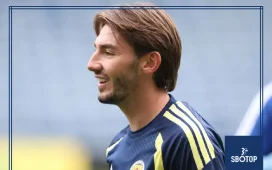
Alex Scott has suffered a significant setback after the Bournemouth midfielder withdrew from England duty because of a tendon injury that could keep him sidelined for several weeks.
The development is an unfortunate interruption for a player who has been building momentum at both club and international level. Scott’s versatility, technical ability and willingness to work across midfield have made him an increasingly valuable option, while his performances for Bournemouth have helped strengthen his reputation as one of the most promising young English midfielders.
Instead of using the international break as another opportunity to impress, however, Scott must now focus on recovery.
The injury is also a concern for Bournemouth, who will be hoping the midfielder can return without complications. Tendon problems can require careful management, particularly for players whose game depends on repeated changes of direction, acceleration and physical intensity.
The immediate priority will therefore be ensuring that Scott makes a complete recovery rather than rushing him back into competitive football.
A Frustrating Moment for a Rising England Player
Being selected for England represents a major achievement for any footballer.
For Scott, another opportunity to work within the senior international setup would have provided valuable experience. England’s midfield competition is intense, meaning every training session and appearance can influence a player’s position within the squad.
His withdrawal therefore represents more than simply a missed international window.
It removes an opportunity for Scott to demonstrate his qualities to the coaching staff and compete against other midfielders for future selection.
Nevertheless, injuries are an unavoidable part of professional football. Scott’s priority must now be to recover properly and return to Bournemouth at full strength.
There will be other opportunities with England if he continues developing at his current rate.
Why Alex Scott Has Become Important to Bournemouth
Scott has developed into an increasingly interesting midfielder because of his ability to operate in several different roles.
Rather than being restricted to one position, he can contribute as a central midfielder, play from wider areas or move into more advanced positions when required.
That flexibility is especially valuable in modern football.
Managers frequently need players capable of changing roles during a match. A midfielder may begin in a deeper position before moving forward to support attacks, or start wide before drifting inside to create numerical advantages.
Scott’s technical qualities allow him to make those adjustments.
His close control, passing ability and movement make him comfortable in possession, while his energy allows him to contribute when Bournemouth do not have the ball.
Those qualities have helped establish him as an important part of Bournemouth’s squad.
The Tendon Injury Creates a Difficult Balancing Act
Tendon injuries can be particularly frustrating for footballers because recovery is often dependent on careful rehabilitation rather than simply waiting for pain to disappear.
A player may feel capable of training before the affected area is ready to withstand the full demands of competitive football.
That creates a difficult balance for medical teams.
Returning too quickly can increase the possibility of aggravating the problem, while taking additional time can reduce the risk of a setback.
For Scott, patience will therefore be crucial.
The phrase “several weeks” also means that the exact timeline could depend on how his body responds to rehabilitation.
Bournemouth will understandably want more clarity before determining when he can resume full training.
Bournemouth Will Miss His Energy in Midfield
Scott’s absence could affect Bournemouth in several ways.
One of his biggest strengths is his ability to provide energy throughout midfield. He can cover ground, support teammates and help maintain intensity during both attacking and defensive phases.
Losing that profile can force a manager to adjust the balance of the midfield.
Bournemouth possess other options, but replacing an individual player is rarely as simple as selecting another name from the squad.
Each midfielder offers different characteristics.
Scott’s combination of technical ability and physical mobility makes him particularly useful in matches where Bournemouth need to transition quickly between defense and attack.
His absence could therefore influence tactical decisions over the coming weeks.
England Also Faces a Selection Problem
Scott’s withdrawal is unlikely to cause England to completely rethink their midfield plans, given the depth available to the national team.
However, every injury changes the dynamics of an international squad.
England have an abundance of midfield talent, but Scott represents a different type of option.
His versatility gives coaches the possibility of altering the team’s shape without making a major personnel change.
He can help provide balance between creativity and defensive work, while his ability to operate in different areas makes him useful when matches become tactically complicated.
Missing the current international window means he loses valuable time with the squad.
For a developing player, that experience can be particularly important.
The Timing Could Not Be More Frustrating
The timing of Scott’s injury is one of the most disappointing aspects of the situation.
International breaks are opportunities for players to step away from the weekly demands of club football and compete at the highest representative level.
For Scott, it was another chance to demonstrate that he belongs in England’s plans.
Instead, he will spend the period recovering.
The frustration will be considerable, especially because young players understand that international opportunities cannot be taken for granted.
Selection depends on form, fitness and competition for positions.
Scott will now have to wait for his next opportunity.
His Development Has Been Built on Adaptability
Scott’s progress has been strongly connected to his willingness to adapt.
Young players entering senior football often struggle when asked to change positions or responsibilities.
Scott has shown an ability to adjust.
That adaptability has helped him become more useful to Bournemouth and more attractive as an international prospect.
His development also reflects the changing demands placed on modern midfielders.
The traditional distinction between defensive midfielders, central midfielders and attacking midfielders has become less rigid.
Players are increasingly expected to contribute in multiple phases.
Scott fits that modern profile.
He can carry the ball, pass through pressure, support attacking moves and work defensively.
That versatility will remain valuable when he returns.
Bournemouth Must Avoid Rushing Him Back
From Bournemouth’s perspective, the temptation to accelerate Scott’s recovery must be resisted.
The club may need him, particularly if injuries or fixture congestion create additional pressure.
But tendon problems can become more complicated when a player returns before fully recovering.
The best long-term decision is therefore likely to prioritize rehabilitation.
Bournemouth will want Scott available for the majority of the season rather than risking a rushed comeback that leads to another absence.
A carefully managed return could include individual training, controlled physical work and gradual reintegration into team sessions before he is cleared for competitive action.
The process may feel slow, but it is designed to protect the player’s long-term career.
What Scott’s Absence Means for Bournemouth’s Midfield
Without Scott, Bournemouth may need to redistribute his responsibilities among several players.
One midfielder could provide his passing qualities, while another contributes the physical energy.
Alternatively, the manager could adjust the formation to compensate for the missing versatility.
That can change the way Bournemouth build attacks.
Scott’s movement often gives teammates an additional passing option, particularly when opponents attempt to press high.
Without him, Bournemouth may have to rely more heavily on other players to carry the ball through midfield.
This could alter the rhythm of matches.
The club’s ability to adapt during Scott’s absence will therefore be an important test of squad depth.
A Setback Does Not Change His Long-Term Potential
It is important that the injury does not overshadow what Scott has already achieved.
At a relatively young stage of his career, he has already established himself as a player capable of competing at a high level.
Injuries are setbacks, but they do not necessarily change a player’s trajectory.
What matters is how the player responds.
Scott’s rehabilitation period can be used to strengthen areas of his game that do not require full physical intensity. He can study matches, work on tactical understanding and maintain his overall preparation while the medical team manages his recovery.
Mental resilience will be equally important.
Footballers often find injury periods difficult because they lose the routine of competition.
Staying connected with teammates and maintaining a positive mindset can help make the process easier.
England’s Midfield Competition Remains Fierce
Even before Scott’s injury, England’s midfield competition was intense.
The national team has several players capable of influencing matches from central areas.
That means Scott cannot assume that returning to fitness will automatically guarantee another call-up.
He will need to return to Bournemouth, regain rhythm and demonstrate his quality consistently.
However, his versatility gives him a valuable advantage.
Managers appreciate players who can provide tactical flexibility from the bench or adapt to different match situations.
If Scott returns strongly, his international prospects should remain positive.
The current setback does not have to become a permanent obstacle.
International Football Will Still Be There
For Scott, perhaps the most important message is that his England career is not defined by one missed camp.
International football can sometimes feel unforgiving because squads are selected for limited windows.
Yet young players generally have more opportunities if they continue to develop.
Scott has already shown enough quality to attract attention at the highest level.
A successful recovery followed by strong club performances could quickly put him back into contention.
The key is not to focus excessively on what has been lost.
Instead, Scott can concentrate on what he can control: rehabilitation, fitness, preparation and performances once he returns.
The Importance of Patience During Rehabilitation
Patience is one of the hardest qualities for a professional footballer to develop.
Players naturally want to compete.
They are accustomed to training every day, preparing for matches and measuring their progress through performances.
An injury interrupts that cycle.
Scott may therefore have moments when he feels ready to return before the medical staff believe he should.
That is where discipline becomes essential.
A carefully planned rehabilitation program can gradually rebuild strength and confidence.
The objective should not simply be to eliminate pain.
The objective is to restore the physical capacity required for professional football.
That distinction can determine whether a player returns successfully or suffers another setback.
Bournemouth’s Support Could Be Crucial
The club’s role during Scott’s recovery will extend beyond medical treatment.
A positive environment can help an injured player maintain confidence and motivation.
Scott remains an important member of Bournemouth’s squad, even while unavailable.
Keeping him involved with teammates and tactical discussions can prevent him from feeling disconnected from the team.
It may also help him maintain his understanding of Bournemouth’s evolving tactical plans.
When he eventually returns, he will already understand what the manager expects.
That can make the transition back into competitive football smoother.
The Road Back Will Require Gradual Progress
Scott’s return should ideally happen in stages.
First comes recovery and rehabilitation.
Then controlled physical training.
After that, he can begin increasing his workload and participating in more football-specific exercises.
The next step is full team training before competitive minutes become realistic.
Each stage provides information about how the injured tendon is responding.
If everything progresses well, Scott can gradually regain the confidence required to make explosive movements, challenge opponents and play at full intensity.
There is no advantage in skipping those steps.
A Future England Regular Still Within Reach
Scott’s withdrawal is disappointing, but it should not obscure his potential to become a regular England international.
He has qualities that fit the modern game and a skill set that can complement several different tactical approaches.
If he continues improving after his recovery, there is every reason to believe he can remain part of England’s wider plans.
The competition will be difficult, but that competition can also drive improvement.
Scott has already demonstrated that he is capable of competing at a high level.
The next challenge is simply returning to that level after injury.
Also Read:
- SBOTOP: Harry Kane Rewrites England History as Thomas Tuchel Hails the Striker’s Extraordinary Legacy
- SBOTOP David Wagner’s Blueprint for German Football: Why the System Must Change to Restore Its Competitive Edge
- SBOTOP: Ronaldo and Portugal at a Crossroads as Messi’s Argentina Farewell Adds Another Chapter to Football’s Greatest Rivalry