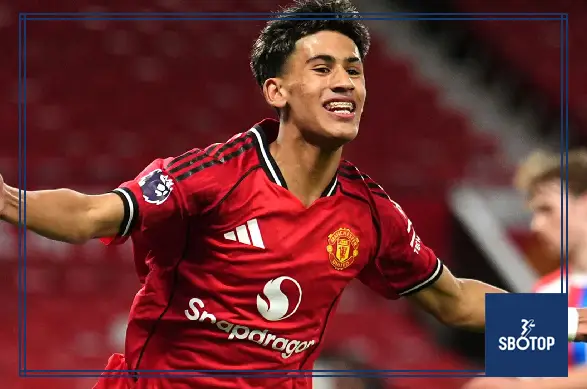
JJ Gabriel’s appearance in Manchester United’s first-team squad photograph offered supporters an apparently reassuring image. A highly regarded young attacker stood alongside senior professionals, suggesting that his development remained connected to the club’s plans.
However, reporting surrounding the teenager’s future presented a different picture. Gabriel was still expected to leave despite his inclusion, with the photograph understood to have been taken before his camp formally requested an exit.
The timing matters. An official image can show where a player stood on one particular day without explaining what happened afterwards. Its publication does not necessarily represent a fresh agreement, a resolved disagreement, or a commitment about future appearances.
Gabriel’s situation therefore requires careful interpretation. The central issue is not whether he appeared in the photograph, but whether the player’s camp and United can agree on a development pathway that both consider credible.
Why the Timeline Changes the Meaning of the Image
The squad photograph was reportedly taken on September 8, before Gabriel and his family submitted a formal request to leave. Subsequent attempts to reconcile the situation were reported to have made little progress, while the teenager remained registered with United.
That sequence explains why the image and the departure reports can exist together. They describe different moments rather than necessarily contradicting one another.
Football supporters understandably look for meaning in official club material. A place in a senior squad picture can indicate recognition, inclusion, and belief. Yet it cannot establish the details of conversations taking place away from public view.
The photograph should therefore be understood within its original context. It reflected Gabriel’s connection to United when it was taken. The later disagreement concerns whether that connection can continue on terms acceptable to everyone involved.
A useful reading of the story begins with chronology rather than symbolism.
A Disagreement About the Speed of Progression
The reported dispute centres on first-team opportunities and the pace at which Gabriel should move beyond youth football. United’s position, as described in reporting, emphasises a pathway that combines senior involvement with protection of his longer-term development.
His camp reportedly wanted a more substantial immediate role. That difference is significant because both positions can begin with belief in the same player while reaching different conclusions about what should happen next.
A club may regard senior training, occasional appearances, and individual coaching as meaningful progress. A player’s representatives may view those steps as insufficient if they believe regular match involvement is already justified.
The disagreement is therefore about expectations as much as talent. Recognising a youngster’s potential does not automatically create agreement over selection.
For any resolution to become convincing, the parties would need a shared understanding of what progression means, how it will be assessed, and which decisions remain dependent on performance.
Pre-Season Exposure Did Not Settle Expectations
Gabriel reportedly trained with United’s first team during pre-season and appeared briefly in a friendly against Atlético Madrid. His camp was understood to have wanted more playing time than that appearance provided.
He also reportedly scored a hat-trick in a UEFA Youth League fixture against Sabah, while his anticipated senior involvement remained a source of disagreement.
Those details help explain the competing interpretations. United could point to exposure to senior football as evidence of a pathway. Gabriel’s camp could look at his youth performances and argue that greater opportunities should follow.
However, youth success and senior readiness are related questions rather than identical ones. Strong performances can justify closer consideration, but they do not remove the need to assess tactical understanding, physical demands, and consistency.
The difficulty arises when one side sees a promising beginning and the other sees an overdue step. Without agreement over the next stage, even positive experiences may fail to reassure.
What a Genuine First-Team Pathway Should Offer
A development pathway becomes meaningful when it contains more than general encouragement. Young players need to understand what the club wants them to improve and how progress will influence their opportunities.
That does not require a manager to promise appearances regardless of circumstances. It requires clarity about the process.
For example, a player can be given specific objectives concerning decision-making, defensive work, physical preparation, or effectiveness against stronger opponents. Coaches can then explain how those objectives relate to senior football.
Communication should also address where the player will train and which level of competition will provide useful minutes. A pathway is stronger when those decisions fit together rather than appearing disconnected.
In Gabriel’s case, the broader question is whether the reported opportunities were understood similarly by both sides. An arrangement that feels substantial to the club may still fail if the player’s camp expects a different timetable.
Why Guaranteed Minutes Create Difficult Questions
Reports described requests for defined amounts of senior playing time. Such expectations raise a difficult issue: how much certainty can a club provide without compromising the manager’s responsibility to select a team?
A coach must respond to form, fitness, tactics, and the circumstances of individual matches. An advance guarantee may become unsuitable if those conditions change.
At the same time, a young player’s representatives may seek reassurance because vague promises can leave progression indefinitely postponed. The desire for clarity is understandable even when the proposed solution creates problems.
A more workable approach would distinguish guaranteed support from guaranteed selection. Coaching attention, regular reviews, and a clear training arrangement can be specified. Match involvement generally requires greater flexibility.
This distinction matters beyond one player. Clubs need to show that opportunities are real while maintaining standards that apply across the squad. Families need enough information to assess whether patience is serving development.
Youth Football Still Has a Developmental Purpose
The debate around exceptional prospects often presents youth football as something a talented player must escape quickly. That view can overlook what different levels of competition contribute.
Youth matches provide opportunities to practise responsibilities, encounter varied defensive approaches, and build confidence through sustained involvement. A player may gain more from an influential full appearance than from a short senior cameo.
However, the value of youth football depends on the challenge it provides. If a player consistently finds the level comfortable, coaches should consider how to increase the demands.
That could involve an older age group, additional senior training, or carefully chosen first-team involvement. The answer need not be permanent placement at one level.
For Gabriel, the important developmental question is which combination would produce the greatest progress. The prestige of a competition matters less than whether it helps him improve the skills needed for a lasting senior career.
Interest From Major Clubs Does Not Confirm a Move
Barcelona, Real Madrid, Paris Saint-Germain, and Bayern Munich have been linked with Gabriel. The reporting also distinguished discussions involving his camp from formal contact between clubs, stating that no club-to-club approach had occurred at that stage.
That distinction should shape expectations. Interest can mean monitoring, an exploratory conversation, or a desire to understand a player’s circumstances. It does not establish an agreement.
For supporters, the appearance of prominent club names can make departure feel inevitable. Yet a completed move requires considerably more than recognition of talent.
The player must assess the proposed environment, while the relevant parties must resolve practical arrangements. Until those steps are confirmed, the destination remains uncertain.
Gabriel’s future should therefore be discussed as a developing situation. The reported likelihood of leaving is an assessment, not proof that a transfer has already been completed.
A Bigger Name Does Not Automatically Mean a Better Route
For any young footballer considering a move, the most famous destination is not necessarily the most suitable one. The practical development offer deserves closer attention than the reputation of the badge.
Important questions include who will coach the player, where competitive minutes are expected to come from, and how the club handles setbacks.
A youngster can join an elite institution and still encounter a crowded route to senior football. Conversely, a less glamorous arrangement may provide clearer responsibilities and more consistent involvement.
There is also the matter of tactical suitability. A player needs an environment that develops strengths while addressing weaknesses, rather than simply celebrating existing ability.
For Gabriel, any potential decision should be judged through those details. The strongest opportunity would be one that offers sustained learning, realistic progression, and a support structure capable of managing the pressures attached to his reputation.
Carrick’s Emphasis on Care Adds Necessary Perspective
Michael Carrick has publicly urged care in discussing Gabriel’s situation, stressing the teenager’s welfare and the need to manage exposure responsibly. His comments introduce an important consideration into a story frequently framed as a transfer dispute.
A highly rated young player is still developing personally as well as professionally. Public attention can arrive long before the experience required to handle it comfortably.
Football decisions therefore sit alongside education, family support, physical development, and everyday wellbeing. Those considerations remain relevant whether a player stays or moves.
They also affect how the story should be discussed. Reported disagreements should not become a basis for assigning motives that have not been established.
It is possible to analyse competing expectations without reducing a teenager to a label. The most useful discussion considers what arrangement would help him develop, rather than treating his future as an argument to be won.
Manchester United’s Challenge Extends Beyond Retention
From United’s perspective, keeping a promising player would only be part of a successful outcome. The club would also need a working relationship strong enough to support his progress.
If the player’s camp doubts the pathway, those concerns could return even after an immediate disagreement is settled. Reconciliation would require clearer expectations and confidence in how decisions are made.
Equally, the club must maintain a coherent approach across its academy. Individual development can be tailored without making every selection dependent on external pressure.
That balance is demanding. Exceptional talent may justify exceptional attention, but attention must still serve development and team requirements.
United’s broader task is to make their pathway persuasive through action. Young players should be able to see how good performances, appropriate preparation, and consistent progress translate into opportunity. A credible system reduces the need for reassurance based solely on promises or symbolic gestures.
What Gabriel’s Camp Must Evaluate Carefully
The player’s camp faces its own complex assessment. Immediate senior involvement may be attractive, but the quality and sustainability of that involvement matter.
A short-term promise can lose value if the coaching staff changes or if the player struggles with a new environment. The strongest arrangement should remain useful even when progress is uneven.
That requires questions about support during injury, periods without selection, and the transition between youth and senior competition. Development rarely follows an uninterrupted upward line.
Any move would also involve adaptation. Familiar surroundings, established relationships, and knowledge of a club’s expectations all have value, even when disagreement exists.
The decision should therefore compare realistic options rather than an imperfect present with an idealised future. Gabriel’s potential deserves an environment chosen for its practical strengths, with ambition supported by a clear understanding of what each route requires.
What Would Demonstrate That the Situation Has Changed?
A meaningful change would need stronger evidence than another photograph or an indirect public signal. An official statement, a confirmed return to training, or a clearly communicated agreement could provide a firmer basis for assessment.
Similarly, a departure would become established through confirmation of the relevant arrangements, rather than repeated reports that leaving is expected.
Until then, uncertainty remains part of the story. That does not make the reporting irrelevant; it means its language should retain the distinction between expectation and completion.
For supporters, patience can be difficult when a promising youngster’s future is unresolved. However, interpreting every small development as decisive can create unnecessary swings between optimism and frustration.
The useful approach is to look for actions that alter the working relationship or formal status. Those developments would explain more about Gabriel’s future than the continued circulation of an image taken before the disagreement.
Also Read: