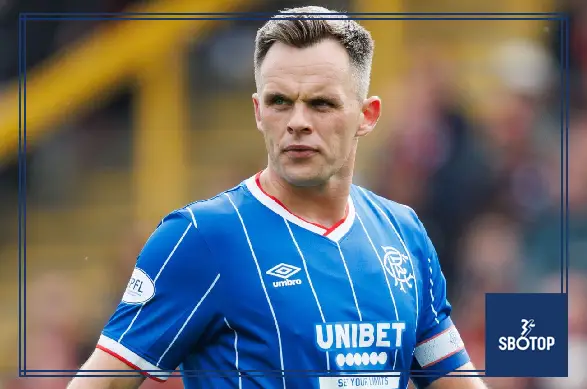
Lawrence Shankland has offered Rangers supporters an encouraging assessment of his recovery after hamstring surgery, while remaining careful about when he might return to competitive football. His message combines optimism about the progress already made with recognition that rehabilitation still requires time.
Speaking on October 7, the Rangers captain said his recovery was moving in the right direction after a follow-up appointment with his specialist. He had also stopped using crutches approximately four weeks after surgery. Those developments provided reassurance following an injury that interrupted the early months of his Rangers career.
However, Shankland did not announce a confirmed comeback date. He emphasised that his progress would remain under physiotherapist supervision and that he needed to feel comfortable before returning to the pitch. The distinction is important: an encouraging recovery update does not mean a player is ready to resume training or take part in matches.
The Injury That Interrupted His Start
Shankland suffered the injury during Rangers’ 1-0 victory over Motherwell at Ibrox on September 5. He came off early in the match, and manager Derek McInnes subsequently indicated that the striker could face an absence of up to four months.
The 31-year-old had scored four goals in ten appearances following his summer arrival from Hearts. His absence therefore removed a player who had already contributed goals, alongside the responsibility attached to his position as captain.
McInnes explained that surgery was intended to reduce the risk of the problem recurring, although the operation would extend the rehabilitation period. That explanation describes the reasoning given for the decision, rather than guaranteeing that another injury could never happen.
For Rangers, the immediate consequence was the need to continue without an established attacking option. For Shankland, the focus changed from preparing for the next fixture to following a recovery process whose duration could not be fixed precisely.
Why the Return Date Remains Uncertain
Shankland’s reluctance to identify an exact comeback date is one of the most significant parts of his update. Supporters naturally want to know which match might mark his return, but his public comments do not provide that certainty.
He referred to assessing his condition around the three-to-four-month stage. He also expressed hope that he could return around January, while making clear that the timing would depend on his progress. January should therefore be understood as an aspiration, rather than a confirmed selection date.
This matters because an estimated period can easily become a deadline in public discussion. Once a particular month is repeatedly mentioned, any change may be interpreted as a setback even when no firm commitment was made.
A more accurate reading is that Shankland remains optimistic about contributing later in the season. His availability will depend on further assessment, not simply on reaching a date in the calendar.
Progress Should Not Be Confused with Readiness
Coming off crutches is a meaningful development in Shankland’s recovery, but the available information does not establish that he has resumed full team training. Nor does it confirm that he is close to being selected for a competitive match.
Those are separate questions. A public update may describe improvement in everyday movement without explaining every stage still required before a football return. Supporters should therefore avoid filling the gaps with assumptions about activities that have not been announced.
From a sporting perspective, the key distinction is between recovery progress and match availability. The first gives reason for encouragement; the second requires a clear assessment that a player can participate.
Shankland’s own emphasis on supervision and comfort supports that cautious interpretation. It allows Rangers supporters to welcome the positive news while recognising that the club captain remains in rehabilitation and that further developments are needed before his comeback becomes concrete.
Watching Rangers Win Has Helped
Shankland has spoken about the difficulty of watching teammates play while he remains unavailable. Rangers’ results have nevertheless provided some comfort, particularly their consecutive victories over Celtic before the international break.
Rangers won the Premier Sports Cup meeting 3-0 at Ibrox before recording a 1-0 Premiership victory at Celtic Park. Shankland watched the league encounter from home and described how absorbed he became in supporting the team.
Those comments show his continued interest in Rangers’ fortunes, but they should not be expanded into claims about private dressing-room conversations or his precise influence during the absence. The evidence concerns what he publicly described.
The broader point is straightforward. Winning cannot complete an injured player’s rehabilitation, but it can make watching from the sidelines less frustrating. Shankland can take encouragement from his teammates’ progress while concentrating on the work required for his own return.
Rangers Must Keep Building without Him
The positive recovery update does not remove Rangers’ immediate need to perform without their captain. Until his availability is confirmed, McInnes must continue making decisions based on the players ready to contribute.
In general football terms, losing a striker can affect more than finishing. Different forwards may offer different movements, ways of receiving possession and relationships with teammates. A manager may need to adjust the supply of chances or the balance around the attacking positions.
That is tactical analysis, rather than confirmation of a particular change Rangers have implemented because of Shankland’s injury. His absence alone does not establish which formation or attacking approach McInnes will prefer.
What matters is that the team continues developing effective combinations. A successful period without Shankland would give Rangers a stronger position when he returns, allowing his reintegration to be considered alongside the form and contributions of other players.
Captaincy Extends beyond Playing Minutes
Shankland’s injury raises a familiar question about leadership: how does a captain remain involved when unable to lead the team on the pitch?
In principle, leadership can continue through communication, support and example. An injured player may still retain important relationships within the squad. However, those general possibilities should not be treated as a detailed account of Shankland’s current responsibilities unless they are publicly confirmed.
His visible interest in the team’s results provides a clearer basis for discussion. He remains invested in Rangers’ progress and has acknowledged the difficulty of being separated from normal training and match participation.
That emotional connection matters without needing exaggeration. Captaincy does not disappear during an injury, but neither does it make absence easy. Shankland’s immediate responsibility is to pursue his rehabilitation, while teammates carry the competitive demands that he cannot currently share on the field.
The Difference between Returning and Finding Form
Whenever Shankland becomes available, the next question will concern performance rather than the return date alone. Resuming competitive football and immediately producing a player’s best form are different expectations.
As a matter of football analysis, a returning striker may need to rebuild relationships with teammates and become familiar with changes made during his absence. The manager will also have to consider the team’s existing balance and the performances of other attacking players.
None of that establishes a prescribed plan for Shankland. There is no confirmed public schedule of substitute appearances, training sessions or playing minutes in the information available.
The sensible conclusion is that his comeback should be assessed as a process. Supporters can welcome the first appearance without treating it as proof that every aspect of his return is complete. Equally, one quiet match would not justify a sweeping judgment about his longer-term contribution.
Keeping Expectations Grounded
Injury updates often encourage speculation because they offer only a partial picture. A positive comment can become a prediction of an early return, while an estimated absence can be presented as a guaranteed timetable.
Shankland’s case illustrates why wording matters. He has described progress and expressed hope, but he has also acknowledged uncertainty. Both elements belong in an accurate account.
Claims about an imminent comeback, a specific fixture or a guaranteed recovery would go beyond his confirmed position. Outside assessments should likewise be distinguished from information supplied by the player or club, particularly when they do not involve direct knowledge of his rehabilitation.
Keeping expectations grounded does not require pessimism. It means allowing optimism to rest on what has been established. The latest update gives supporters reason to feel reassured, while leaving the timing of his return open to further assessment.
Also Read: