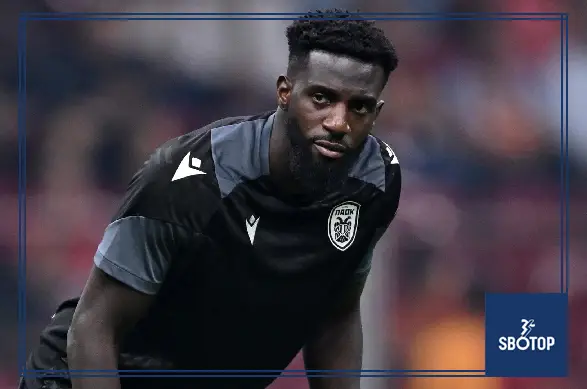
Celtic will not offer Tiémoué Bakayoko a contract, according to the latest reporting on the former Chelsea and AC Milan midfielder. The update brings an immediate conclusion to speculation about a possible move, although the precise reasoning behind the decision has not been publicly established.
Reports published on October 9 and summarised the following day stated that the 32-year-old would not receive a deal. They also indicated that he had used Celtic’s facilities during the international break to maintain his fitness. Bakayoko has been without a club since leaving PAOK in July 2025.
The distinction between a reported decision and an official explanation matters. There is no basis for claiming that Celtic rejected him because of wage demands, a medical assessment or poor training performances. Those explanations remain speculation unless supported by further information.
The Training Story Requires Caution
The circumstances surrounding Bakayoko’s reported presence attracted conflicting accounts. Some reporting described him as training with Celtic or using the club’s facilities, while another account disputed that he had been training at Lennoxtown and said he was not a signing target.
That disagreement limits how confidently the episode can be described. It would be inaccurate to present a formal trial, a defined assessment programme or a failed audition as established fact.
The common practical point is that no deal is being offered in the latest reports. The details of any arrangement around training are less certain.
For readers, separating those elements prevents a simple update from becoming an invented transfer narrative. A player’s reported access to facilities does not automatically establish negotiations, an agreed contract proposal or a commitment by the club to make a signing.
A Recognisable Career Attracted Attention
Bakayoko’s name naturally generated interest because of his experience at prominent European clubs. His career has included spells with Monaco, Chelsea, AC Milan and Napoli, alongside his more recent time at PAOK.
That background explains why a potential move attracted attention. Supporters recognise the clubs associated with him and may remember performances from earlier stages of his career.
However, career history and current suitability are different questions. Previous experience can be valuable, but it cannot establish how effectively a player would perform in a new environment now.
A responsible assessment therefore avoids two extremes: assuming a well-known player would automatically improve Celtic, or treating the absence of a contract as proof that he can no longer contribute anywhere. The latest development concerns one reported opportunity. It does not provide a complete verdict on Bakayoko’s remaining career.
Being Available Does Not Guarantee Suitability
A player without a club can appear an attractive option when supporters want immediate reinforcement. Availability, however, answers only one part of a recruitment decision.
In general terms, a club must consider the role it needs to fill, the player’s recent involvement and how his qualities fit the existing team. Contract terms and longer-term planning may also be relevant.
Those are normal recruitment considerations, not confirmed explanations for Celtic’s decision in this case. The information available does not identify which factor carried the most weight.
The analytical point is that recognising a need does not make every available player the appropriate answer. A signing must offer something useful within the team’s structure.
Equally, declining one player does not establish that a club has no intention of strengthening. It simply means that this particular possibility has not resulted in a contract offer, according to the latest reports.
A Long Absence Raises Questions, Not Conclusions
Bakayoko’s period without a club is relevant to an assessment of his circumstances. It creates questions about recent competitive involvement and the work needed to prepare for a new team.
However, that information alone does not establish his current physical condition. Claims that he failed to meet a fitness standard, could not cope with training or required a specific recovery period would need supporting evidence.
It is also important to distinguish being without a club from knowing every detail of a player’s activity during that period. The public record does not reveal his complete training routine.
From a football perspective, a club would want to understand readiness before making a commitment. For outside observers, the appropriate response is more restrained: the absence is a relevant consideration, but its precise influence on Celtic’s reported decision has not been confirmed.
Midfield Improvement Depends on Collective Balance
The Bakayoko speculation drew attention to Celtic’s midfield, but assessing that area requires more than identifying a player with a familiar reputation.
A midfield needs complementary responsibilities. Players must support possession, protect space and coordinate their movement with the rest of the team. Adding an individual does not automatically create that balance.
In general tactical terms, a defensive midfielder can help provide protection, but his effectiveness depends on distances between teammates and the support around him. The same applies to players asked to progress the ball or contribute further forward.
These observations are analysis rather than a confirmed diagnosis of Celtic’s current system. They explain why recruitment should connect with a specific football need.
The relevant question is what a potential addition would improve. A clear answer is more useful than simply describing someone as experienced, physical or available.
Avoiding Unsupported Explanations
When a reported transfer possibility ends, explanations often arrive faster than evidence. Supporters may suspect a disagreement over wages, a manager’s rejection or a change of direction by club officials.
None of those possibilities should be presented as fact here. The latest reports do not establish the content of private discussions or the existence of a failed agreement.
It would also be misleading to state that Bakayoko turned Celtic down. The reported development is that the club will not offer him a deal, which describes a different outcome.
Careful wording protects both sides from an invented account. It also makes the story clearer: the immediate contract prospect has ended, while the reasons remain incompletely explained.
If further information emerges, it can be assessed separately. Until then, uncertainty should remain visible rather than being filled with assumptions that happen to sound plausible.
O’Neill’s Choices Remain the Immediate Focus
Martin O’Neill continues to lead Celtic, and the reported decision leaves him working with the squad already available. There is no confirmed arrival of Bakayoko to alter his options.
That directs the immediate football discussion towards selection, preparation and the relationships between existing players. A transfer update may dominate attention briefly, but the team still needs effective performances from those currently involved.
It would be speculative to claim that O’Neill personally vetoed the move or approved a particular alternative. No detailed account of responsibility for the decision has been established.
The practical outcome is narrower: Celtic are not adding Bakayoko under the arrangement described in the latest reports.
For the manager, improvement must therefore come through the options he can actually use. Any later recruitment development should be treated as a separate event rather than assumed from the ending of this story.
Recruitment Decisions Need More than Immediate Reaction
Declining a recognisable player can provoke frustration, particularly when supporters believe the squad needs strengthening. It can also be welcomed by those who prefer a different approach.
Neither reaction establishes whether the decision was correct. That judgment requires an understanding of suitability, alternatives and the consequences for the team.
A club may reasonably decide against an available player, but still need to address the underlying area of concern. Conversely, signing someone can satisfy a desire for action without producing a useful football outcome.
The analytical standard should therefore remain consistent. Recruitment is most convincing when it connects a clearly identified need with a player capable of fulfilling it.
In Bakayoko’s case, the limited information prevents a definitive assessment of Celtic’s reasoning. The decision can be reported accurately without being declared either an obvious mistake or an unquestionable success.
Bakayoko’s Next Step Is Still Open
The absence of a Celtic offer does not determine where Bakayoko will play next. No subsequent club agreement is established by the information available.
It would therefore be premature to predict retirement, a move to a particular league or an imminent contract elsewhere. His future remains a separate question.
For a player seeking a new club, opportunities depend on the requirements of potential employers and the agreement that can be reached. Experience may attract interest, but a deal still needs to satisfy both sides.
The current story should remain within those boundaries. Celtic’s reported position has become clearer, while Bakayoko’s next destination has not.
That distinction avoids treating one unsuccessful possibility as the conclusion of his professional career. Any new agreement would need its own confirmation and should be assessed according to the circumstances of that move.
Also Read: