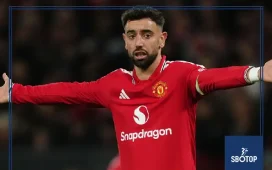
Erling Haaland has urged Manchester City supporters to remain positive and united following the independent commission’s verdict finding the club responsible for serious breaches of Premier League financial rules.
The striker’s message addressed the emotional impact of the case on supporters rather than attempting to answer its complex regulatory questions. With City challenging the findings, Haaland encouraged fans to look ahead, support one another and continue enjoying football.
His intervention came at a moment when discussion about the club extended far beyond results, performances and the title race. For supporters, the uncertainty concerned both City’s reputation and the possible consequences of a disciplinary process that remained unfinished.
Haaland’s response offered reassurance without promising a particular outcome. That distinction is essential: his confidence and commitment do not determine the appeal, while the commission’s findings cannot be overturned by performances on the pitch.
A Message Built Around Togetherness
Speaking publicly after the verdict, Erling Haaland made solidarity the central theme of his response.
“We have to stick together,” he said.
He encouraged supporters to maintain a positive outlook and explained that he cared deeply about the club and its fans. His comments presented him as someone sharing their concern, rather than standing outside it as a detached professional.
The message was deliberately accessible. Haaland did not offer an interpretation of financial evidence, forecast a punishment or suggest that he could resolve the uncertainty.
Instead, he focused on the relationship between players and supporters. In practical terms, that meant continuing to attend matches, backing the team and finding enjoyment in football while the proceedings continued.
His remarks were published ahead of City’s return to Premier League action against Liverpool, placing them within the immediate demands of preparing for another competitive fixture.
What the Commission Found
The Premier League announced the commission’s findings on 29 September 2026.
According to that announcement, City were found responsible for all charges concerning serious financial breaches across the nine-season period from 2009-10 to 2017-18. The findings concerned commercial arrangements, financial reporting and compliance with spending restrictions.
The commission concluded that certain agreements misrepresented the underlying arrangements and enabled the club to inflate revenue and reduce reported costs. It also found breaches of City’s obligations to cooperate with the investigation.
These are findings made through the league’s disciplinary process, which City dispute. They should be described accurately without turning the article into a judgment about matters beyond the published decision.
The proceedings concern compliance with football regulations. The use of the word guilty in coverage of the case should therefore be understood within that sporting disciplinary context, rather than automatically implying a criminal conviction.
City Have Formally Challenged the Decision
Manchester City have appealed against the commission’s findings.
The club confirmed that its appeal was lodged on 1 October 2026 and argued that the decision contained significant errors involving law, principle and fact. The Premier League subsequently confirmed that an appeal had been submitted.
Those statements establish the positions of the parties. The commission reached findings against City; the club rejects those findings and is seeking to overturn them.
An appeal does not, by itself, establish that the original decision was wrong. Equally, the existence of an adverse decision does not remove the club’s right to challenge it through the available process.
The distinction matters because public debate often treats an appeal either as inevitable vindication or as a meaningless formality. Neither interpretation is justified before the relevant body has considered the challenge and published its outcome.
Haaland’s comments should be read against that unresolved position. He was speaking during an ongoing process, with no basis for guaranteeing its conclusion.
Findings and Punishment Are Separate Questions
One source of confusion surrounding the case is the difference between a finding that rules were broken and a decision about the resulting sanction.
When the findings were announced, the Premier League explained that punishment would be addressed separately. Consequently, discussion of possible penalties should not be presented as confirmation that a particular punishment has already been imposed.
Fines, points deductions and other sporting sanctions feature within the regulatory framework. Their availability does not establish which measure will ultimately be selected.
Predictions about relegation, the removal of titles or a specific points penalty require particular caution. Without an announced decision, they remain possibilities discussed around the case rather than settled consequences.
For fans, that uncertainty is understandably difficult. A supporter can know that a serious ruling exists while still lacking a reliable answer about what it means for future seasons.
That gap between established findings and unresolved consequences helps explain why a straightforward message from a prominent player attracted attention.
Haaland’s Role Is Different From the Club’s Defence
Haaland joined Manchester City in 2022, after the historical period at the centre of the principal financial findings.
That chronology is relevant when assessing his response. He was addressing supporters as a current player whose work is affected by the controversy, rather than explaining decisions taken during the years examined by the commission.
It would be unreasonable to assume that his public visibility gives him detailed knowledge of every agreement or accounting issue involved.
His immediate responsibilities remain football responsibilities: preparing for matches, contributing to the team and maintaining professional standards.
Nevertheless, his position makes his words influential. A leading player can help establish the mood around a squad, particularly when supporters are looking for signs of commitment.
The value of his intervention therefore lies in its clarity about belonging and support. It does not supply evidence for or against the disputed financial arrangements.
Positivity Does Not Resolve Questions of Accountability
Haaland’s appeal for unity can be understood as encouragement without treating it as an answer to the commission’s findings.
Supporters may continue backing their team while also wanting a transparent explanation of what happened. Those responses can exist together.
Similarly, rival supporters are entitled to take financial compliance seriously. Rules governing spending and reporting concern the competitive conditions under which clubs operate.
The challenge is to keep those questions distinct from assumptions about individual fans. Supporting Manchester City does not make a person responsible for decisions taken by club executives.
Nor does concern about the case automatically amount to hostility towards the players.
A useful discussion should examine the findings, the appeal and the eventual sanction on their merits. Haaland’s emotional message belongs to a different part of that conversation: how people connected to the club cope with uncertainty while those questions remain open.
Maresca Also Emphasised Football Focus
City head coach Enzo Maresca adopted a similarly supportive public position, expressing trust in the club and seeking to keep attention on football preparation.
That approach reflects a familiar managerial challenge. A coaching staff cannot control the outcome of disciplinary proceedings, but it can organise training, select players and prepare for opponents.
External controversy does not suspend those daily obligations.
However, it would be speculative to claim that the case has either united every player or damaged the entire dressing room. Public reassurance provides evidence of the message being communicated, not complete access to private reactions.
Different players may process uncertainty differently. The practical task for management is to maintain clear expectations regardless.
Haaland’s emphasis on togetherness supports that effort by giving supporters a message consistent with the squad’s immediate competitive responsibilities.
Results Cannot Decide the Appeal
The temptation to interpret every subsequent City performance through the financial case is considerable.
A victory can be portrayed as defiance, while a defeat can be presented as evidence that the pressure has become overwhelming. Both explanations risk claiming more than the available evidence supports.
Football matches turn on many factors, including tactics, finishing, injuries and the quality of opponents. Establishing that a regulatory controversy caused a particular performance requires more than observing that the two occurred together.
More fundamentally, winning matches cannot erase financial findings. Losing them cannot strengthen the evidence behind those findings either.
City’s football season and disciplinary proceedings affect the same institution, but they answer different questions.
For Haaland, the sensible sporting response is to concentrate on what he can influence. For those assessing the case, the necessary focus remains the evidence and the decisions reached through the established process.
Supporters Await Clarity Beyond Reassurance
Haaland’s words offered supporters something immediate: a prominent player acknowledging their feelings and asking them to remain connected to the team.
They could not provide the certainty that many fans ultimately want.
That certainty must come from further published decisions, including the outcome of City’s challenge and clarification of any sporting consequences. Until then, predictions should remain clearly labelled, and assertions about an inevitable outcome should be treated cautiously.
The striker’s message was strongest when understood within those limits. He did not need to become a financial expert to recognise that supporters faced an unsettling period.
His appeal was personal and practical: maintain solidarity, look ahead and continue supporting the football team.
City’s formal defence must succeed or fail through the disciplinary process. Haaland’s contribution is to keep the bond between the squad and its supporters intact while they wait.
Also Read: