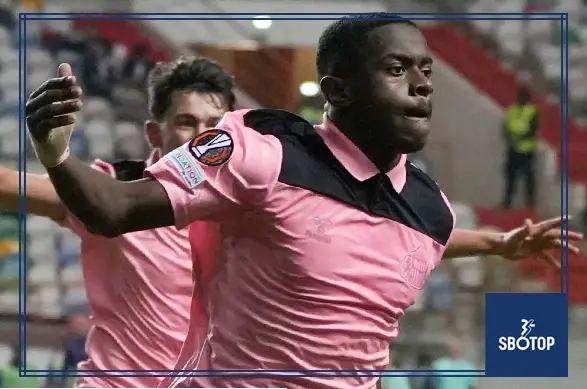
Noah Sadiki delivered the decisive moment as Sunderland came from behind to beat Torreense 2-1 and preserve their perfect start to the Europa League. His powerful finish in the third minute of stoppage time transformed a frustrating evening into a memorable victory for the travelling supporters.
The Portuguese hosts had threatened an upset after Volnei Feltes opened the scoring with an outstanding long-range strike. Sunderland struggled to turn possession into clear chances before Jules Ahoka’s second-half header brought them level.
Even then, the visitors needed patience, changes from the bench and an exceptional late finish to secure three points. For Regis Le Bris, victory in Leiria on Thursday, October 15, 2026, offered satisfaction alongside a warning: Sunderland had survived a serious examination, and their improved second half should not obscure the difficulties that preceded it.
A European Away Night with Added Significance
The match represented Sunderland’s first European away fixture in 53 years, giving the occasion importance well beyond its place in the league-phase schedule.
Torreense also approached the evening with considerable ambition. The Portuguese second-tier side had earned their European opportunity through domestic cup success and were determined to make their home assignment count.
The fixture was staged at Estadio Dr. Magalhaes Pessoa in Leiria rather than Torreense’s usual ground. That distinction matters: Sunderland travelled to face Portuguese opposition, but the match was not played at the hosts’ regular stadium.
Such occasions can create competing pressures. The visitors carry expectations associated with their league status, while the home side has an opportunity to challenge those assumptions.
Torreense made that difference in reputation largely irrelevant for long stretches. Their organisation and willingness to compete forced Sunderland to work for every significant opening.
Seven Changes Leave Sunderland Searching for Rhythm
Le Bris made seven changes to his starting side, using the fixture to distribute opportunities across his squad.
Rotation is an understandable part of managing domestic and European commitments. However, changing personnel also changes relationships on the pitch, including passing options, movement and defensive understanding.
Sunderland’s first-half performance lacked the fluency required to break through consistently. They reached attacking areas but struggled to deliver the final ball or finish that would turn those situations into a lead.
That does not establish rotation as the sole explanation. Torreense’s defending also contributed, and individual execution remained important regardless of selection.
Nevertheless, the contrast after Sunderland introduced more experienced regulars became one of the match’s defining features. Le Bris eventually found a combination that increased the pressure, but his team had already allowed the evening to become considerably more difficult than anticipated.
A Disallowed Header Adds to the Frustration
Sunderland thought they had scored during the first half when Tymur Tutierov headed in following a Luke O’Nien long throw. The effort was ruled out for a foul in the penalty area.
The decision denied the visitors a potential breakthrough, but it did not change the underlying problem: they were struggling to create enough clean opportunities.
O’Nien had earlier headed wide from a corner, while other attacks ended without sufficiently testing goalkeeper Lucas Paes. Sunderland needed better accuracy and coordination around the box.
In assessing the disallowed goal, the official outcome must remain clear. Tutierov put the ball into the net, but Sunderland were not awarded a goal.
Frustration with a decision can explain part of a team’s emotional response. It cannot substitute for finding another route through. Sunderland still had substantial time to improve their attacking work before Torreense produced the opening goal.
Volnei Produces the First Moment of Brilliance
Volnei put Torreense ahead in the 37th minute with a superb shot from outside the penalty area.
The centre-back advanced with the ball before finding the top-right corner, giving Robin Roefs little opportunity to prevent the breakthrough. It was an exceptional contribution from a player whose principal responsibilities normally lie at the opposite end.
The goal rewarded initiative. Volnei carried possession into an attacking position and recognised an opportunity to shoot rather than simply returning the ball to a teammate.
For Sunderland, the concession created an immediate need to respond. They entered half-time behind, with the hosts now holding a result worth protecting.
Torreense’s lead also changed the tactical demands. Sunderland needed greater urgency, but committing players forward without control could have opened further opportunities for their opponents. The challenge was to increase pressure while keeping the contest within reach.
Le Bris Turns to His Bench
Sunderland improved after the interval, but their pursuit of an equaliser required additional intervention.
Le Bris introduced Granit Xhaka, Enzo Le Fee, Reinildo and Nordi Mukiele during the second half. Those changes brought experience and different options for moving the ball into dangerous areas.
From a tactical perspective, fresh players can influence a match through positioning as much as energy. Wider support can stretch a defensive block, while composed distribution can help sustain attacks rather than allowing pressure to dissipate.
The substitutions did not make Torreense disappear as opponents. The hosts continued defending their advantage and Sunderland still needed quality in the decisive moments.
However, the visitors began to find a more productive attacking structure. Mukiele, in particular, would supply the delivery that finally turned their increased pressure into a goal.
Ahoka’s Header Restores Parity
Ahoka equalised in the 67th minute, guiding Mukiele’s cross into the bottom corner.
The goal provided the connection Sunderland had been seeking: an accurate delivery from a wide position and a controlled finish from the player attacking it.
For Ahoka, it was his first goal for the club. More immediately, it removed the deficit and gave Sunderland enough time to pursue a winner.
The equaliser also demonstrated why repeated crossing is only useful when the delivery and movement complement one another. Sending the ball into the box does not automatically create a meaningful chance; the quality of this particular combination made the difference.
Torreense now faced a different task. Rather than defending a narrow lead, they had to protect a point against opponents gaining confidence.
Sunderland had recovered their position, but recovery alone was not yet the result they wanted.
Pressure Builds Without an Immediate Reward
After drawing level, Sunderland continued looking for the second goal.
Ahoka had another opportunity but could not beat Paes, while further attacks required Torreense to defend crosses and second balls around their penalty area.
Sunderland’s persistence was important, although persistence alone does not guarantee a winner. Attacking players still needed to distinguish between forcing an unlikely pass and waiting for a better opening.
That balance becomes harder as time runs out. The desire to score can encourage rushed decisions, reducing the quality of chances despite an increase in attacking volume.
Torreense’s resistance therefore remained a substantial part of the story. They had lost their lead but continued to make Sunderland work.
The visitors were closer to controlling the direction of play, yet the scoreboard remained level as the contest approached its final minutes.
A Late Penalty Decision Is Overturned
Another moment of frustration arrived when Tutierov went down in the penalty area late in the game.
The incident produced a penalty decision, an offside consideration and a video review. After the referee checked the footage, Sunderland were not awarded the spot-kick.
The important confirmed outcome is straightforward: the match continued at 1-1, with no penalty taken.
For Sunderland, the sequence briefly offered the possibility of securing victory from the spot before that route disappeared. They still needed to create something in open play or from another attacking situation.
It would be misleading to describe the overturned decision as proof that the visitors had been denied a certain goal. A penalty would still have required conversion.
Instead, the episode became another obstacle they had to move beyond before Sadiki supplied a more decisive answer.
Sadiki Finds the Winning Finish
In the third minute of added time, Xhaka helped the ball into Sadiki’s path inside the penalty area.
The midfielder struck powerfully past Paes, completing the comeback and triggering celebrations among Sunderland’s travelling supporters.
It was a finish that required both conviction and technique. With the opportunity arriving late, Sadiki delivered the execution that had often been missing earlier.
Xhaka’s contribution was also significant. The final touch before a shot can determine whether a teammate receives an awkward ball or a genuine scoring chance.
Together, the combination turned sustained pressure into the winning goal. Torreense had been close to earning a point, but Sunderland found the quality needed to change the outcome.
Sadiki’s first Sunderland goal consequently carried immediate importance: it secured victory rather than merely decorating an already comfortable scoreline.
Six Points Earned, Lessons Still Available
Sunderland finished the evening with two wins from two Europa League matches and six points from their opening assignments.
Sadiki praised the team’s mentality afterwards while acknowledging how difficult Torreense had made the contest. His assessment reflected the contrast between pre-match expectations and the resistance Sunderland encountered.
There was clear value in the response. The visitors recovered from a deficit, benefited from their substitutes and continued searching after a late decision went against them.
There were also shortcomings to address. Their first-half attacking work had not been convincing, and they needed substantial intervention before establishing greater authority.
For Torreense, defeat did not erase the quality of Volnei’s goal or the discipline that kept them competitive. Sunderland ultimately prevailed because they found two decisive finishes after the break. Sadiki supplied the unforgettable last one, converting a night of mounting frustration into three hard-earned points.