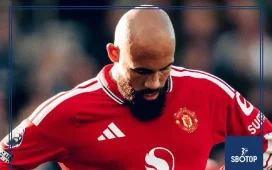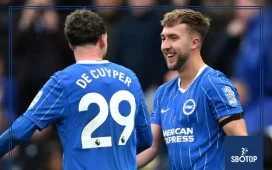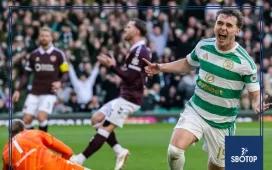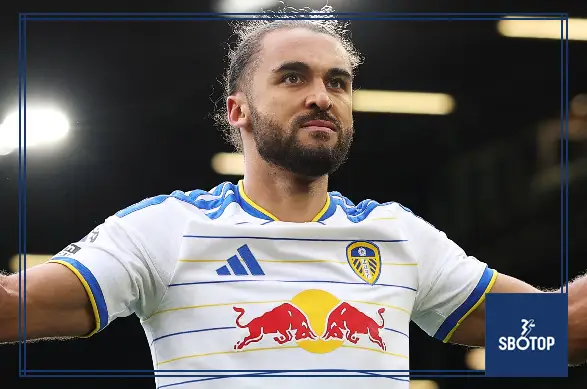
Leeds United recovered from a first-half deficit to draw 1-1 with Manchester United at Elland Road on Sunday, 18 October 2026. Dominic Calvert-Lewin’s equaliser answered Bryan Mbeumo’s opening goal and ensured an absorbing Premier League encounter finished without a winner.
Mbeumo put the visitors ahead in the 35th minute after combining with Youri Tielemans. However, Leeds responded strongly after the interval, drawing level through Calvert-Lewin in the 51st minute following a corner.
Both teams subsequently had opportunities to claim victory. Manchester United threatened through Bruno Fernandes and Amad, while Leeds continued to trouble the visitors with deliveries into the penalty area and attempts from midfield.
The result left Michael Carrick’s side without a win in five Premier League matches. For Daniel Farke’s Leeds, the recovery demonstrated resilience, although their second-half pressure also offered grounds to consider whether more than a point had been available.
Leeds Establish an Early Aerial Threat
Leeds made their intentions apparent through deliveries into Manchester United’s penalty area. Jayden Bogle and James Justin looked to bring Calvert-Lewin into the game, forcing the visiting defence to remain alert.
Ethan Ampadu’s long throws provided another route towards goal. Tarik Muharemovic helped redirect those deliveries, creating situations in which Manchester United needed to react quickly to the second ball.
Those early passages mattered even when they did not produce a clear finish. Leeds were testing how effectively the visitors could defend repeated balls into crowded areas.
Anton Stach also supplied a cross that Nico Elvedi met with a header, requiring Senne Lammens to make a save.
Manchester United therefore faced a varied physical challenge. Defending the initial delivery was only part of the task; they also needed to control where the ball went afterwards.
That issue would become decisive early in the second half.
Mbeumo Finds the Breakthrough
Manchester United carried an attacking threat of their own, particularly through the connection between Tielemans and Mbeumo.
Before scoring, Mbeumo had an opportunity to meet a Tielemans delivery with his head but failed to direct the attempt on target. The opening illustrated the potential of their combination, even though the finish did not match the quality of the chance.
The pair combined more successfully in the 35th minute. Tielemans delivered a low cross, and Mbeumo supplied the close-range touch that guided the ball beyond James Trafford.
It was an efficient finish from the Cameroon international. His movement put him in position to attack the delivery, and the final contact gave Manchester United the lead.
For Carrick’s side, the goal provided a tangible reward from their attacking adjustments. Tielemans was able to influence play in an advanced area, while Mbeumo offered a decisive presence near goal.
The visitors now had an advantage to protect.
Leeds Respond Before Half-Time
Going behind did not stop Leeds from looking for a response. Ao Tanaka tested Lammens with a powerful effort, while Calvert-Lewin had a headed opportunity that he could not direct on target.
Bogle continued to offer an outlet on the right. His willingness to advance helped Leeds reach positions from which they could send the ball towards the penalty area.
Manchester United nevertheless retained their lead until the interval. Their defending was not without difficulty, but they had done enough to prevent Leeds from converting the pressure into an equaliser.
Trafford also contributed at the opposite end by intervening outside his penalty area when Amad threatened to run in behind.
The first half consequently contained important work from both goalkeepers. Neither team could assume that its defensive line would resolve every developing situation.
At the break, Manchester United held the advantage, but Leeds had already demonstrated several ways of creating problems.
Calvert-Lewin Turns Pressure into an Equaliser
Leeds began the second half with greater attacking purpose. Their pressure produced a corner on the right, providing another opportunity to test Manchester United’s organisation.
Stach delivered, Muharemovic flicked the ball on, and Calvert-Lewin reacted inside the crowded penalty area.
The striker took a settling touch before finishing beyond Lammens in the 51st minute. Manchester United had failed to clear the danger, and Leeds had the equaliser their renewed pressure had been seeking.
The goal was significant for its composure. In a congested area, Calvert-Lewin still found enough control to turn a loose-ball situation into a successful finish.
It also underlined the importance of second phases at set pieces. Preventing a clean initial header is not sufficient if the attacking side can collect the next touch.
Leeds had threatened through that general route earlier. This time, they completed the sequence with a goal.
The Hosts Push for a Second
The equaliser changed the demands of the contest. Manchester United could no longer concentrate on protecting their lead, while Leeds had fresh encouragement to continue attacking.
Tanaka went close with another effort, and Noah Okafor was unable to keep an opportunity down after a scramble in the penalty area.
Stach also threatened as Leeds sought a second goal. Their midfielders were finding opportunities around the edge of the area when deliveries were only partially cleared.
From a tactical perspective, those moments showed why defending against Leeds required more than dealing with Calvert-Lewin. The striker occupied defenders, while teammates looked to exploit the spaces around the resulting contests.
However, pressure still needed a more accurate final action. Several promising situations ended with attempts over the crossbar rather than a decisive test of Lammens.
That distinction prevented Leeds from turning their stronger spell into a winning advantage.
Manchester United Retain a Route to Victory
Although Leeds carried considerable second-half momentum, Manchester United were not without opportunities to regain the lead.
Fernandes collected a pass from Leny Yoro and sent a shot narrowly wide. The attempt provided a reminder that the visitors could still create a dangerous opening even when they were spending longer periods defending.
Diogo Dalot also advanced from defence and found Amad, whose finish went wide. The move demonstrated the value of carrying the ball out when Leeds committed players forward.
Mason Mount, introduced from the bench, had an attempt that missed the target following a worked set-piece move.
Those chances complicate any suggestion that only one team could have won. Leeds applied sustained pressure, but Manchester United still generated moments capable of deciding the match.
Neither side, however, supplied the necessary accuracy. The game remained level as the closing stages approached.
Changes from the Bench Cannot Break the Deadlock
Carrick replaced Lisandro Martinez with Noussair Mazraoui at half-time. Later, Mount and Matheus Cunha entered as Manchester United searched for a winning contribution.
Farke also used his bench, bringing on Lukas Nmecha and Sean Longstaff. The changes provided fresh options as the physical demands increased.
Substitutions can alter movement, improve energy or introduce different attacking qualities, but none of those changes guaranteed a breakthrough here.
The clearest remaining requirement was still execution. Both teams needed a delivery, touch or finish precise enough to separate them.
Leeds had a late opening when Stach received the ball after another delivery into the area. His attempt encountered defensive resistance, allowing Lammens to recover the situation.
The opportunity passed, and the final whistle confirmed a point each.
For both managers, the substitutions became part of the effort to win rather than the source of a decisive late goal.
Two Goals Reveal Different Attacking Strengths
The goals offered a useful contrast between the teams’ most productive moments.
Manchester United scored through the partnership between a provider operating in an advanced position and an attacker arriving to finish a low delivery. Tielemans and Mbeumo combined effectively because the pass and movement complemented each other.
Leeds equalised through a corner, a flick-on and the striker’s reaction to the next ball. Their goal depended on maintaining an attacking presence after the initial delivery.
Neither route was inherently superior. Each succeeded because the attacking side executed its actions while the defending side could not stop the sequence.
For Manchester United, the lesson concerned completing defensive work at set pieces. For Leeds, their successful equaliser highlighted the value of continuing to attack the ball rather than treating the first contact as the end of the move.
A Point with Different Implications
Manchester United’s performance contained evidence of commitment, but the result did not end their league winless run.
They had led at half-time and created further chances, yet could not secure a second Premier League victory of the season. The draw therefore offered limited relief rather than a complete answer to their difficult start.
Leeds could take encouragement from their response after falling behind. They improved after the interval and created opportunities to go beyond an equaliser.
Still, their missed chances formed part of the assessment. Recovering a point was valuable, but the opportunities that followed made the absence of a winning goal relevant.
Neither conclusion requires speculation about future results or managerial decisions. The established outcome was a competitive draw, shaped by Mbeumo’s first-half finish and Calvert-Lewin’s response after the break.
Elland Road Contest Finishes Unresolved
The match’s defining highlights were spread across both halves: Mbeumo converting Tielemans’ delivery, Calvert-Lewin reacting to the corner, Fernandes going close and Leeds continuing to threaten through Stach and their advancing players.
Lammens and Trafford also made interventions that helped prevent either side from establishing a decisive advantage.
Ultimately, Manchester United could not protect their lead, and Leeds could not convert their recovery into victory.
The 1-1 scoreline reflected a contest in which each team had a route to all three points but lacked the final successful action. Mbeumo and Calvert-Lewin supplied the goals; the chances left unfinished ensured the afternoon ended with honours shared.
Also Read: