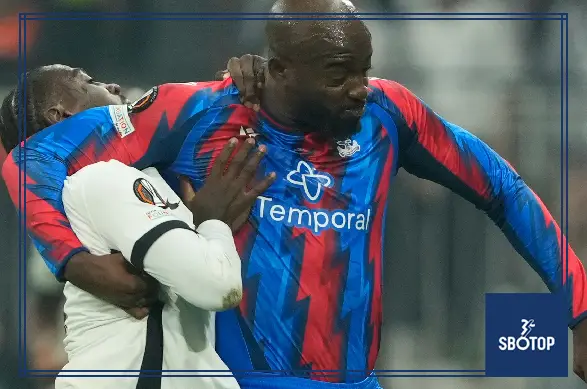
Crystal Palace overturned a half-time deficit through Yéremy Pino and Jean-Philippe Mateta but could not complete the job, drawing 2-2 with Besiktas in an eventful Europa League encounter in Istanbul on Thursday, 22 October 2026.
Wilfred Ndidi put the hosts ahead in first-half stoppage time before Palace transformed the contest with two goals in four minutes after the interval. Junior Olaitan restored parity in the 73rd minute, and Besiktas subsequently survived the dismissal of Ümit Akdağ to secure a share of the points.
For Palace, the evening offered encouragement and disappointment in almost equal measure. Their attacking performance provided evidence of improvement, but a winning position slipped away. Even with an extra player during the closing stages, they could not find the decisive third goal.
An Early Celebration Cut Short
Palace thought they had made the ideal start when Mateta swept the ball into the net inside the opening minutes. The move briefly promised an early advantage, only for a VAR intervention to rule the effort out for offside.
The disallowed goal established an important theme: Palace were capable of creating danger, but turning promising situations into a lasting advantage would prove difficult.
An early setback of that kind can affect a visiting team, particularly in an intense atmosphere. Palace nevertheless continued looking for openings rather than allowing the disappointment to dictate their approach.
From an analytical perspective, their response mattered. The visitors maintained enough attacking purpose to suggest they could trouble Besiktas, even though the scoreboard did not immediately reward their efforts.
Chances Without a First-Half Breakthrough
Palace’s opportunities before the interval reinforced the sense that they had a route into the game. Chris Richards headed over, Tyrick Mitchell dragged an effort wide, and Mateta forced a strong save after connecting with an Adam Wharton corner.
Those moments illustrated different ways of reaching threatening positions. Palace were not relying entirely on one player carrying the ball through pressure or one repeated passing combination.
However, creating opportunities and converting them remain separate tasks. A team can establish a promising attacking pattern without gaining the lead that would change the opposition’s obligations.
For Palace, that distinction became increasingly significant. Their positive work kept the contest competitive, but the absence of a goal left Besiktas able to change the evening with a single effective attack.
Ndidi Gives Besiktas the Advantage
The breakthrough arrived at the opposite end shortly before half-time. Ndidi collected a pass from Salih Özcan, advanced into a dangerous position and finished beyond Walter Benítez.
Besiktas therefore reached the interval ahead despite Palace’s earlier opportunities. Their advantage demonstrated the value of taking a decisive chance when a match remains closely balanced.
For the visitors, the timing complicated the half-time assessment. They had reasons to feel encouraged by their attacking play, yet still needed to recover a deficit.
Analytically, such situations require a measured response. Abandoning everything that produced the chances can be counterproductive, but continuing unchanged without addressing the concession is equally insufficient. Palace needed to retain their attacking confidence while improving the protection behind it.
Pino Starts the Turnaround
Palace found their response in the 51st minute. Dwight McNeil released Anan Khalaili, whose delivery was finished from close range by Pino. An initial offside decision threatened to deny the visitors again, but a VAR review confirmed that the goal should stand.
Four minutes later, Mateta intercepted Tiago Djaló’s loose back pass and drove forward before finishing emphatically. Palace had turned a 1-0 deficit into a 2-1 lead.
Pino’s equaliser was his third goal in as many Europa League appearances that season, while Mateta marked his return to the starting line-up with a significant attacking contribution.
The speed of the turnaround changed the demands on both teams. Palace now had something to protect, while Besiktas needed to recover their attacking momentum without becoming vulnerable to another concession.
Mateta Makes His Opportunity Count
Mateta’s goal rewarded alertness as much as finishing quality. Recognising a loose pass is only the first part of such an opportunity; the attacker must then reach the ball, maintain control and execute under pressure.
His intervention gave Palace the advantage they had been seeking since their disallowed early effort. It also highlighted the importance of remaining involved after disappointment.
From a tactical perspective, an available central striker provides more than a final touch. His positioning can occupy defenders, create uncertainty over back passes and offer teammates a reference point when advancing possession.
However, one productive performance should not become a guarantee about future scoring. The more useful conclusion is that Mateta supplied Palace with a direct threat and converted a moment that briefly placed them in control of the result.
A Lead That Required Further Work
At 2-1, Palace faced a different challenge. Recovering from behind had required urgency; managing the lead required judgement about when to continue attacking and when to reduce unnecessary risk.
Those objectives are connected. A team that retreats too readily may invite pressure, while one that attacks without sufficient protection can expose itself to an equaliser.
The practical requirement is collective positioning. Players supporting the attack must remain aware of the space behind them, and those holding deeper positions need options when possession changes.
This is an analytical reading of the match situation rather than proof of a single tactical error. Explaining the eventual equaliser fully would require examining the complete sequence, including the pressure on the ball and the movement around it.
Olaitan Restores Besiktas’ Belief
Besiktas recovered through substitute Olaitan, who equalised in the 73rd minute with an individual effort from outside the penalty area. His goal returned the match to level terms after Palace’s rapid second-half recovery.
The home side had endured a difficult spell but remained close enough to change the result. Their response ensured that Palace’s attacking revival would not automatically produce an away victory.
The equaliser also demonstrated the influence a substitute can have. Fresh involvement offers a different problem for opponents, especially when players must adjust their marking responsibilities during a developing contest.
For Palace, conceding at that stage removed the reward their turnaround had appeared likely to deliver. They still had time to respond, but the match had become a search for another breakthrough.
Akdağ’s Dismissal Creates a Late Opening
Besiktas were reduced to ten players in the 77th minute when Akdağ was dismissed for a challenge on Jørgen Strand Larsen. Palace consequently had a numerical advantage for the remaining regulation time and stoppage time.
The order of events is important. Besiktas had already equalised before the red card, so the dismissal did not explain how Palace lost their lead.
Instead, it created a fresh opportunity for the visitors to regain it. Eddie Nketiah later shot wide, but Palace could not find another goal.
An extra player can help a team sustain possession and stretch the opposition. It does not guarantee clear chances, particularly when the defending side concentrates its remaining players around the penalty area and prioritises protecting the draw.
Why Numerical Superiority Is Not Enough
Late numerical advantages often create misleading expectations. The attacking team may have more passing options, but the opposition can still defend the most valuable spaces with considerable numbers.
Patience therefore needs to be purposeful. Moving the ball slowly without changing the defensive shape may consume time without improving the chance of scoring.
Conversely, forcing repeated deliveries into a crowded area can make the task predictable. Useful variation includes changing the point of attack, finding supporting runs and retaining possession after the first clearance.
These are general tactical considerations rather than a claim that one adjustment would certainly have won Palace the game. Their final opportunity depended on execution as well as approach, and Besiktas still had to defend effectively to preserve the result.
Encouragement Alongside the Frustration
Palace could take genuine encouragement from overturning a deficit away from home. Their response after half-time showed that conceding shortly before the interval had not removed their attacking confidence.
Yet the disappointment was equally understandable. A lead established through two quick goals offered a realistic route to victory, and the subsequent red card provided another opening.
A balanced assessment needs both elements. Calling the evening an unqualified success would overlook the lost advantage; treating it as entirely negative would ignore the quality that created the turnaround.
The most useful lessons concern repeatable actions: creating opportunities, reacting to setbacks and managing the period after taking the lead. Those details provide a firmer basis for improvement than broad conclusions drawn from the final score alone.
Palace Leave with Progress and Regret
The 2-2 draw captured the competing strengths and shortcomings of Palace’s evening. Pino and Mateta supplied the finishing that transformed the match, but Besiktas found a response through Olaitan and then protected the result with ten players.
Neither side could turn its strongest spell into a decisive advantage. Palace’s second-half surge was insufficient to secure victory, while Besiktas’ early lead also disappeared.
For the visitors, the task is to build on the attacking improvement while becoming more effective at preserving winning positions. Istanbul provided evidence that they could recover from adversity. The next step is ensuring that such a recovery delivers the full reward.
Also Read: