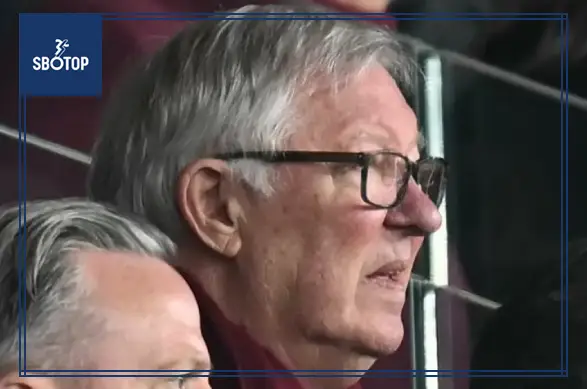
Manchester United’s transfer strategy has come under renewed scrutiny, with legendary former manager Sir Alex Ferguson reportedly raising concerns about the club’s recruitment decisions and the way its football operations are being managed.
According to The Athletic, Ferguson questioned CEO Omar Berrada and Director of Football Jason Wilcox over Manchester United’s approach to signing players, particularly the club’s recruitment activity during the summer of 2024.
The concerns were reportedly discussed during a football board meeting in September. Although the gathering was intended as an informal discussion rather than a formal business decision-making session, Ferguson’s involvement reflected his continued interest in the club’s direction.
The former United manager remains one of the most influential figures in the club’s history. Having delivered 24 major trophies during his time at Old Trafford, including 13 Premier League titles and two Champions League crowns, Ferguson is still deeply connected to the institution he left in 2013.
His reported intervention comes at a difficult time for United, with recruitment decisions, managerial changes and the club’s ownership structure continuing to attract criticism.
Sir Alex Ferguson Questions Manchester United’s Recruitment Strategy
Ferguson’s reported concerns focused on Manchester United’s transfer policy and the decisions made by the club’s senior football executives.
The Athletic reported that the former manager raised questions about recruitment, particularly the spending and player selection during the summer 2024 transfer window.
His discussions involved Omar Berrada and Jason Wilcox, two important figures responsible for shaping United’s football operations.
Although Ferguson no longer manages the first team, he continues to serve as the club’s Global Ambassador.
His history at Old Trafford gives his views considerable significance, especially when discussing the long-term direction of Manchester United.
The reported meeting also highlights the wider debate surrounding the club’s recruitment structure. United have invested heavily in players over recent transfer windows, but questions remain about whether those investments have consistently addressed the team’s biggest weaknesses.
Manchester United’s Managerial Instability Adds to the Pressure
United’s transfer problems have been accompanied by considerable instability in the dugout.
The club’s struggles have continued during the post-Ferguson era, with Michael Carrick becoming the seventh permanent manager to lose his position during that period.
Carrick was dismissed after United collected just eight points from their opening 10 league matches, leaving the team 18th in the Premier League table.
Mauricio Pochettino was subsequently announced as his replacement.
Carrick’s departure attracted sympathy from sections of the United fanbase, particularly because he had previously guided the club back into the Champions League during the previous season.
Many supporters believed the team’s difficulties extended beyond the manager’s responsibilities.
Problems involving recruitment, squad construction and the club’s wider football structure have also become major talking points.
The situation has strengthened calls for greater consistency in United’s decision-making, particularly when it comes to identifying players who can deliver long-term improvements.
Glazer Family and Sir Jim Ratcliffe Face Supporter Criticism
Manchester United’s ownership structure remains another major source of frustration among supporters.
The Glazer family’s leveraged takeover of the club 21 years ago continues to attract criticism, with United carrying debt estimated at around £600 million.
Sir Jim Ratcliffe, who acquired a minority stake in February 2024, has also faced growing scrutiny.
Ratcliffe previously promised improvements to the club’s management standards, but supporters continue to question whether the changes have delivered the expected results.
Transfer policy has become one of the most visible areas of concern.
During the summer of 2024, Manchester United reportedly spent approximately £180 million on five players:
- Leny Yoro
- Manuel Ugarte
- Matthijs de Ligt
- Joshua Zirkzee
- Noussair Mazraoui
The following summer brought further additions, including Benjamin Sesko, Matheus Cunha, Bryan Mbeumo and Senne Lammens.
Those recruitment decisions were viewed more positively by many observers. However, criticism returned when United failed to address several important squad requirements in their latest transfer plans.
Midfield Rebuild Becomes a Major Transfer Priority
One of Manchester United’s biggest challenges has been rebuilding the midfield.
The departure of Casemiro and concerns that Manuel Ugarte would not develop as expected increased the need for additional quality in the centre of the pitch.
United reportedly identified several potential targets, including:
- Andrey Santos
- Carlos Baleba
- Youri Tielemans
- Elliot Anderson
- Mateus Fernandes
- Sandro Tonali
- Aurelien Tchouameni
- Alex Scott
- Ederson
- Ayyoub Bouaddi
The club’s recruitment discussions reportedly included a combined potential expenditure of around £150 million on Andrey Santos, Carlos Baleba and Youri Tielemans.
However, Elliot Anderson was considered the leading target.
According to The Athletic, Manchester United were also seriously considering Leon Goretzka as a potential free-transfer signing rather than pursuing Tielemans.
Goretzka eventually joined Aston Villa, where he replaced Tielemans and subsequently scored against United in Carrick’s final match as manager.
The situation highlighted how quickly transfer plans can change and how important recruitment timing can be.
Elliot Anderson Transfer Failure Raises Questions Over Decision-Making
The pursuit of Elliot Anderson became another example of United’s difficulties in the transfer market.
Manchester United reportedly failed to get close to an agreement because Jason Wilcox was unable to meet the valuation required for the midfielder.
Manchester City eventually secured Anderson’s signature for a reported £116 million.
Missing out on a major midfield target has raised further questions about United’s ability to compete for elite players.
The issue was not simply the financial commitment. The recruitment process itself was also reportedly becoming increasingly complicated.
Manchester United’s Six-Person Approval Process Under Scrutiny
Another concern highlighted by The Athletic involved the number of people required to approve transfer decisions.
Manchester United’s recruitment process reportedly requires agreement from six different individuals before a deal can be completed.
Several senior figures are involved, including:
- Omar Berrada, Chief Executive Officer.
- Jason Wilcox, Director of Football.
- Christopher Vivell, Recruitment Director.
- Matt Hargreaves, Director of Negotiations.
- Sir Jim Ratcliffe.
- Representatives of the Glazer family.
Some agents have reportedly expressed frustration about the difficulty of obtaining clear answers from the club because so many executives are involved in transfer discussions.
Such a complicated structure can make negotiations more difficult, particularly when clubs need to move quickly to secure their preferred targets.
For Manchester United, improving communication and establishing clearer responsibilities could become important steps towards making recruitment more efficient.
Ferguson’s Intervention Highlights United’s Need for Direction
Sir Alex Ferguson’s reported criticism comes at a time when Manchester United are facing questions about almost every aspect of their football operations.
From managerial instability and ownership concerns to recruitment decisions and squad planning, the club has several challenges to address.
The reported discussions with Berrada and Wilcox underline the importance of having a clear transfer strategy rather than making decisions that create further problems for the first team.
United have the financial resources and global profile to attract elite players. However, turning that advantage into consistent success requires effective planning, clear leadership and better coordination between the people responsible for recruitment.
Ferguson’s legacy at Old Trafford remains enormous. His reported concerns may therefore serve as another reminder of the standards Manchester United are expected to maintain.
The biggest question now is whether the club’s leadership can translate its ambitions into a more effective recruitment strategy and build a squad capable of competing consistently at the highest level.
ALSO READ :