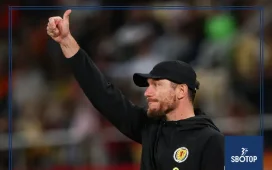
Oliver Glasner’s forceful response to Nottingham Forest’s defeat at Brentford did not immediately create the rupture some observers anticipated. Instead, reporting published on 3 November 2026 indicated that influential figures within the club welcomed his determination to confront their poor form and continued supporting the head coach.
The distinction is important. Glasner’s public comments were directly attributable to him; the hierarchy’s reaction was reported through club sources rather than announced in a formal statement. Together, they presented a picture of internal support for a manager demanding improvement, despite considerable disappointment with results.
The episode followed Forest’s 2-0 loss at Brentford on 31 October. It also preceded a significant response on the pitch: a 3-1 victory over Manchester City the following weekend. That later result changed the immediate atmosphere, although it did not establish that every problem had been solved.
Brentford Defeat Exposes Familiar Problems
Forest lost through a Nikola Milenković own goal and an Igor Thiago finish at the Gtech Community Stadium. The result gave Brentford three points and left the visitors facing another examination of why their performances were not delivering sufficient reward.
For Glasner, the concern was recurrence. Forest’s official account of his reaction identified defensive mistakes and failure to convert chances as the central issues. He rejected the idea that encouraging statistics or positive passages could continue compensating for disappointing outcomes.
That is a practical distinction. A team can create opportunities without finishing them, or enjoy promising spells while conceding avoidable goals. Neither condition guarantees eventual improvement unless the decisive actions change.
The Brentford match therefore became more than an isolated defeat in Glasner’s assessment. It represented another example of weaknesses he believed were being repeated rather than corrected.
Glasner Changes the Tone of His Message
The head coach made clear that he intended to alter his approach and accept fewer compromises. His comments framed the situation as a collective challenge requiring greater clarity about expectations and stronger adherence to the direction he wanted Forest to follow.
However, his warning should not automatically be described as a resignation announcement. He discussed the possibility of another managerial change if his approach failed, but that was different from formally stepping down or confirming an agreed departure.
The distinction matters because emotional post-match language can become more definitive as it is repeated. A conditional statement about consequences is not evidence that those consequences have already been decided.
What was clear was dissatisfaction. Glasner no longer wanted to offer reassurance without demanding different behaviour. Whether that shift would be effective depended on how the message translated into training, selection and match performance.
Reported Backing Offers Space to Work
The reported response from Forest’s hierarchy suggested that Glasner’s intensity was interpreted by some decision-makers as evidence of commitment rather than disloyalty. Sources indicated that his determination to reverse the team’s decline was appreciated.
That support offered useful context, but it was not an unlimited guarantee about his position. Football clubs can back a coach while continuing to assess results and progress.
Equally, backing should not be confused with endorsement of every phrase used publicly. Supporting the overall demand for improvement does not require agreement with every aspect of its delivery.
From an analytical perspective, the value of support lies in what it enables. A manager needs sufficient authority to implement reasonable changes, while the club needs a clear understanding of what those changes are intended to achieve. Confidence becomes useful when it supports coordinated work rather than remaining a temporary public impression.
A Poor Start Gives the Reaction Its Context
Forest were nineteenth after the Brentford defeat and had scored six goals in their opening nine league matches. The result also left them with four defeats in five league games, explaining why frustration had become increasingly difficult to contain.
Those figures describe the situation immediately after that fixture, not the current table. They provide the background against which Glasner’s words and the reported internal response should be understood.
A low scoring total places additional pressure on every defensive incident. When a team rarely scores multiple goals, conceding first can substantially complicate the route to points.
Yet the two weaknesses require separate attention. Better defending will not automatically improve finishing, and sharper finishing does not remove the need to reduce mistakes. Forest needed both ends of their performance to become more reliable if the wider pattern was to change.
Stability Matters After Repeated Coaching Changes
Glasner arrived during the summer after Forest had used four head coaches the previous season. His appointment therefore carried a context of managerial turnover, making questions about continuity especially relevant when the new campaign began poorly.
Frequent changes can leave players adapting to different terminology, responsibilities and methods. That does not prove every later problem is caused by instability, but it helps explain why continuity may have value.
At the same time, stability is not an argument against accountability. Keeping a coach only becomes constructive when there is a credible plan and evidence that the team can improve.
The analytical challenge is to distinguish temporary difficulty from persistent failure without relying solely on the latest result. Clubs need to examine the quality of the work, the suitability of the approach and the progress being made against identified weaknesses. Managerial change is one possible response, not a complete diagnosis.
The Coach Explains His Intention More Clearly
In the days after Brentford, Glasner said his intervention had been intended positively. He reported a good training week and explained that he wanted to interrupt a pattern in which similar mistakes were followed by similar explanations and another disappointing result.
His clarification added context to the initial anger. It presented the reaction as an attempt to improve standards, rather than simply an expression of personal frustration.
However, intention and effect remain different questions. A manager can intend to motivate without knowing immediately whether every player receives the message in the same way.
The practical test was therefore behavioural. Were instructions clearer? Did players make better decisions? Were mistakes reduced during competitive matches? Those questions offered a more useful assessment than judging the volume of the press conference alone. Strong language could mark a change in approach, but it could not perform the footballing work itself.
Culture Requires Daily Actions, Not Just Demands
Glasner’s subsequent explanation emphasised a balance between a supportive environment and high expectations. He wanted players to take ownership of improvement rather than rely entirely on coaches to identify every requirement.
As an analytical principle, accountability works best when the expected action is specific. A player can respond more effectively to a clear positional correction or preparation standard than to a general demand to care more.
The same applies to coaches. Their responsibilities include designing useful sessions, explaining decisions and ensuring that demands are proportionate to the player’s role.
A stronger culture cannot be measured merely by how severe its language sounds. It becomes visible through preparation, communication and execution. Forest’s challenge was to connect the stated ambition with habits that would survive beyond the immediate emotional response to Brentford. Otherwise, the intervention risked becoming another memorable moment without a lasting change.
Manchester City Victory Provides a Concrete Response
Forest subsequently defeated Manchester City 3-1 at the City Ground on 7 November. Jair Cunha scored and Liam Delap struck twice as the hosts secured their first home league victory of the season.
That outcome materially changed the account of the week. Glasner’s reaction was no longer followed only by assurances about training; it was followed by a significant competitive result.
However, the sequence does not prove that the outburst alone caused the victory. Preparation, player execution, opposition performance and individual moments all contributed. Establishing one exclusive cause would go beyond the available evidence.
The measured conclusion is that Forest produced the response Glasner had demanded in terms of the result. They converted opportunities and won against strong opposition. Whether that represented a sustained turning point would require evidence from further matches rather than certainty drawn from one successful evening.
Backing Must Become Sustained Progress
The episode ultimately concerned the relationship between authority, communication and performance. Glasner identified recurring weaknesses, changed his tone and received reported encouragement from within the club. Forest then delivered an important victory that offered a practical basis for optimism.
None of those developments removed the need for continued scrutiny. Support remained valuable only if it helped produce clearer work, while the City result needed to become part of a broader improvement rather than an isolated exception.
The strongest reading avoids both extremes. The Brentford reaction was not proof that the relationship had collapsed, and the subsequent win was not proof that the rebuilding was complete. Forest had evidence that a better outcome was possible. Their next responsibility was to make the standards behind it repeatable, turning a difficult public reckoning into more dependable football.
Also Read: