

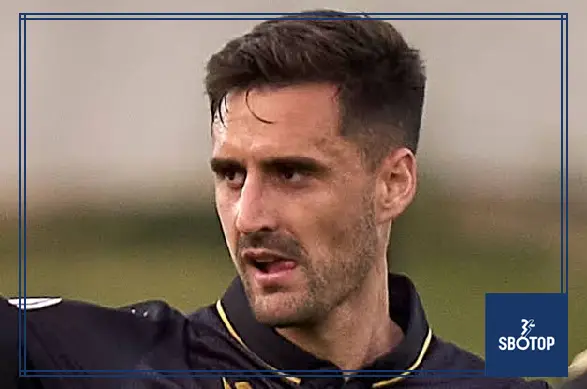
The death of Tenerife striker Jesús de Miguel has left his club and the wider football community mourning a player whose career had been built through years of persistence. The 30-year-old died on 3 November 2026, the morning after suffering a cardiac arrest following a collision during a Spanish second-division match against FC Andorra.
Tenerife confirmed that De Miguel died at 8am and expressed its devastation at the loss. The club also relayed his family’s gratitude for the support received, alongside their request for privacy during an exceptionally difficult period.
What began as a competitive league fixture became a medical emergency and, ultimately, a tragedy extending far beyond the result. Subsequent tributes, postponed matches and disciplinary proceedings have formed different parts of the response. At its centre remains the loss of a person, teammate and professional footballer.
A Match Interrupted by a Medical Emergency
The incident occurred on 2 November at the Heliodoro Rodríguez López stadium in Santa Cruz de Tenerife. De Miguel was challenging for a ball near midfield when he collided with Andorra goalkeeper Jesús Owono, who had advanced well outside his penalty area.
Owono received a straight red card. Medical personnel attended to De Miguel before he was taken from the pitch and transported to hospital. The match, which stood at 2–2, was abandoned.
The official disciplinary documentation subsequently recorded that play stopped in the sixth minute of added time. After discussions involving the captains and team representatives, those involved indicated that they were not emotionally able to continue.
That account establishes why the fixture could not resume. Once the seriousness of De Miguel’s condition became apparent, the immediate priority was his treatment and the welfare of those confronting the emergency.
Hospital Treatment Followed by Confirmation of His Death
De Miguel was admitted to intensive care at the Hospital Universitario de Nuestra Señora de la Candelaria. Tenerife’s initial update described his condition as stable despite its seriousness, before a later announcement reported neurological deterioration. His death was confirmed the following morning.
Those updates describe the publicly reported sequence of events. They should not be expanded into assumptions about every stage of his treatment or the precise medical mechanism involved.
The distinction matters because early accounts of a sporting emergency can contain incomplete information. A match recording may show the collision, but it cannot independently establish a full clinical explanation.
The confirmed reporting establishes that De Miguel suffered a cardiac arrest following the collision and subsequently died in hospital. Detailed conclusions about medical causation require authoritative medical evidence rather than interpretation of footage or speculation about what might have happened.
A Career Built Through Persistence
De Miguel’s football story deserves attention beyond the circumstances of his death. His progress came through the demanding environment of Spain’s lower divisions, where careers often develop away from widespread recognition.
Tenerife’s own remembrance traced his journey through clubs including Fuenlabrada, Unión Adarve, Navalcarnero, Unionistas and Castellón. Across his career, he accumulated experience in several levels of Spanish football before becoming part of Tenerife’s attack.
He joined the island club on 8 July 2025 and scored 11 goals during the following campaign, finishing as the squad’s second-highest scorer behind Enric Gallego.
Those achievements give substance to the tributes. De Miguel had earned his place through sustained work across different teams and competitive environments. His career reflects the contribution of players whose importance to their clubs can be considerable even when their names are less familiar internationally.
His Contribution to Tenerife’s Return
De Miguel’s first season with Tenerife included a significant collective achievement: promotion to the second division. His 11 goals contributed to the club’s successful campaign and helped establish his connection with supporters.
He had arrived from Castellón, where he had already experienced the challenge of progressing through Spain’s football structure. Tenerife became the next stage of that development, offering another opportunity to contribute to a promotion-winning team.
Remembering that contribution helps restore perspective to a story dominated by its final, devastating events. Supporters had watched him compete, score and work alongside his teammates before they gathered to mourn him.
For the club, his absence therefore reaches into recent shared memories. Promotion celebrations and individual goals now form part of a sporting legacy that cannot be separated from the sadness surrounding his death.
Condolences Across the Football Community
Messages of sympathy came from across Spanish and international football. The Spanish federation expressed its condolences to De Miguel’s family, friends, teammates and Tenerife’s supporters, joining the club in acknowledging the scale of the loss.
Andorra also offered condolences. Other clubs and prominent sporting figures publicly expressed their sadness, while European football organised moments of silence before its club competition fixtures.
Tenerife president Felipe Miñambres acknowledged that the club would need professional help as it dealt with the tragedy. That recognition gave an important practical dimension to the public expressions of support.
A collective tribute can provide solidarity, but those closest to the incident may need support over a much longer period. Teammates, staff and relatives will experience the loss differently. Their needs cannot be measured by the number of ceremonies held or by the date competitive football resumes.
Postponements Gave the Club Space to Grieve
The consequences extended beyond the interrupted Andorra fixture. Tenerife’s scheduled Copa del Rey visit to Badajoz on 10 November was postponed following the club’s request.
The federation’s decision explicitly connected that postponement to De Miguel’s death and the mourning surrounding it. Separate decisions also postponed matches involving Tenerife’s reserve and youth teams.
These changes reflected how the loss affected the wider institution. A professional club includes players and staff across several teams, alongside employees whose working lives are closely connected to the first-team squad.
Allowing time away from competition recognised those relationships. It also avoided treating the tragedy simply as a scheduling inconvenience.
Returning to training or playing again would require practical decisions, but those decisions had to account for people dealing with an extraordinary event.
Disciplinary Action and the Judicial Process
On 13 November, the Spanish federation’s disciplinary committee imposed a 12-match suspension on Owono. Its decision relied on the referee’s account of the challenge, which described a raised leg, a forceful impact and excessive force while the ball was being contested.
The committee classified the action as a serious disciplinary offence and applied the maximum suspension available under the relevant provision.
Separately, Spanish authorities opened a judicial investigation following De Miguel’s death. Reporting explained that deaths considered non-natural under Spanish law trigger judicial examination, including cases involving accidents.
These processes must be distinguished. A sporting suspension concerns football’s disciplinary rules. A judicial inquiry examines matters under the law. The existence of an investigation does not establish criminal guilt, and the disciplinary decision should not be presented as a criminal verdict.
Any further conclusions must rest on the findings of the appropriate authorities.
An Emotional Return Against Ceuta
Tenerife returned to competition on 15 November, hosting Ceuta at the same stadium where the collision had occurred. The occasion combined the resumption of football with a public act of remembrance.
A minute of silence was accompanied by sustained applause. Play also stopped in the ninth minute for another tribute, reflecting De Miguel’s shirt number.
Tenerife won 2–0. After opening the scoring, Nacho Gil held up De Miguel’s shirt towards the crowd, turning the goal celebration into a visible dedication to his teammate.
The result provided a positive sporting moment within a deeply difficult occasion. It could not resolve the grief surrounding the club.
The significance of the afternoon lay equally in the opportunity for players and supporters to remember De Miguel together, inside a place closely associated with his contribution to their team.
Remembrance Beyond the First Tributes
Spanish football’s coordinated tributes extended across competitions. The federation, the professional league and the women’s league announced commemorative gestures for fixtures played between 6 and 9 November.
Such gestures give a community a shared language for grief: silence, applause, shirts and messages of solidarity. Their value can continue after the immediate shock has passed, particularly when remembrance is accompanied by sustained care for those most affected.
De Miguel’s family requested privacy, and that request remains central. Public interest in the incident does not remove their right to grieve without intrusion.
For Tenerife, preserving his memory means recognising the full course of his time at the club: the work behind his performances, the goals that helped secure promotion and the relationships formed along the way. His football career ended tragically, but its meaning reaches well beyond its final match.
Also Read: